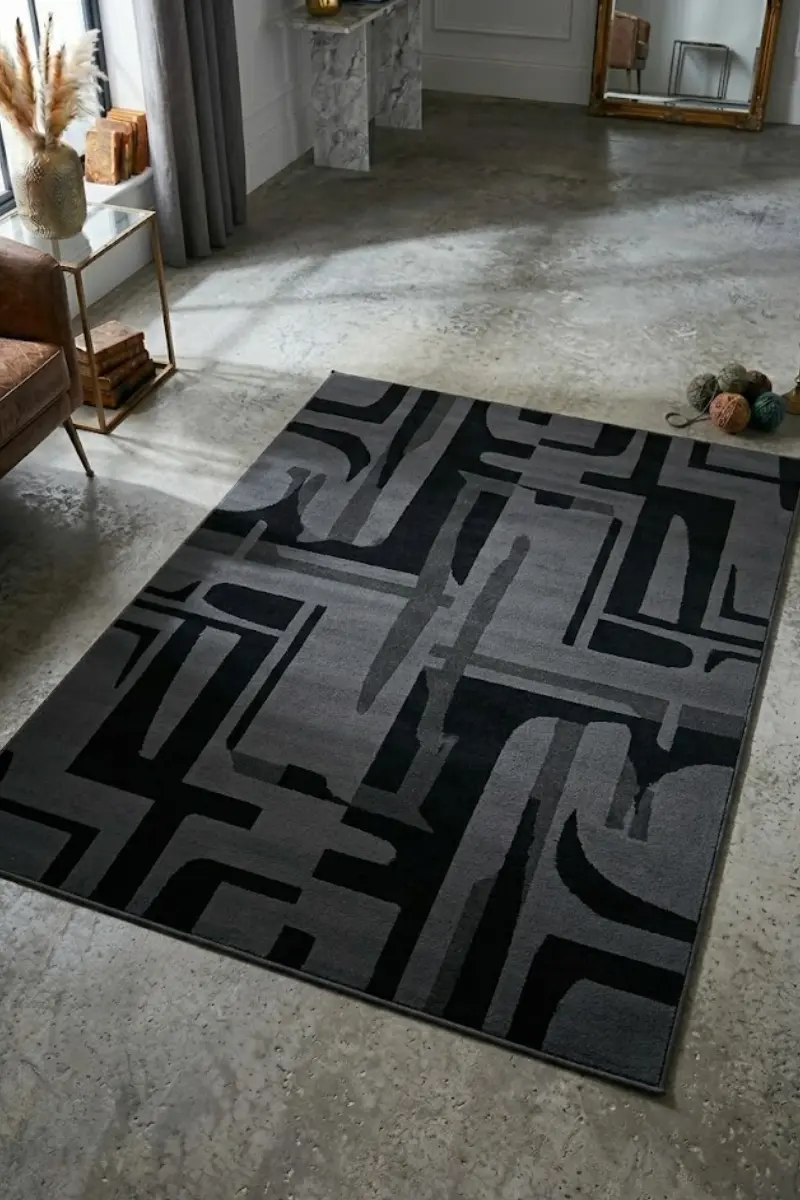
Charcoal Abstract Low-Pile Industrial Area Rug
$79–$249
A plush, ornate rug fights an industrial room instantly. This style needs texture that stays understated.
Choose a low-pile flatweave in charcoal, rust, or faded denim blue. Anything plush or ornately patterned works against the raw, utilitarian feel.
Industrial rugs have to add warmth without softening the room’s edge.
A low-pile flatweave in charcoal or rust brings enough texture to keep concrete or exposed wood floors from feeling cold, without introducing the plushness or ornate pattern that would fight the room’s raw, utilitarian materials.
Color stays muted and slightly weathered here, matching the worn metal and reclaimed wood this style typically pairs with.
A bright or heavily saturated rug reads as too polished for a space built around exposed, honest materials.
This page covers industrial rug tones, weaves, and sizing, with picks that add warmth without losing the room’s edge.
Low-pile polypropylene or a flatweave cotton works best for industrial styling, since the goal is softening hard concrete or exposed flooring without adding a texture that fights the raw, utilitarian look.
Solid neutral tones suit industrial rugs better than pattern:
Pattern can pull the look toward boho or traditional depending on the design.
Keep it simple and let the room’s architecture do the visual work.
Not all rugs work the same way in a industrial space. Here's how the main types differ.
Area rugs are the foundation of every styled room. They define zones, anchor furniture, and set the scale of the space. The right area rug makes a large room feel intentional instead of scattered.
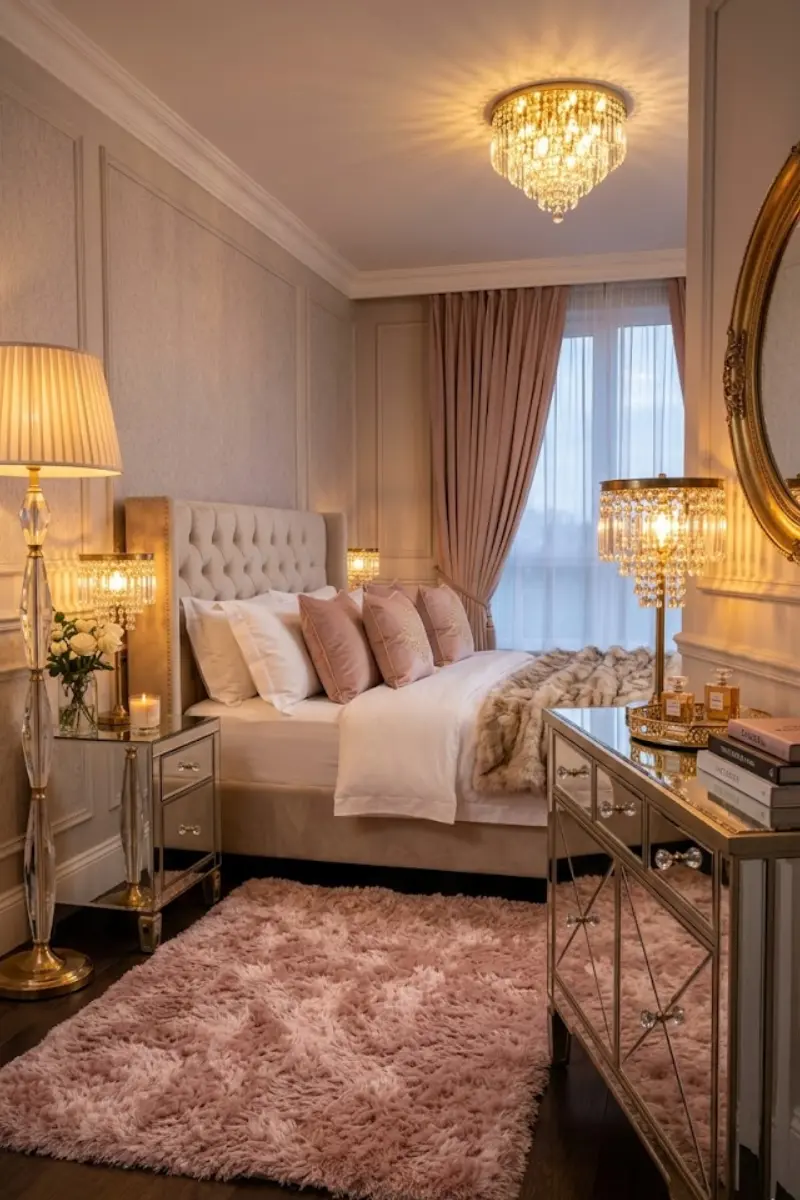
High-pile shag rugs are the texture play that makes a bedroom feel like a boutique hotel. That first barefoot step in the morning is the whole point. Pile height of 1.5 inches or more gives you the sink-in softness that reads as luxury.
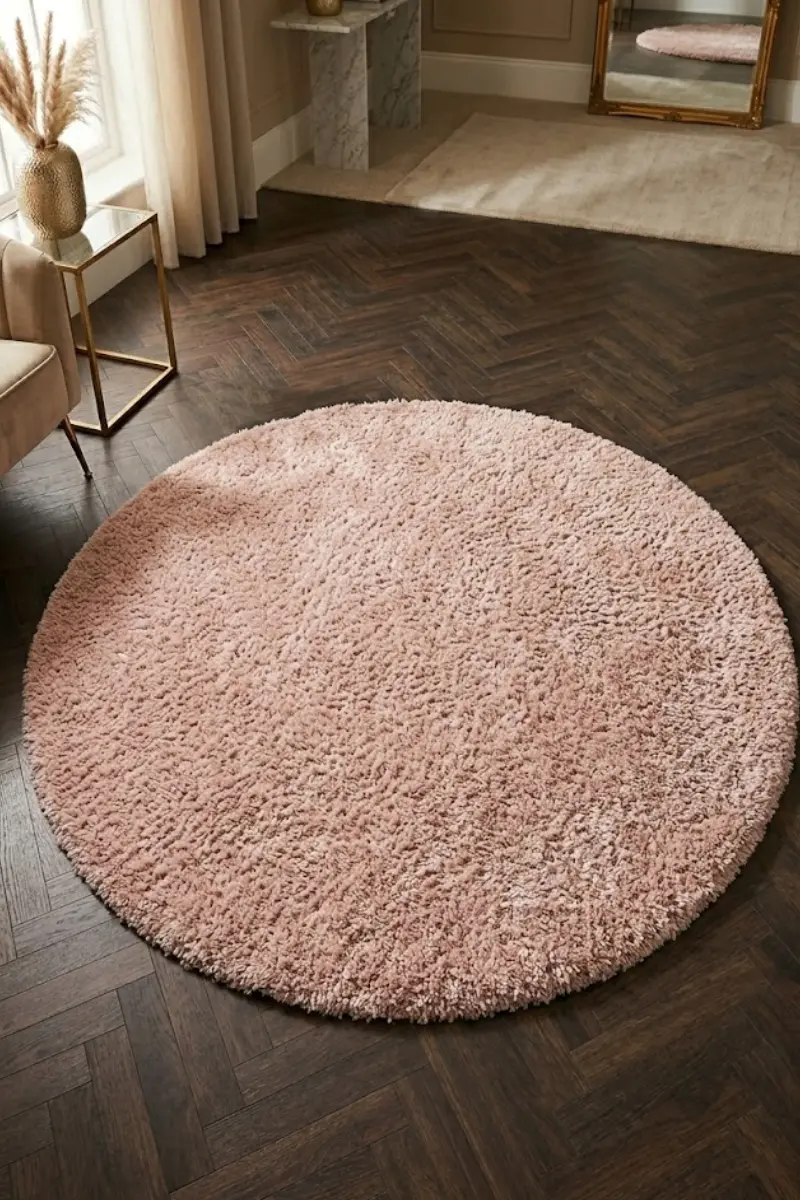
Round rugs work in corners, under circular tables, and beside beds where a rectangle would cut off awkwardly. They soften spaces that have too many hard angles. A round rug under a round dining table is one of those design moves that looks obvious in retrospect.
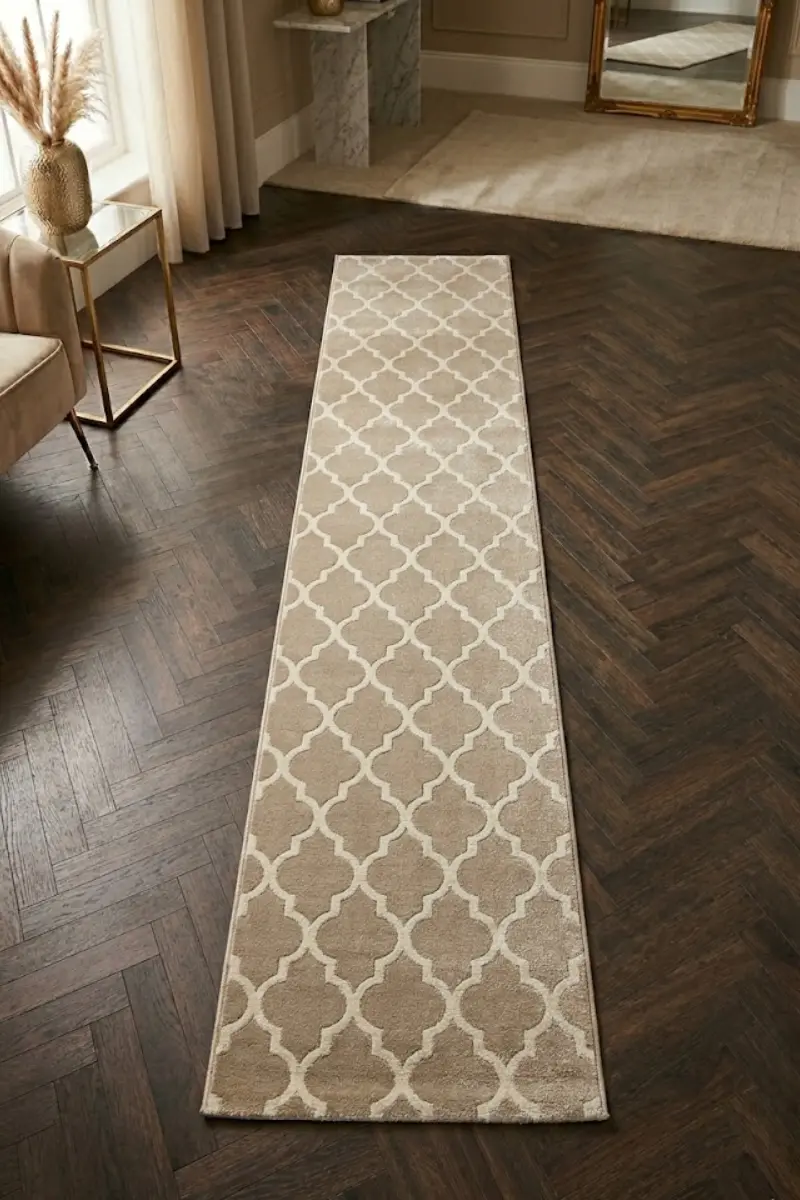
Runners do two things well: they protect high-traffic flooring and they make long, narrow spaces feel finished. An entryway without a runner looks unfinished. A hallway with the right runner looks designed. Standard runner width is 2 to 2.5 feet. Anything wider starts looking like a small area rug.
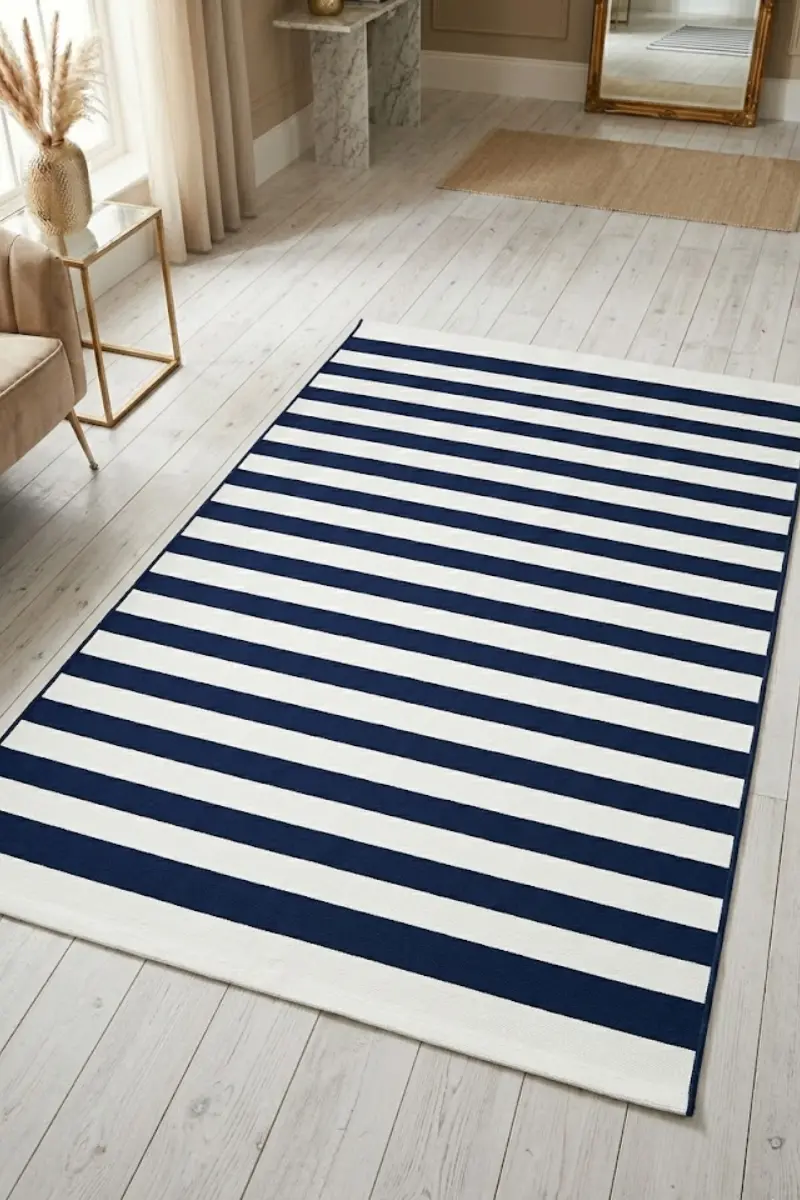
Flatweave rugs have no pile. They lay completely flat, making them the easiest to clean and the most practical for high-traffic zones. Jute, cotton, and kilim-style flatweaves bring texture without adding height. They work especially well under furniture because chair legs do not snag.
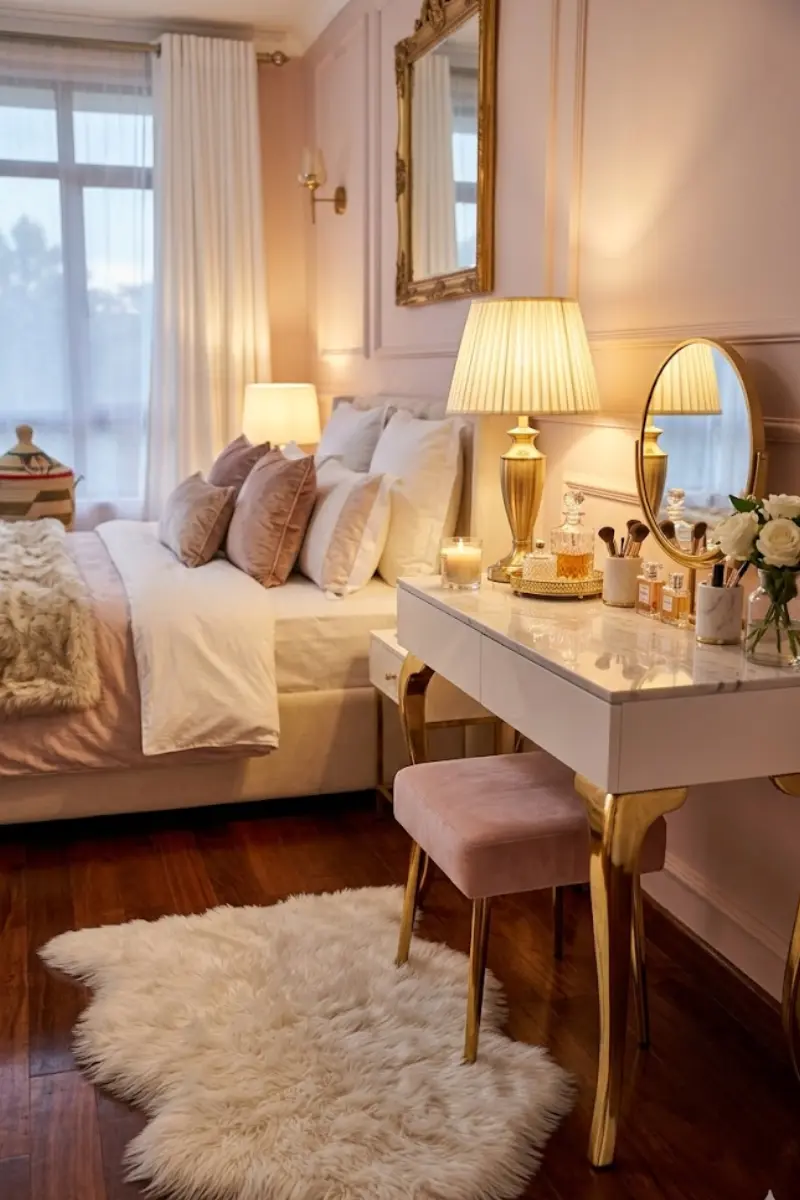
Faux fur rugs are a pure luxury texture statement. They are not meant to anchor a whole room. They are meant to be one deliberate moment in it. Beside the bed, in front of a vanity, or layered over a flatweave, they add a level of softness that photographs beautifully.
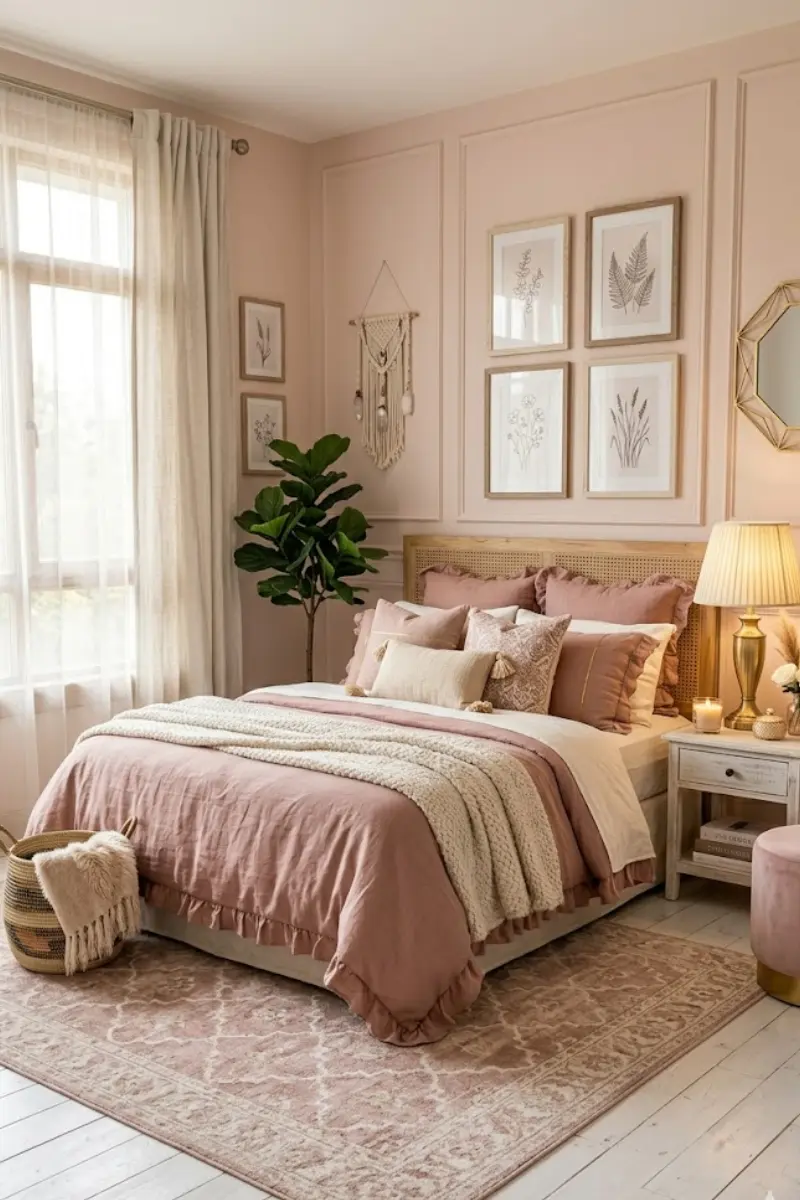
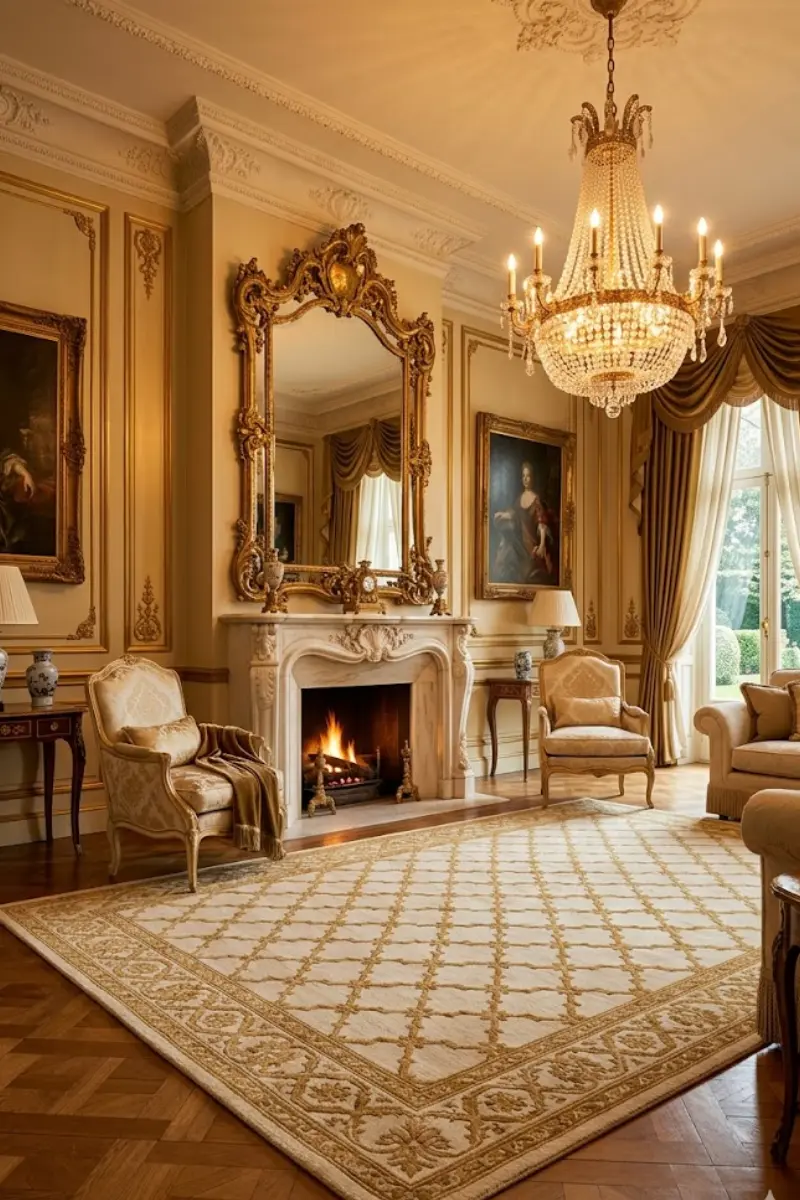
Trellis and quatrefoil patterns are the most versatile printed rugs for glam interiors. The repeat geometry scales well. A 5x8 reads just as clearly as a 9x12. Dusty rose and champagne colourways translate the pattern from traditional to contemporary in seconds.
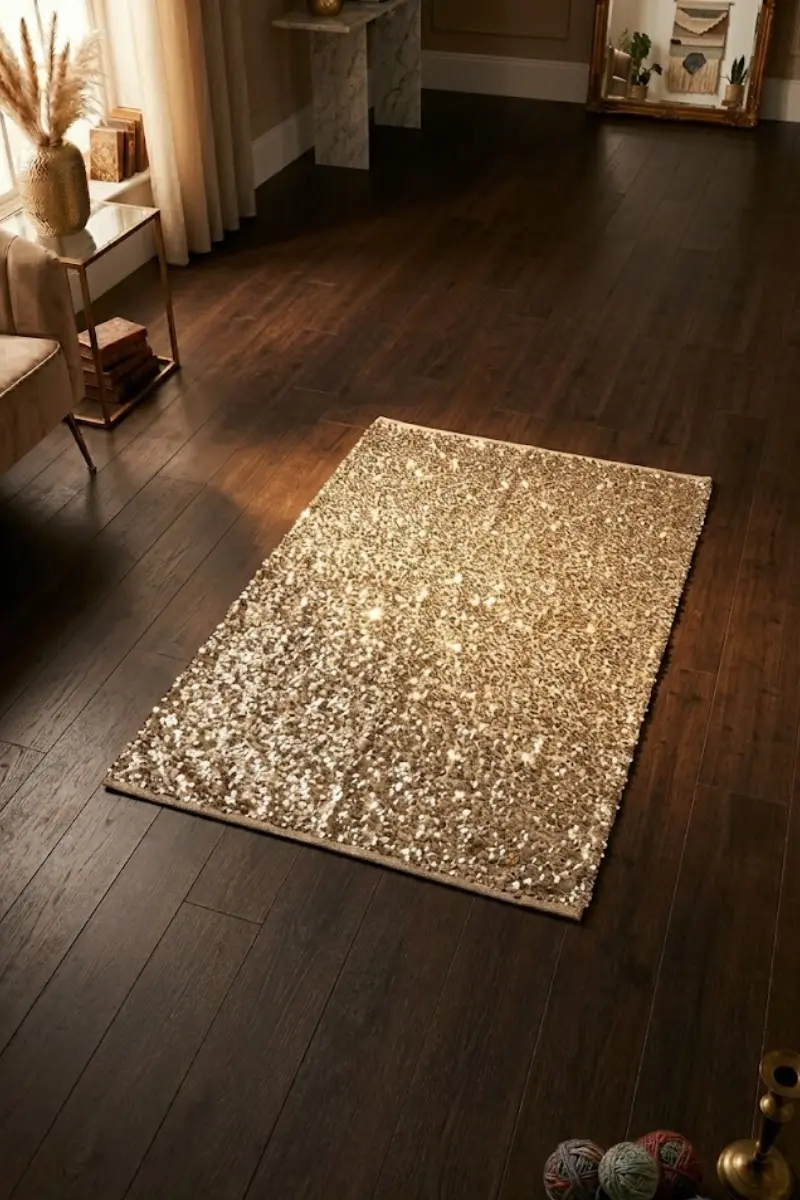
Sequin and metallic-thread rugs are a specific tool: they are for rooms that need one more layer of shimmer. Not a room workhorse, but a punctuation mark. Small scale, 2x3 or 3x5, keeps them from overwhelming the space.
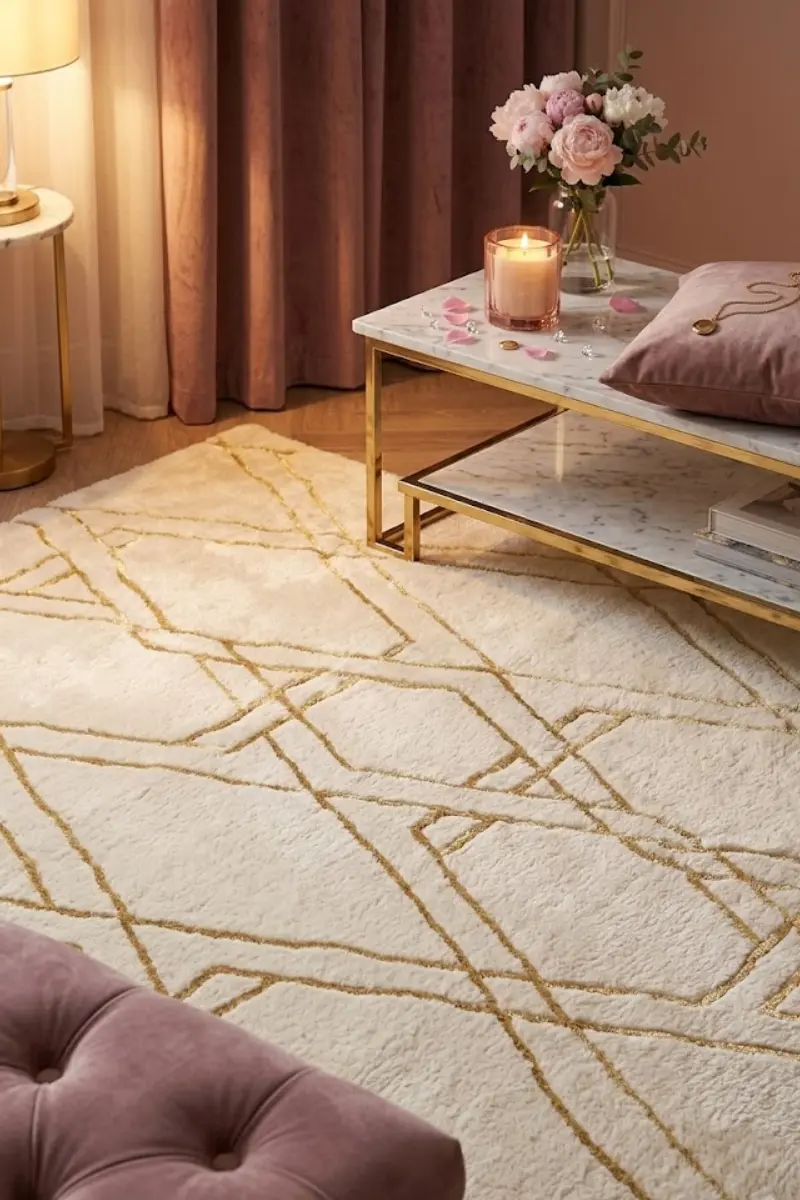
The right area rug anchors furniture and softens hard floors. Here are 8 plush, metallic, …
Read guide →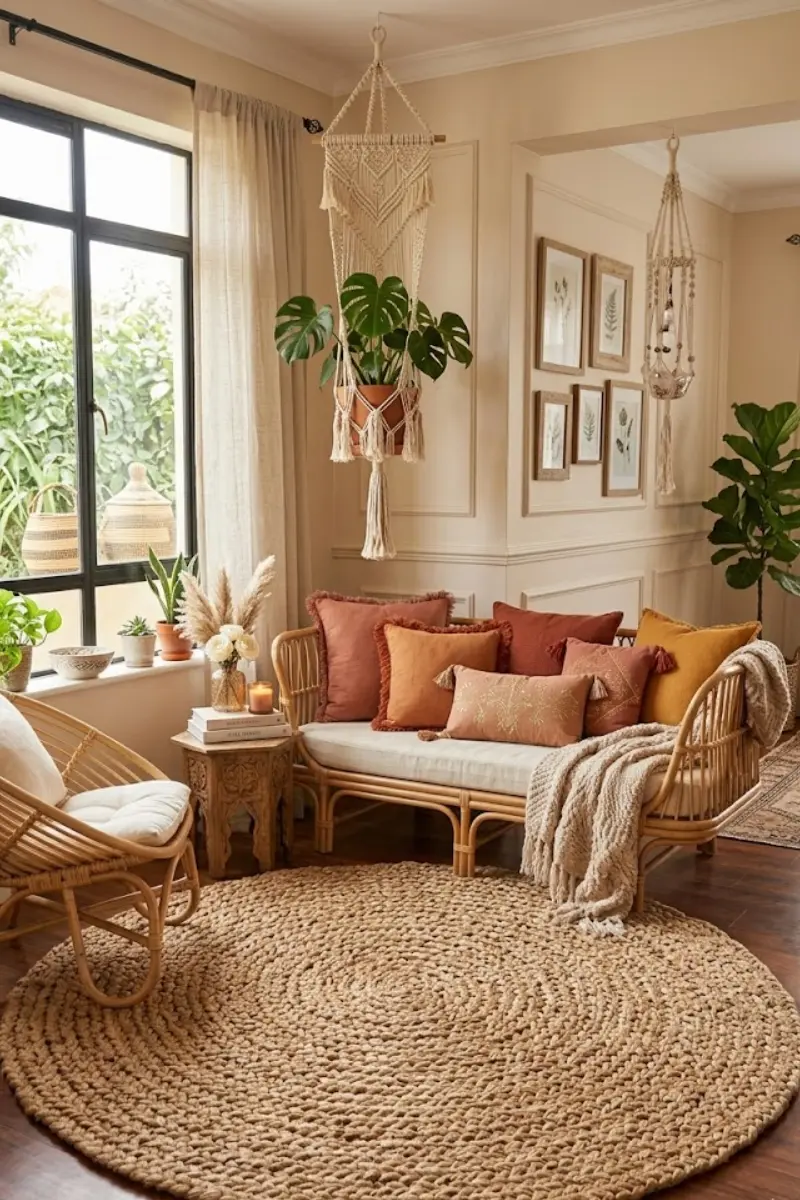
No rug is labeled coastal and jute at once, but jute's natural texture is exactly what …
Read guide →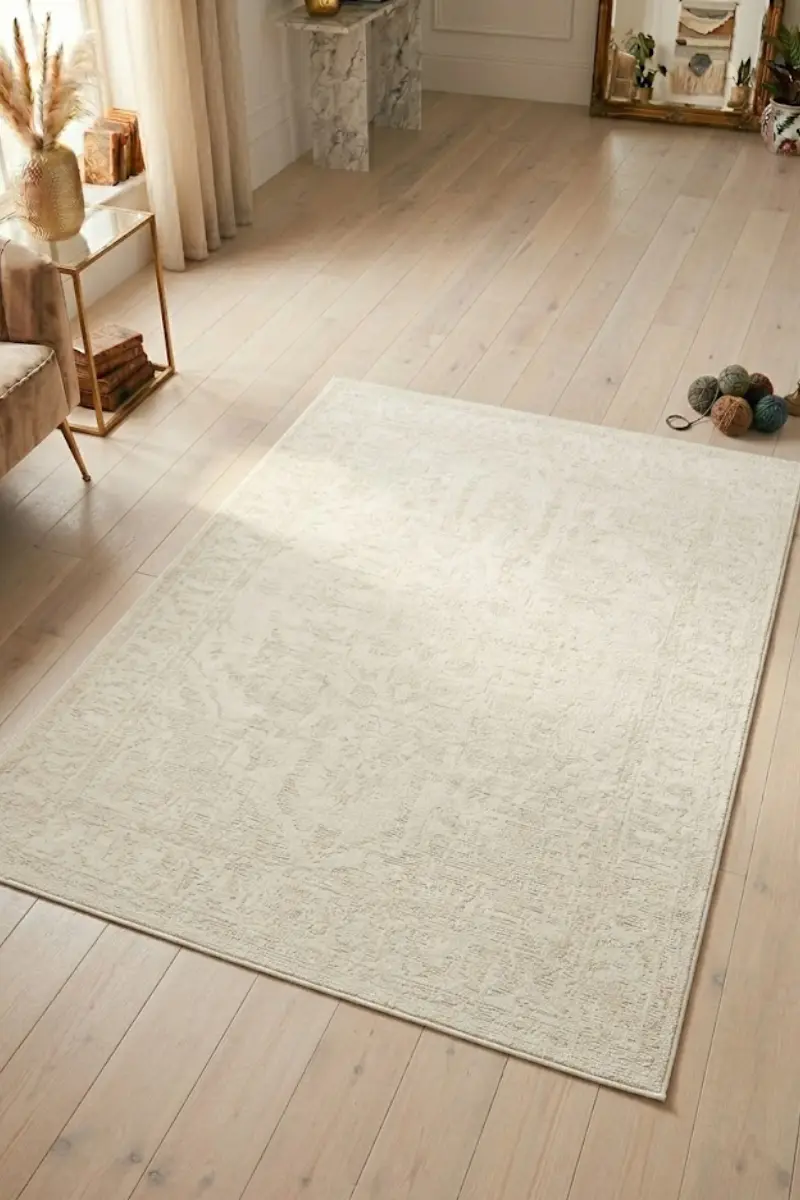
Scandinavian rugs go quiet and low-pile; boho rugs go textured and warm-toned. The answer …
Read guide →Types, styles, sizing rules, and our complete pick list, all in one place.
Browse All Rugs →