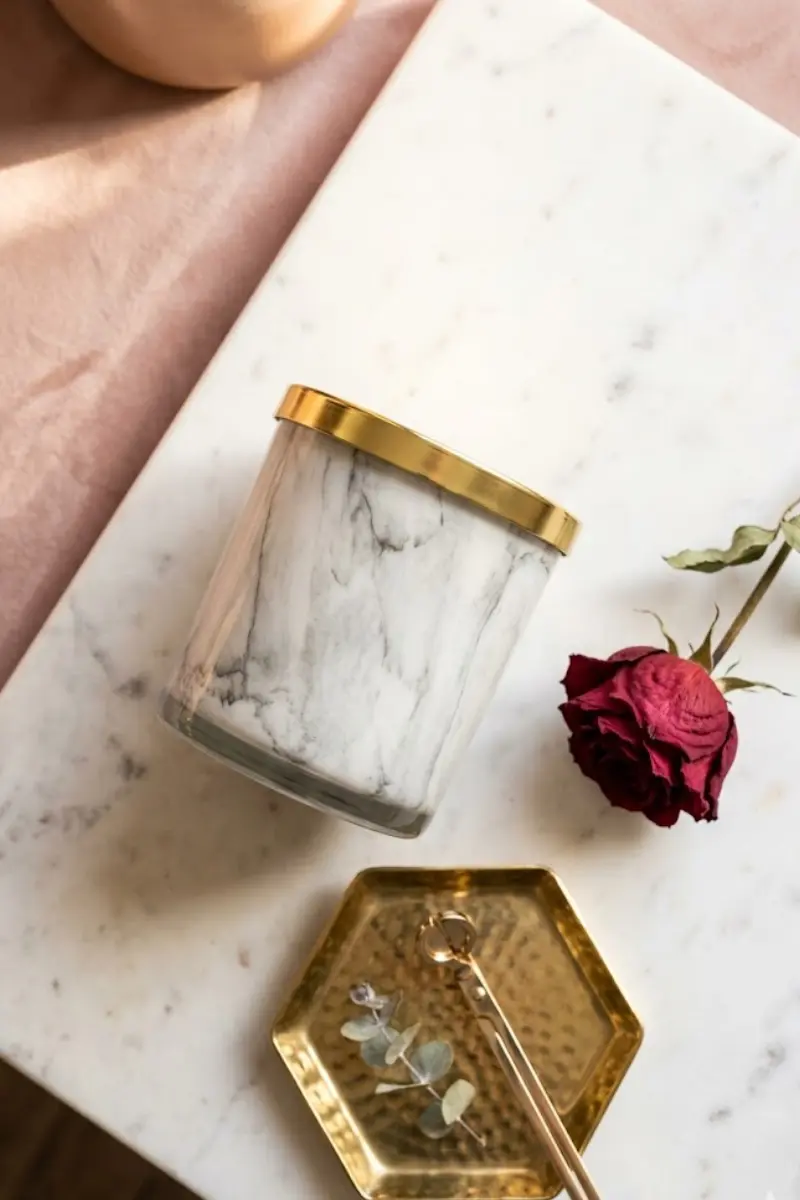
Soy wax burns cooler, slower, and with measurably less soot than paraffin — an 8oz soy candle runs 45 to 60 hours versus 35 to 50 for paraffin at the same size, and produces a fraction of the black soot residue. Neither is dangerous in normal household use, but soy is the better choice if you’re sensitive to smoke or burn candles daily.
This post contains affiliate links. If you buy through our links, we may earn a small commission at no extra cost to you. See our full disclosure.
The Actual Differences
| Soy Wax | Paraffin Wax | |
|---|---|---|
| Burn time (8oz) | 45–60 hours | 35–50 hours |
| Burn temperature | Cooler | Hotter |
| Soot output | Low | Higher |
| Scent throw (hot) | Moderate | Strong |
| Source | Plant-based (soybean) | Petroleum by-product |
| Price | Slightly higher | Slightly lower |
Paraffin burns hotter, which means it releases fragrance oil more aggressively — this is why paraffin candles often smell stronger once lit, even at the same fragrance percentage as a soy candle. The trade-off is more soot and a shorter burn time.
Is Paraffin Actually Unsafe?
No, not in ordinary household use. The “paraffin is toxic” claim that circulates online overstates real-world risk — the soot and any trace compounds released during normal candle burning are well below levels associated with health effects in the studies this claim traces back to. The genuine, well-supported difference is soot: paraffin produces visibly more of it, which can discolor walls and glass vessels over months of regular burning and may bother people with asthma or smoke sensitivity.
When Paraffin Is Actually the Better Choice
If scent throw is your top priority — you want a candle you can smell from across an open living room — paraffin or a soy-paraffin blend will outperform pure soy at the same price point. Most premium branded candles use a blend specifically to get soy’s cleaner burn with paraffin’s stronger throw.
When Soy Is the Better Choice
Daily burners, small or enclosed rooms, anyone with smoke sensitivity, and bedrooms specifically — soy is the safer default across all four. The longer burn time also makes it the better value per hour, even though the upfront price is usually a few dollars higher.
Beeswax: The Third Option
Beeswax burns the cleanest and longest of the three — 60 to 80 hours per comparable size — but holds fragrance oil poorly, so beeswax candles are usually lightly scented or unscented, valued more for the natural honey undertone than for a strong fragrance throw.
FAQ
Is paraffin wax bad for your health? Not in normal household use — the widely circulated claim that paraffin candles are toxic overstates real-world risk based on the actual studies it references. The genuine difference is soot output, which is measurably higher with paraffin and can matter for people with smoke sensitivity or asthma.
Which wax type burns longer? Beeswax burns longest (60–80 hours per comparable size), soy is next (45–60 hours per 8oz), and paraffin burns shortest (35–50 hours per 8oz) at equivalent sizes.
Which wax type has the strongest scent throw? Paraffin, because it burns hotter and releases fragrance oil more aggressively. This is why many premium candles blend soy and paraffin — clean burn from the soy, stronger throw from the paraffin.
See our full candles buying guide for picks by room and style.
Ideas & Inspiration
You can get a real hand-poured jar candle with genuine fragrance oil for under $25 — just …
Read guide →
Terracotta, raw ceramic, and beeswax carry the boho candle look — not woven baskets and …
Read guide →Soy wax burns cooler, longer, and with less soot than paraffin. Here's the real comparison …
Read guide →