Mount vanity lights 75 to 80 inches from the floor, centered above the mirror, and never inside a shower or tub's direct splash zone unless the fixture is rated for wet locations.
Bathroom lighting follows real electrical safety codes that don’t apply anywhere else in the house, which is why the wrong fixture here is a bigger mistake than in a bedroom or living room.
Mount vanity lighting at 75 to 80 inches, centered above the mirror, in a 3000K to 3500K bulb for accurate skin tones.
Keep anything not rated for wet locations at least 3 feet from a tub or shower.
This page covers vanity height, wattage, and safe placement for every bathroom layout.
Types of Lamps
Not all lamps work the same way in a bathroom space. Here's how the main types differ.

Floor Lamps
Tall freestanding lamps that provide ambient or task lighting. The most versatile lamp type. Works in any room with enough floor space. Arc floor lamps create a dramatic statement; torchiere floor lamps bounce light off the ceiling for soft ambient glow.
Table Lamps
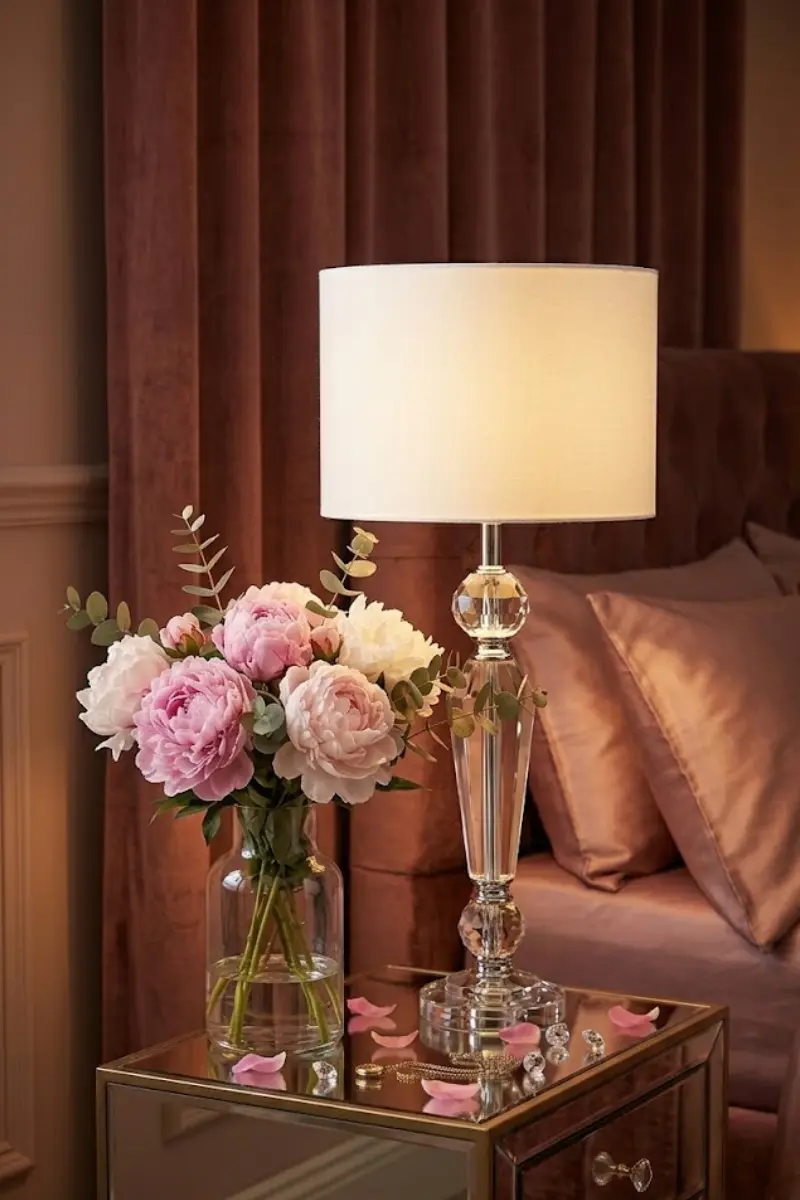
The workhorse of glam lighting. Designed for bedside tables, console tables, and desks. The key is proportion. The lamp should be roughly 1.5× the height of the surface it sits on. Crystal and gold bases are the signature of the glam look.
Pendant Lights
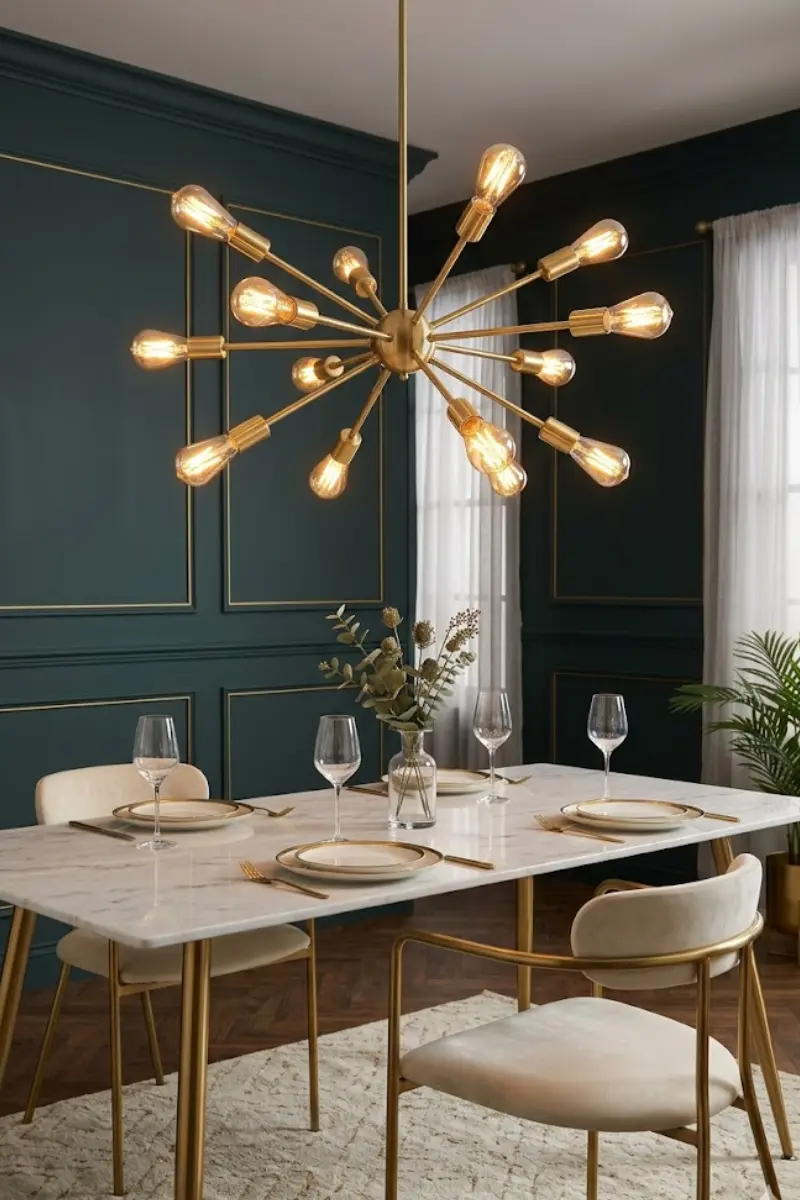
Hang from the ceiling and create a focal point in any room. Single pendants work over kitchen islands and reading nooks. Clustered pendants make a dramatic statement over dining tables. Gold and brushed brass finishes are the most popular for glam interiors.
Chandeliers
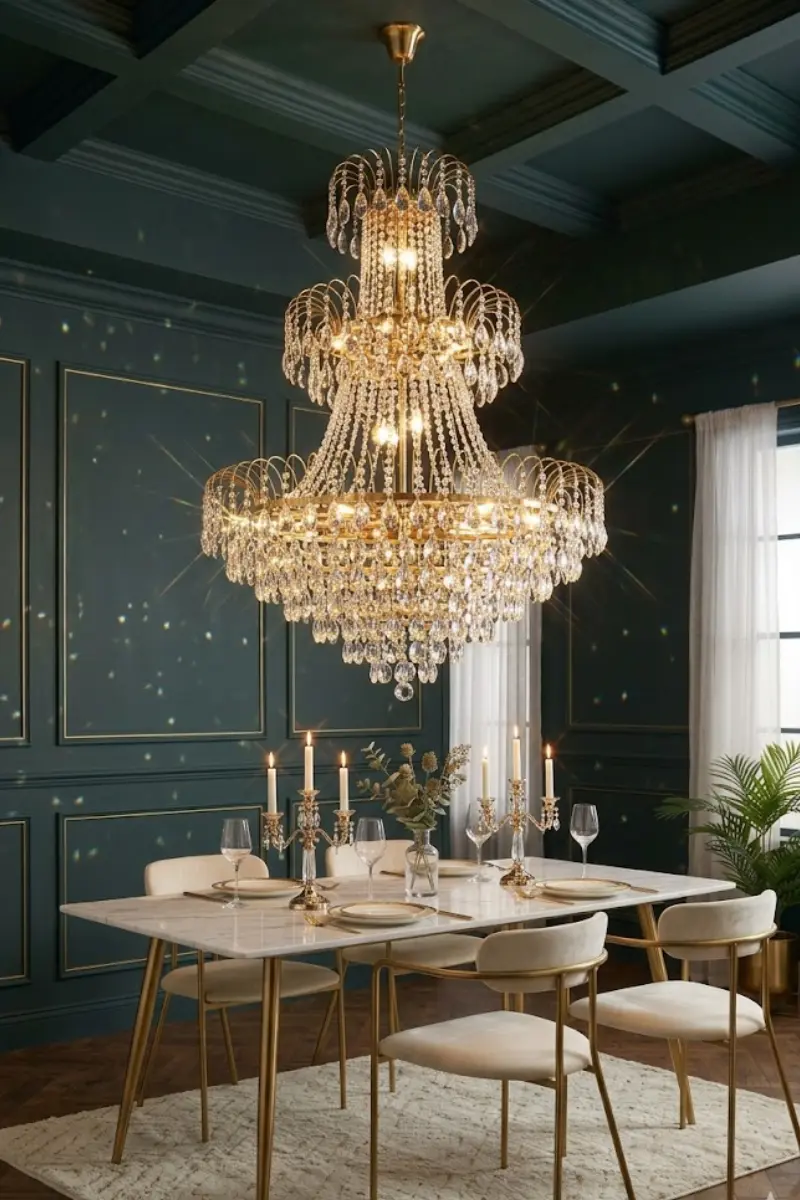
The ultimate glam statement piece. A chandelier defines the entire aesthetic of a room. Crystal chandeliers refract light into thousands of points, creating that signature luxury sparkle. Size is critical. Too small and it disappears; too large and it overwhelms.

Sconces
Wall-mounted lights that work as accent lighting and space-savers. Bedside sconces free up the nightstand surface; entryway sconces frame a mirror or artwork. Plug-in sconces are the easiest to install. No electrician required.
Browse All Bathroom Lamps
Ideas & Inspiration
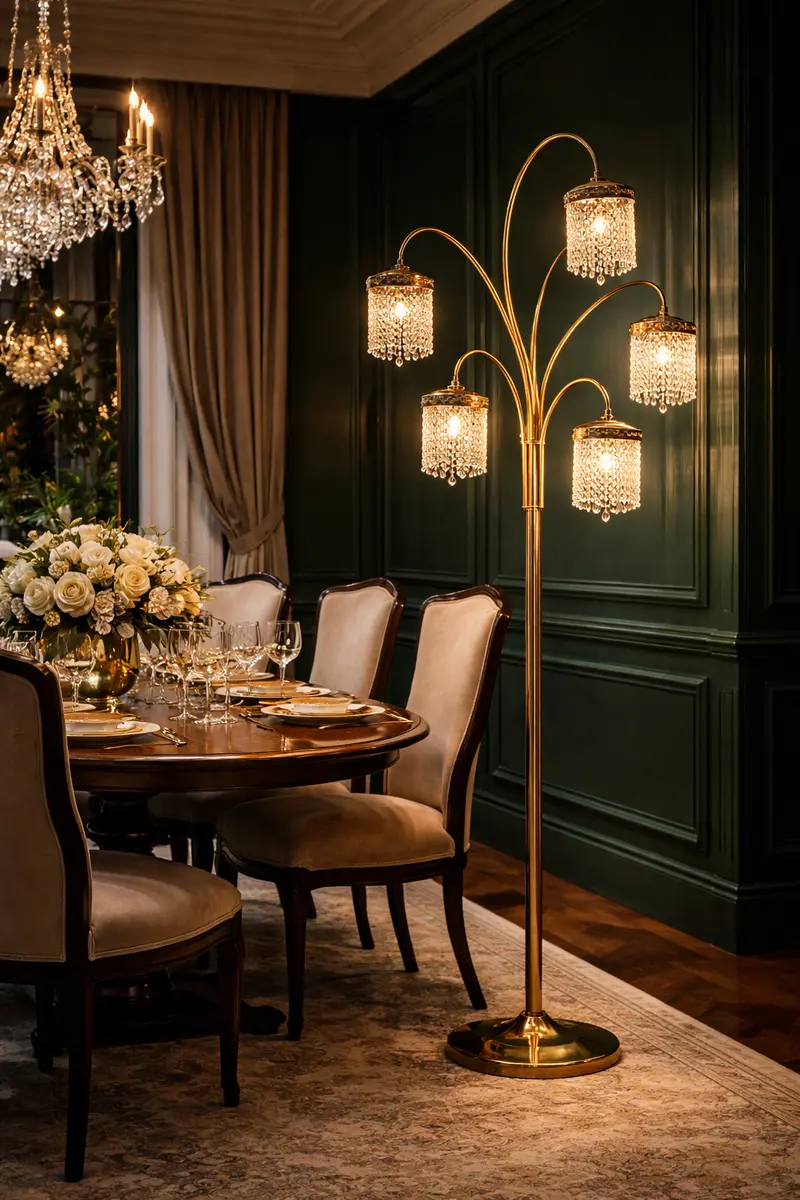
Discover how crystal chandelier floor lamps bring overhead ballroom sparkle to living …
Read guide →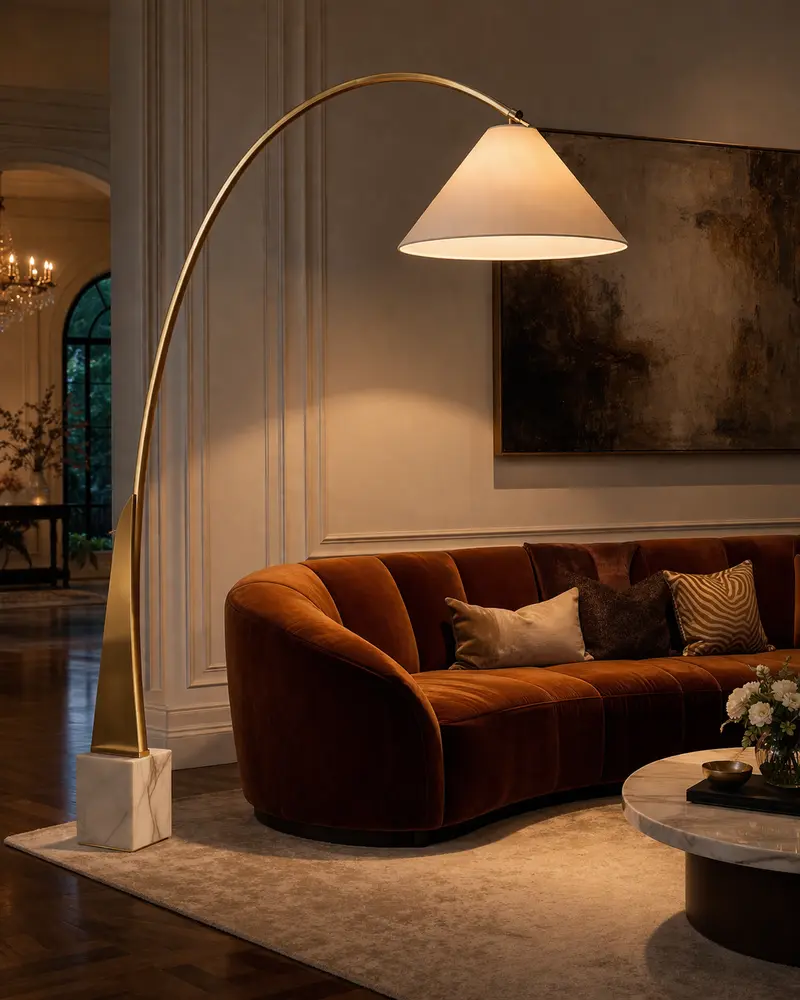
Recessed ceiling lights can leave rooms feeling sterile. Here are 7 statement arc, …
Read guide →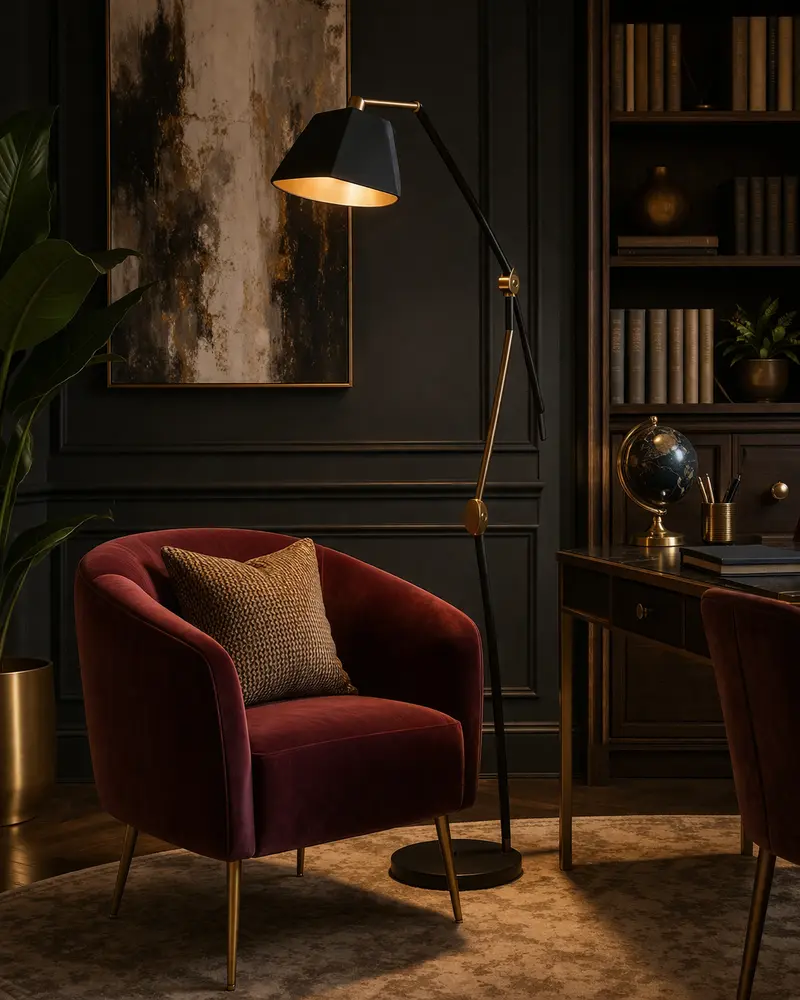
Eight glam home office picks from $24 to $280, chosen to survive a video call: lighting …
Read guide →Frequently Asked Questions
How high should bathroom vanity lights be mounted?
Can I put a regular lamp in a bathroom?
What wattage is best for a bathroom vanity?
Should bathroom lighting be warm or cool white?
Want the Full Lamps Guide?
Types, styles, sizing rules, and our complete pick list, all in one place.
Browse All Lamps →