A bedroom that looks styled but smells like nothing (or worse, like the day you just had) undoes half the wind-down effect before you’ve even climbed into bed.
Lavender, sandalwood, and palo santo are the scents actually linked to lower heart rate and calmer breathing in sleep research, and here are five real ways to get them into the room, including options you can safely leave running while you sleep.
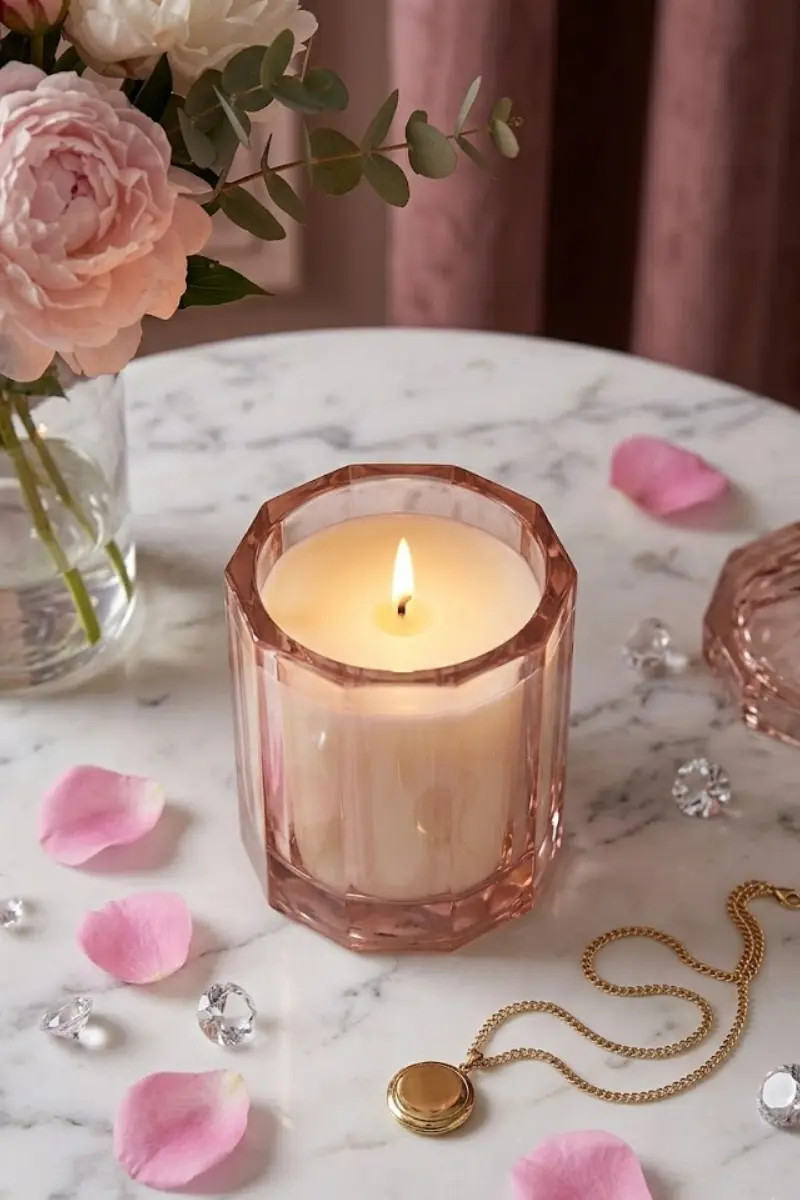
Blush Rose Crystal Candle Jar: $22–$42
This is the one to start with.
Rose is a calming scent without tipping into “flowery enough to keep you awake,” the soy wax burns clean with no black marks on the jar, and at under $25 it’s an easy first candle to test whether a scented wind-down routine actually works for you before spending more.
- Soy wax, blush glass jar with a crystal charm detail
- Burns clean, jar stays display-worthy after the wax is gone
- Best for: a first bedroom candle, gifting
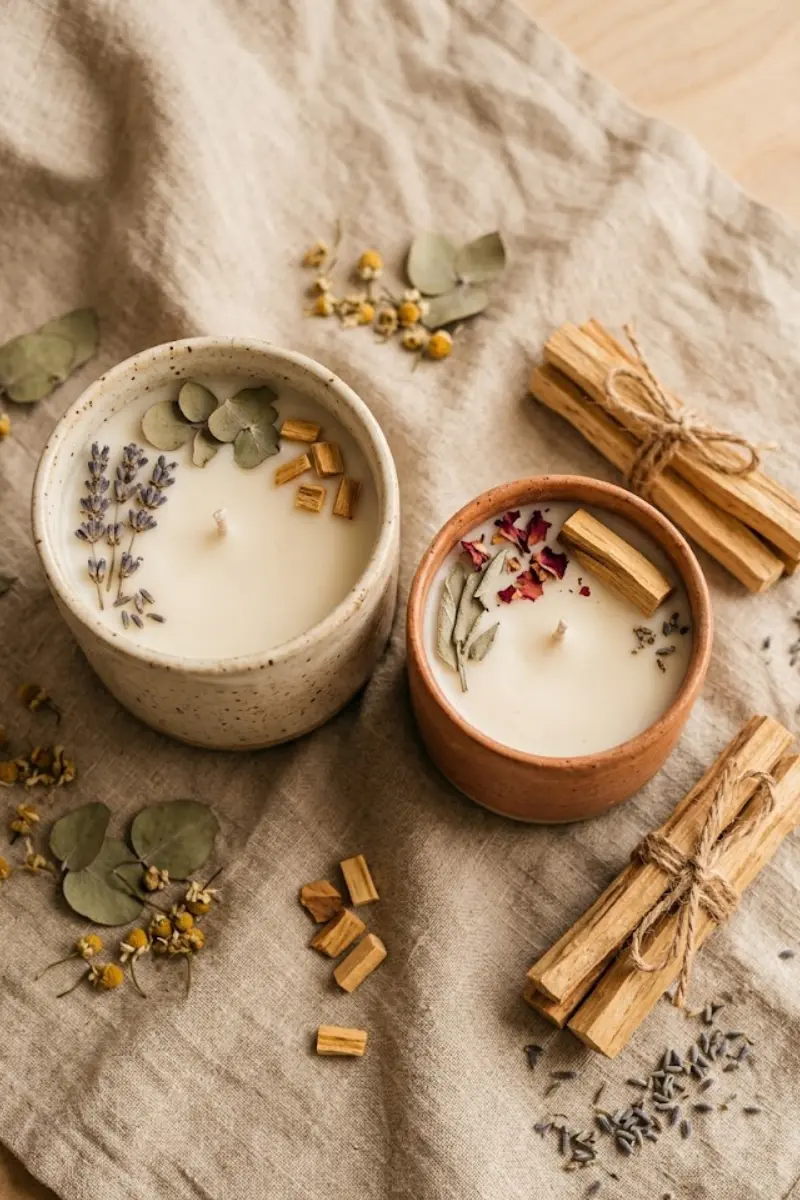
1. Palo Santo Aromatherapy Soy Candle Set: $35–$65
Palo santo and sandalwood read as grounding rather than sweet, which makes this the pick if lavender feels too floral for you.
It comes as a set of two, so one lives on the nightstand and the other moves to a reading chair or bathroom without you needing to buy twice.
- Two candles, earthy ceramic vessels
- Sandalwood and palo santo scent profile
- Best for: readers who find lavender too floral
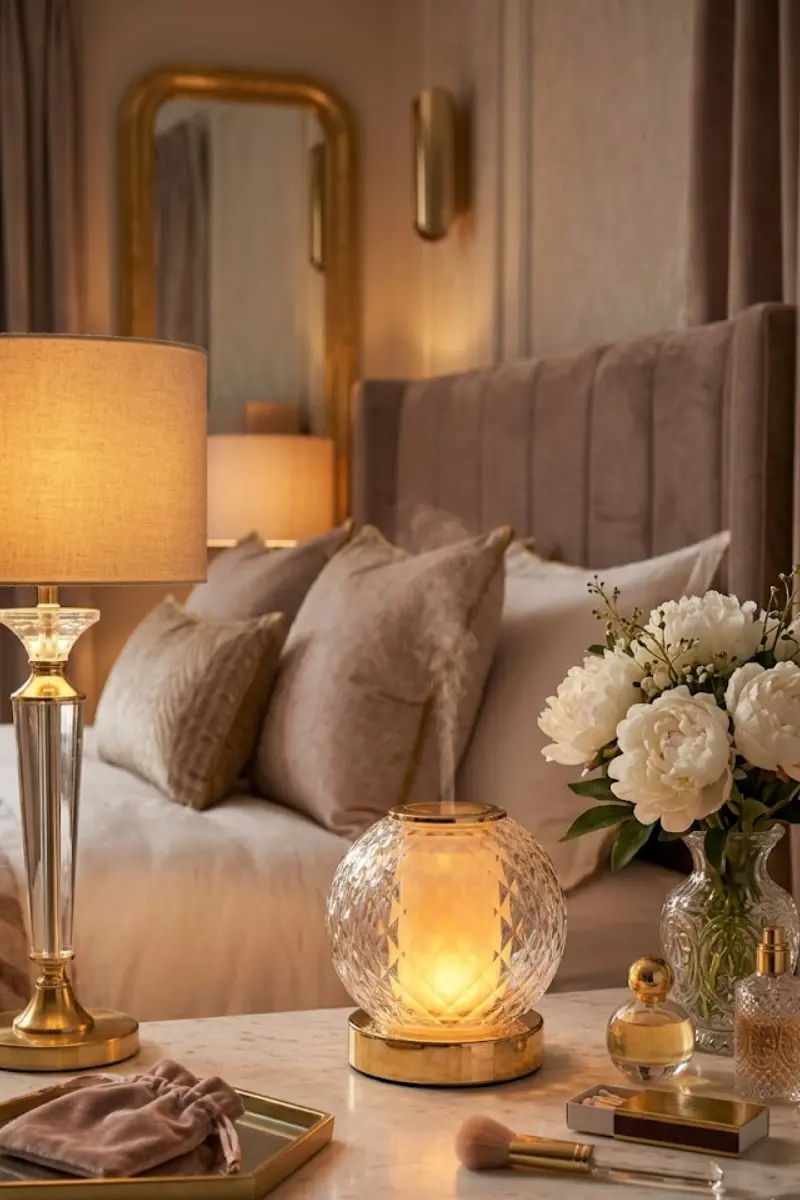
2. Crystal Aura Ultrasonic Electric Diffuser: $175–$260
Zero open flame means this is the one you can actually leave running while you fall asleep, no 30-minute countdown to remember.
The ultrasonic mist covers a full bedroom properly (weak diffusers just don’t), and the ambient LED glow does double duty as a nightlight.
- Ultrasonic mist, ambient LED glow
- No flame, no supervision needed overnight
- Best for: anyone who wants scent running while they actually sleep
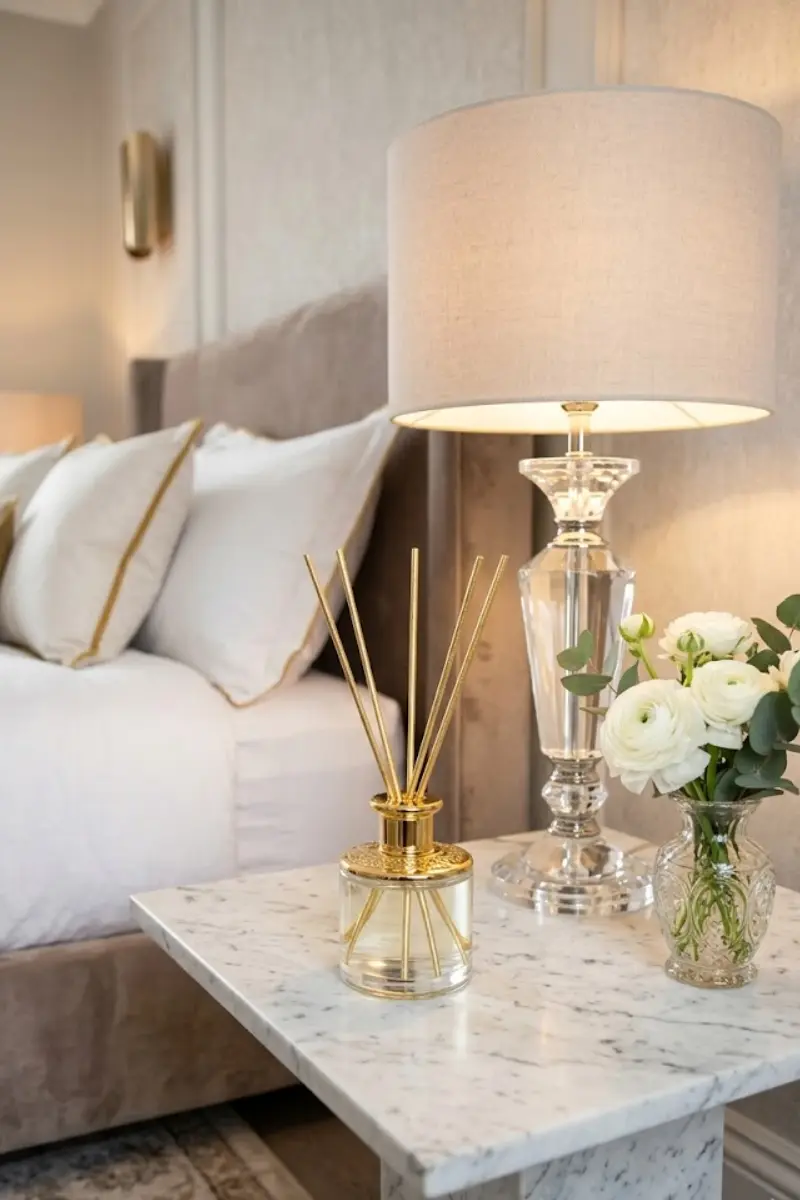
3. Gold Reed Diffuser Luxury Home Scent Set: $55–$89
The lowest-maintenance option on this list: flip the reeds once a week and the scent holds for weeks, not days, because the fragrance oil is denser than what’s in a budget diffuser.
The gold reeds and cap sit on a dresser as real décor even when you’re not thinking about the scent at all.
- Reed diffuser, gold-cap bottle
- Weeks of scent per refill, weekly reed flip
- Best for: set-it-and-forget-it scent with zero daily effort
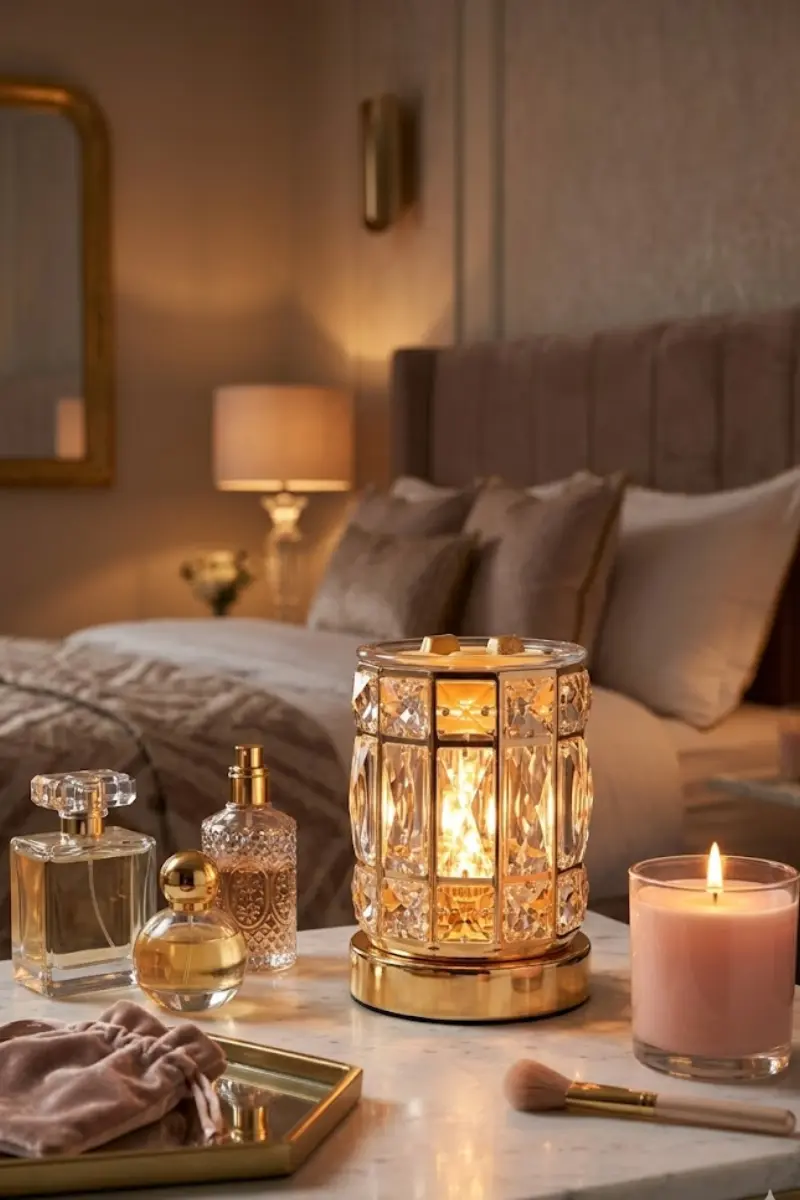
4. Luxury Crystal Glass Wax Melt Warmer Set: $165–$249
Scent from a wax warmer fills a room faster than a reed diffuser, since the wax is actively heated rather than slowly evaporating, and there’s still no flame to extinguish before bed.
The crystal glass and gold base look like a genuine object on a nightstand, not just an appliance.
- Electric wax warmer, crystal glass with gold base
- Fast scent throw, no flame
- Best for: households with kids or pets where any open flame is a hard no
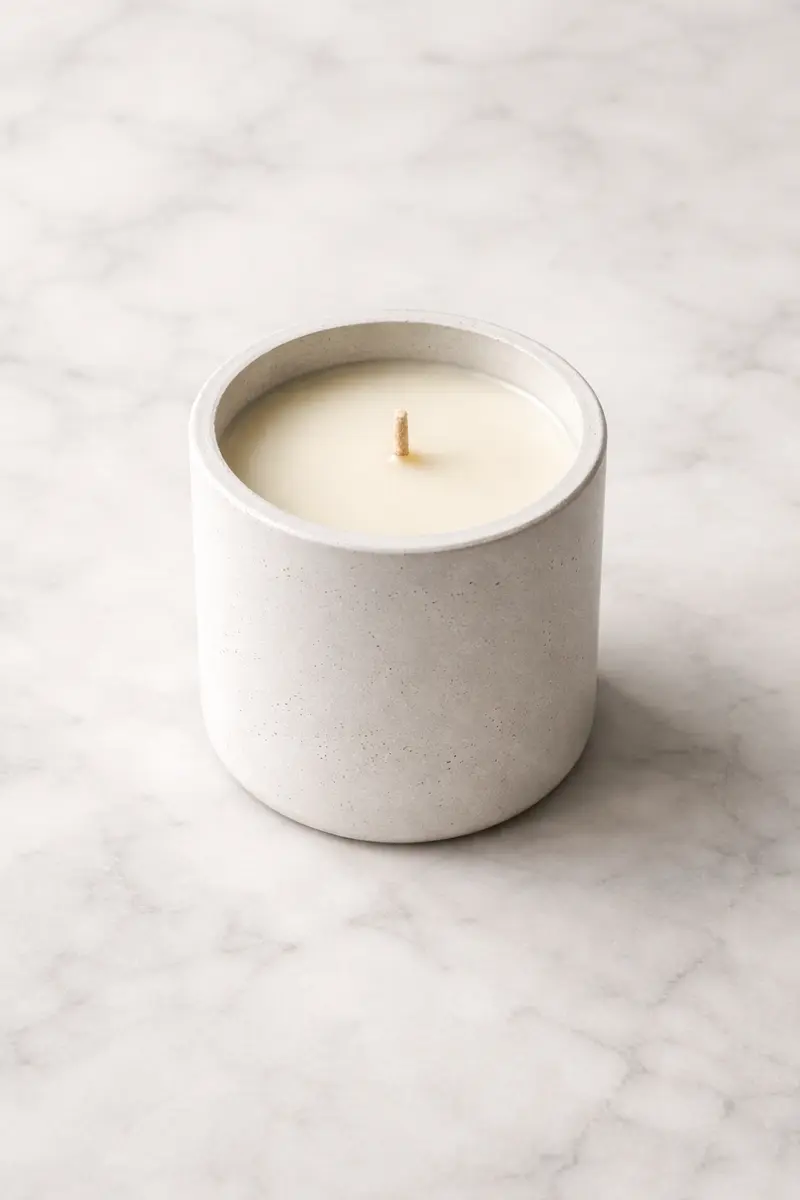
5. White Minimalist Concrete Soy Candle: $22–$42
For anyone who finds rose or sandalwood too much, this is the quiet option: a woody, unfussy scent in a matte concrete vessel that reads more architectural object than candle.
It’s also the pick that survives a decor refresh, since the vessel gets reused as a small planter or catchall once the candle’s gone.
- Matte concrete vessel, woody scent
- Reusable vessel after the candle is spent
- Best for: anyone who wants scent without a strong floral or sweet note
The 30-Minute Rule for Anything With a Flame
If you pick one of the two open-flame options above, extinguish it at least 30 minutes before you actually plan to fall asleep.
This isn’t about the fragrance fading, a full 8oz candle still burns hot enough to be a genuine risk if left unattended near bedding while you’re unconscious.
If you want scent actively running while you sleep, the diffuser or wax warmer picks above solve that without the risk.
FAQ
Do candles actually help you sleep, or is that just marketing? Certain scents, specifically lavender, are linked in sleep research to lower heart rate and reduced anxiety before bed.
The candle itself doesn’t cause sleep; it’s part of a wind-down cue, similar to dimming lights.
The scent matters more than the format (candle vs. diffuser vs. wax warmer).
Is it safe to burn a candle while sleeping? No. Extinguish any lit candle at least 30 minutes before you plan to fall asleep.
If you want scent that runs overnight safely, use a reed diffuser or an electric ultrasonic diffuser instead, both of which have zero open flame.
What’s the best candle scent for a bedroom? Lavender, sandalwood, or palo santo.
All associated with calm rather than energy.
Avoid citrus, mint, and peppermint in a bedroom; those scent families read as energizing, which works against a wind-down routine.
See the full room-by-room breakdown in our candles buying guide.
Add us to your preferred sources to see our latest room styling guides and luxury decor edits first in your Google feed.
Ideas & Inspiration
Lavender, sandalwood, and palo santo genuinely support winding down before bed. Five real …
Read guide →
You can get a real hand-poured jar candle with genuine fragrance oil under $25. Check burn …
Read guide →
Terracotta, raw ceramic, and beeswax carry the boho candle look. Not woven baskets and …
Read guide →