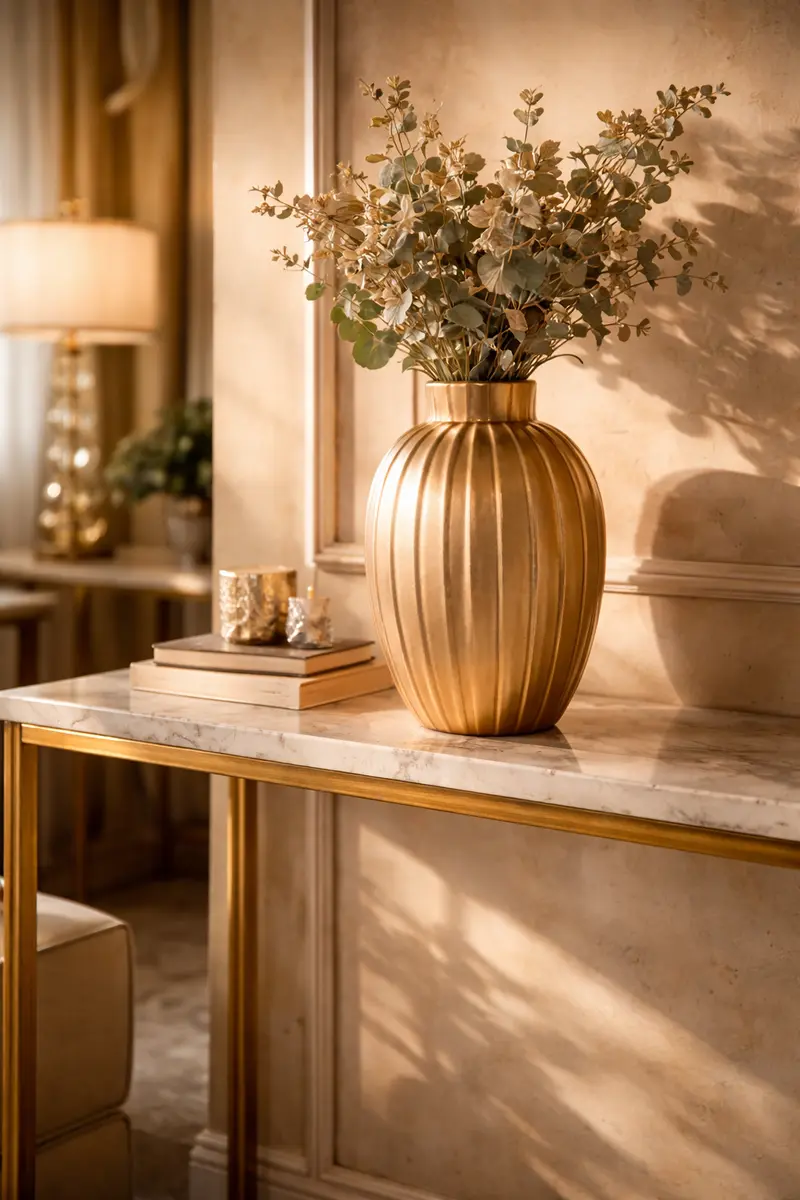
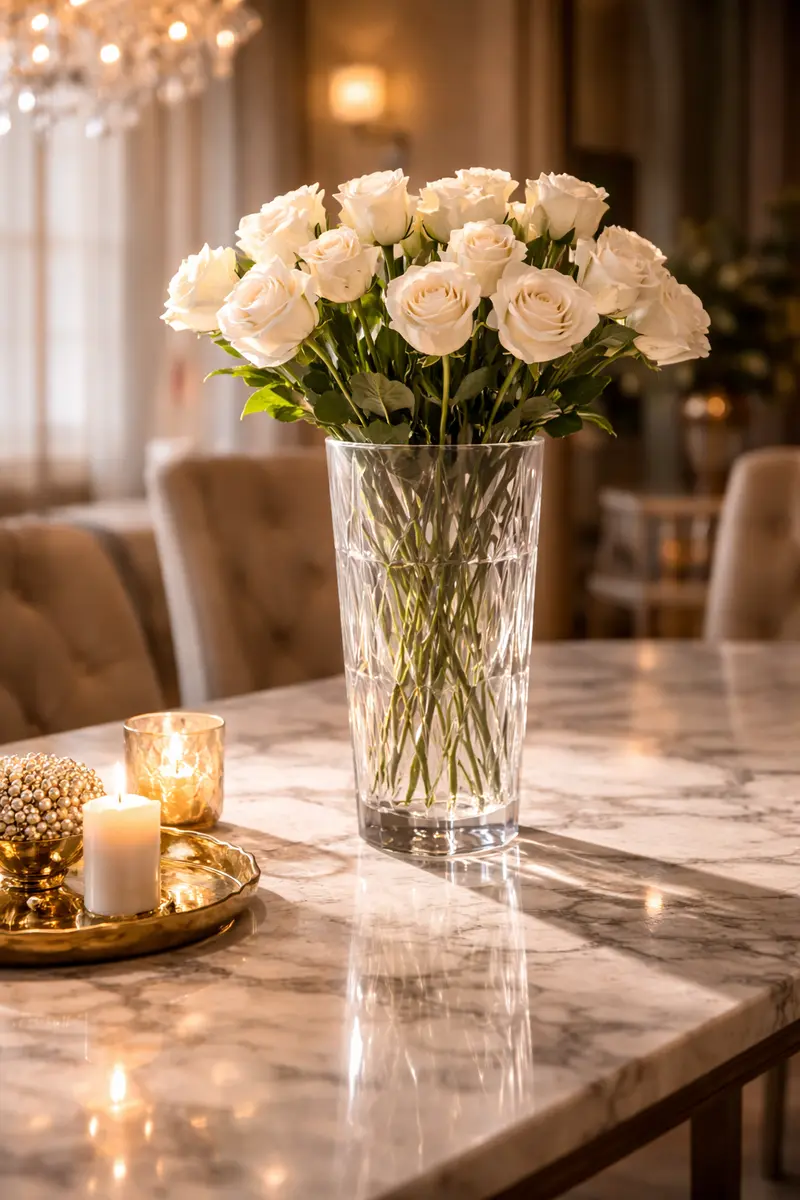
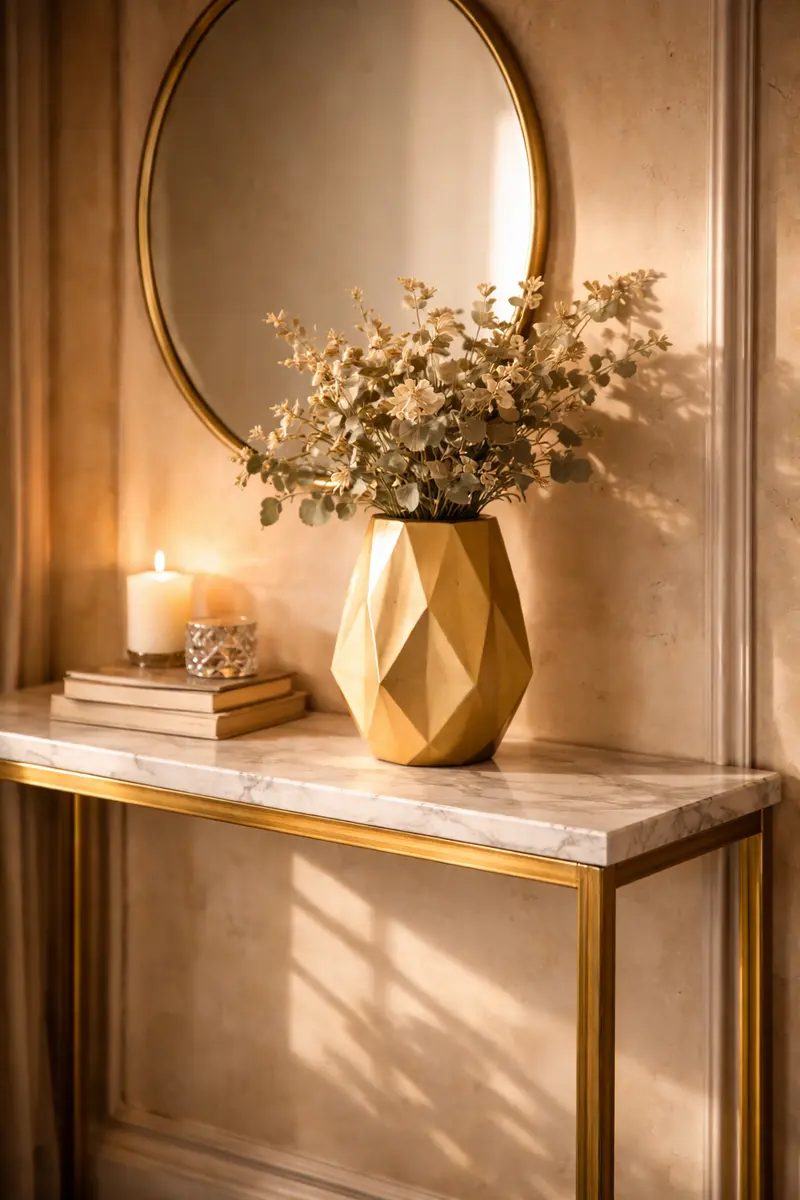
Neither is objectively better.
Ceramic reads warmer, heavier, and more substantial, while glass reads lighter and shows off the stems themselves rather than hiding them.
The actual decision comes down to whether you want the vase or the flowers to be the visual focus.
Ceramic, Glass or Metal at a Glance
| Ceramic | Glass | Metal | |
|---|---|---|---|
| Best for | Sculptural or statement pieces | Dining table centerpieces | Visual interest without committing either way |
| Hides stems and water | Yes, completely | No, the arrangement shows | Usually, most are opaque |
| Visual weight | Heavy and textured | Light | Light and reflective |
| What it does with light | Absorbs it, matte or hand-glazed | Catches and scatters it | Reflects it |
| Works empty | Yes, that is its strength | Less well, it wants stems | Yes |
| Matches a room with | Warm wood, textiles, matte finishes | Mirrors, chrome, polished stone | Either |
| Fresh flowers | Yes | Yes | Only if lined or labelled water-safe |
The mismatch is what looks wrong, not the material. Pick the column that continues what the room already has.
What Ceramic Does Better
Ceramic vases carry weight and texture that glass can’t.
A matte or hand-glazed surface adds visual interest even when the vase is empty, which matters if you want it to work as a standalone decor object rather than purely a flower holder.
Ceramic also fully hides the stems and water, which is useful if you’re using cloudy vase water or don’t want to think about changing it as often.
Ceramic wins for:
- Sculptural or statement pieces
- Boho and glam styling
- Empty display
- Any spot where the vase itself needs to carry visual weight
What Glass Does Better
Glass is the better choice when the stems are the point.
A crystal or faceted glass vase catches and scatters light in a way ceramic simply can’t, and it shows off the actual arrangement inside rather than concealing it.
Glass also reads lighter visually, which matters on a smaller surface like a dining table or a narrow console where a heavy ceramic piece can feel like too much.
Glass wins for:
- Dining table centerpieces
- Arrangements where the stems themselves are attractive
- Rooms with a lot of natural light where you want the light-catching effect
The Metal Vase Wildcard
Metal accent vases, brass, gold-finish, split the difference in a specific way: sculptural like ceramic, but lighter and more reflective like glass.
They’re the best pick if you want visual interest without commitment to either the “vase as object” or “vase as flower holder” approach, but check whether it’s water-safe before putting fresh stems directly inside; most unlined metal vases aren’t.
The Real Answer: Match the Room’s Existing Materials
If the room already has warm wood, textiles, and matte finishes, ceramic fits without introducing a jarring new material.
If the room has more reflective surfaces already, mirrors, chrome, polished stone, glass continues that language rather than fighting it.
Neither material is more “correct”; the mismatch is what actually looks wrong.
FAQ
Is ceramic or glass better for a coffee table vase? Ceramic if you want the vase to work as a standalone object even when empty.
Glass if the arrangement inside is the point and you want it visible.
Both work.
The choice depends on whether the vase or the flowers should be the visual focus.
Does glass or ceramic show water better? Glass shows the water and stem bases, which some people like for a clean, fresh look and others prefer to hide.
Ceramic fully conceals the water, which is more forgiving if you don’t change it as often as you should.
Can I put fresh flowers in a metal vase? Only if it’s labelled water-safe or comes with a glass liner insert.
Unlined metal vases will rust or discolour from standing water within a couple of weeks.
Use them for dried or faux stems instead unless water-safety is confirmed.
See the full materials breakdown in our vases buying guide.
Add us to your preferred sources to see our latest room styling guides and luxury decor edits first in your Google feed.
Ideas & Inspiration
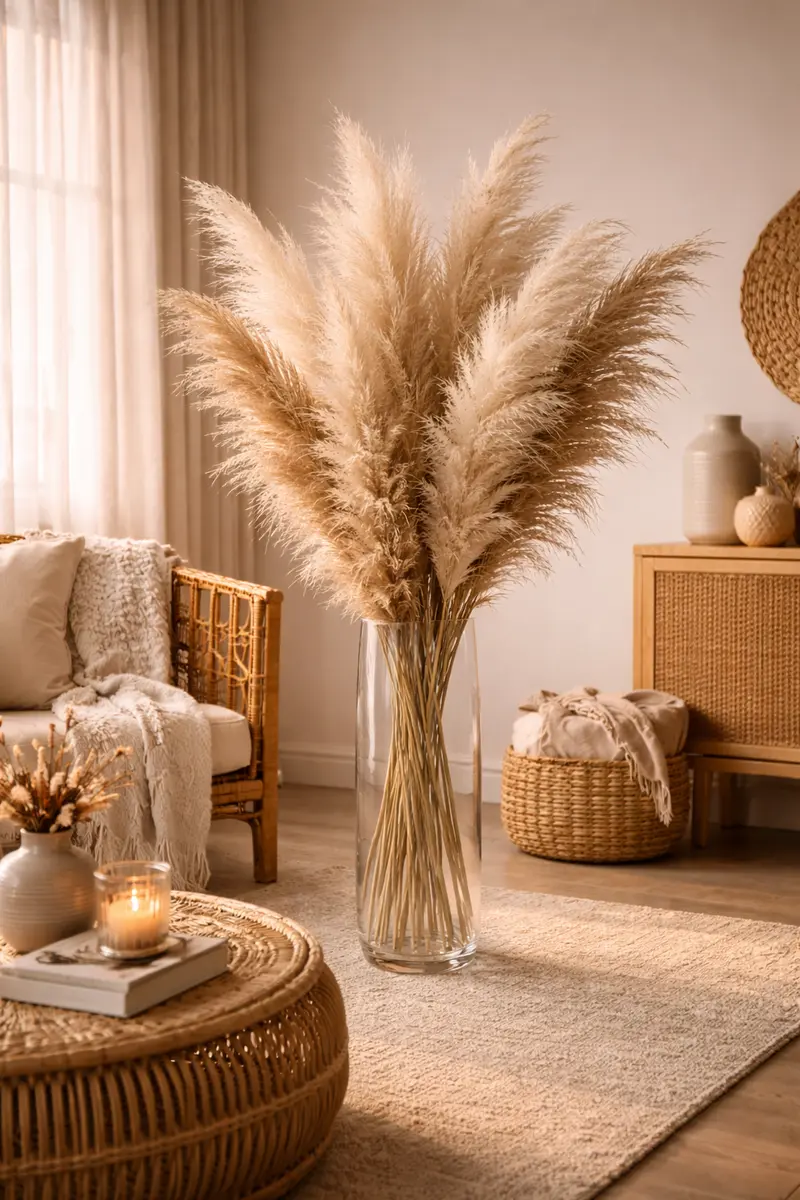
Pampas grass in a bedroom works best scaled down and paired with natural materials already …
Read guide →
Ceramic reads warmer and more substantial; glass reads lighter and shows off stems. The …
Read guide →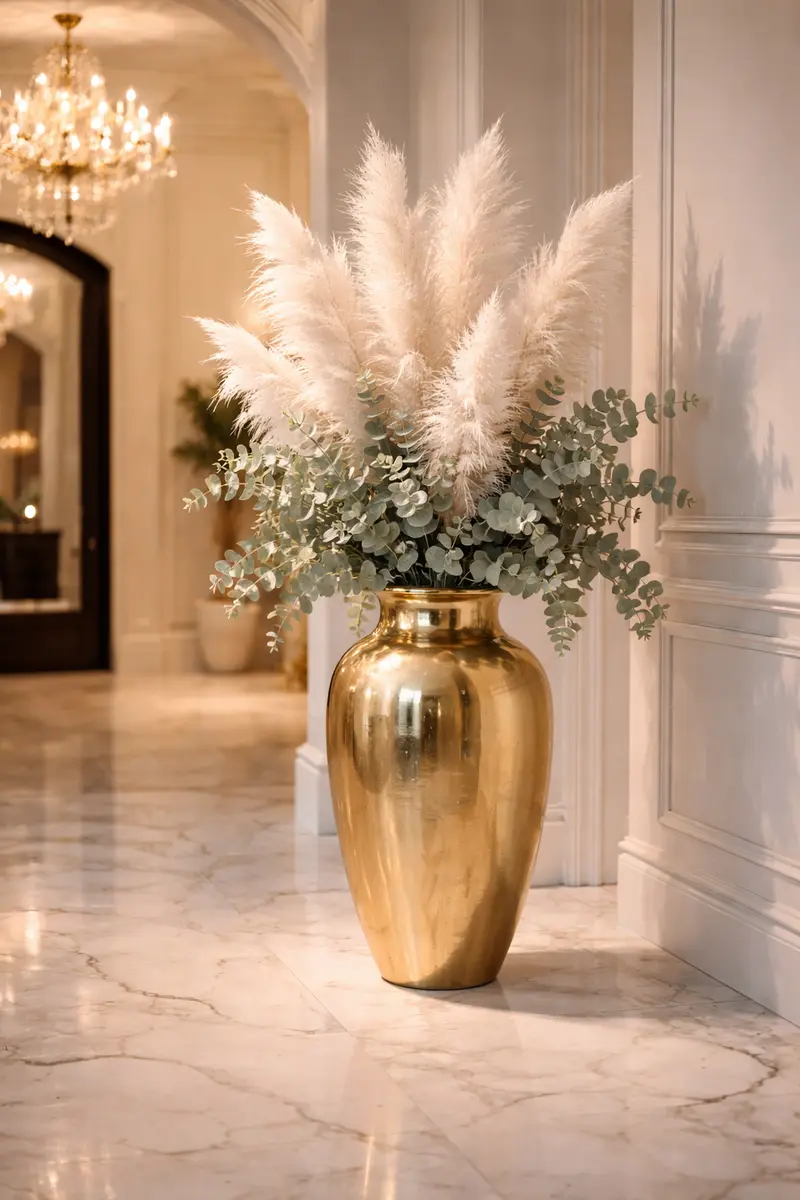
An entryway vase needs to survive daily contact and make an impression in five seconds. …
Read guide →