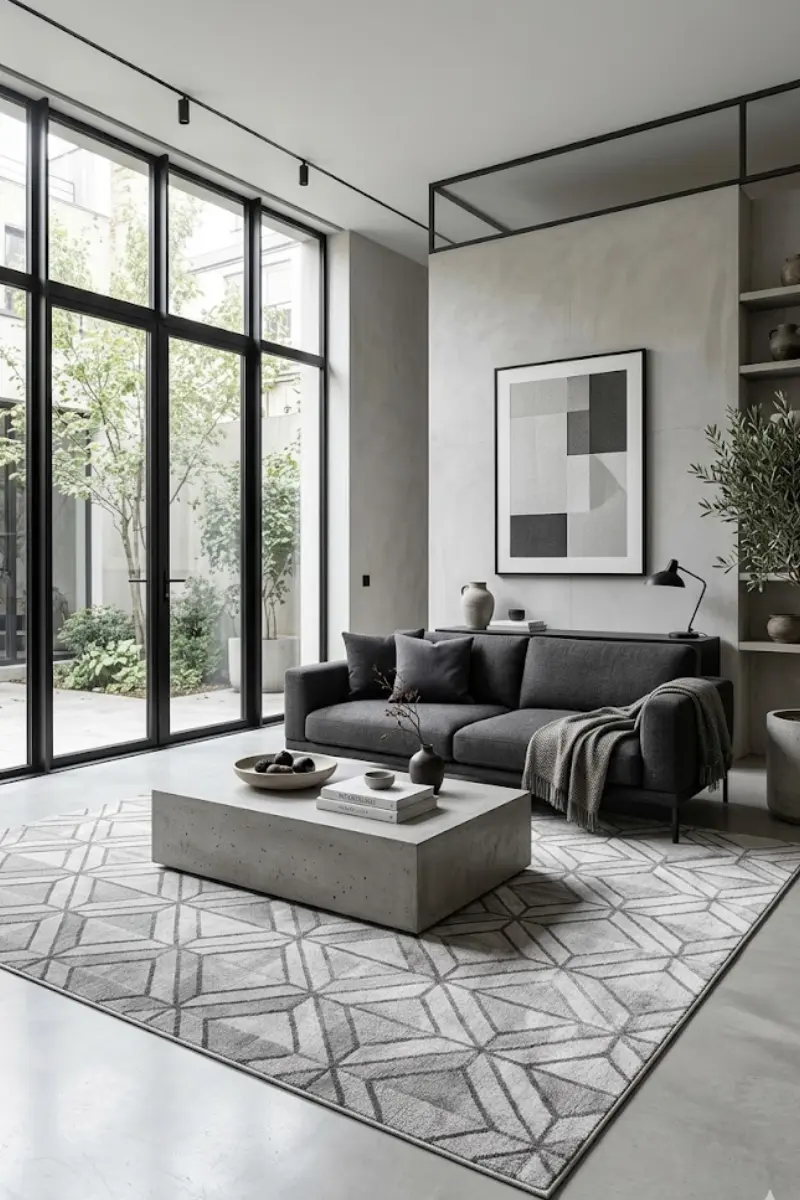

A rug pad with a rubber or felt-rubber backing fixes most sliding on hardwood on its own.
For a rug that still creeps at the edges or corners, add grip tape or corner grippers on top of the pad.
Here’s how to actually solve it, not just cover it up.
Start With a Rug Pad, Not Tape
A rubber or felt-rubber rug pad cut slightly smaller than the rug itself is the actual fix, not a workaround.
The rubber layer grips the hardwood while the felt side grips the rug’s underside, so the whole rug moves as one piece instead of sliding on the smooth wood.
Buy the pad sized 1 to 2 inches smaller than the rug on all sides so it stays hidden underneath.
Skip the Foam or Vinyl Pads
Foam and thin vinyl rug pads feel cushiony but grip hardwood poorly compared to rubber or felt-rubber.
If a pad you already own still lets the rug slide, check the material before buying tape or grippers.
The pad itself is the wrong type for hardwood, even if it worked fine on carpet in a previous home.
Add Corner Grippers for High-Traffic Spots
The corners and edges are where sliding actually starts, even with a good pad underneath.
Self-adhesive corner grippers, small fabric loops with rubber backing, hold the rug’s corners flat against the pad in doorways, in front of a sofa where people stand up often, or anywhere foot traffic is heaviest.
Flatweave rugs like this one are especially prone to edge curl and sliding since there’s no dense pile weight holding the rug down.
A rug pad plus grip strips along the two longest edges keeps a lightweight cotton flatweave rug flat and in place, even in a high-traffic entryway or living room.
Double-Sided Rug Tape: Use Sparingly
Double-sided carpet tape works, but only as a backup for a rug that still shifts after a pad is already in place.
Don’t rely on tape alone without a pad underneath: tape holds the rug’s edge down, but it doesn’t stop the middle of a lightweight rug from bunching or rippling the way a full pad does.
Also check that the tape is rated safe for hardwood finish before applying, some adhesive residues can dull or damage a sealed wood floor over time.
FAQ
What’s the best type of rug pad for hardwood floors? Rubber or felt-rubber combination pads.
The rubber side grips the hardwood, the felt side grips the rug, and together they stop sliding far better than foam or vinyl pads, which grip poorly on smooth wood.
Does double-sided tape damage hardwood floors? It can, if the adhesive isn’t rated for sealed wood finishes.
Check the product label before applying tape directly to hardwood, and test a small hidden section first if you’re unsure how your floor’s finish will react.
Why does my rug still slide even with a pad underneath? The pad material is usually the issue.
Foam and thin vinyl pads don’t grip hardwood well even though they add cushion.
Switch to a rubber or felt-rubber pad, and add corner grippers at the highest-traffic edges if slipping continues.
Do lightweight rugs slide more than thick ones? Yes.
A flatweave or low-pile rug has less weight holding it in place, so it needs a rug pad more than a thick, heavy shag rug does, even though that seems backward at first.
See rug materials and sizing for every room in our complete rugs buying guide.
Add us to your preferred sources to see our latest room styling guides and luxury decor edits first in your Google feed.
Ideas & Inspiration
The right area rug anchors furniture and softens hard floors. Here are 8 plush, metallic, …
Read guide →
No rug is labeled coastal and jute at once, but jute's natural texture is exactly what …
Read guide →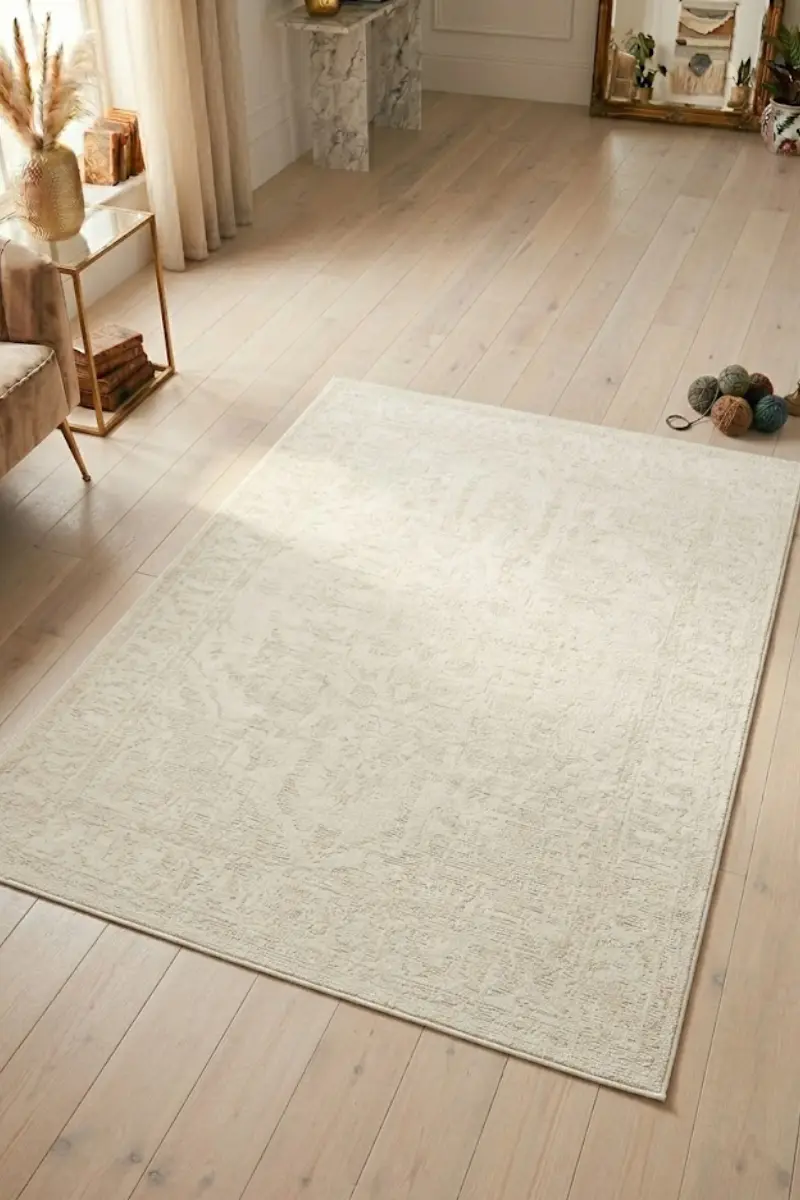
Scandinavian rugs go quiet and low-pile; boho rugs go textured and warm-toned. The answer …
Read guide →