
Neither fabric is objectively better.
Velvet reads richer, holds saturated color better, and adds visual weight.
Linen reads relaxed, lets a room breathe, and shows less obvious wear over time.
The right one depends on what the rest of the room is already doing.
What Velvet Does Better
Velvet catches light differently depending on the angle it’s brushed, which gives a pillow depth a flat fabric can’t match.
It also holds deep or soft saturated colors, like this blush velvet set, better than most other fabrics, so the color stays true instead of washing out under regular light.
The tradeoff is upkeep: velvet shows crush marks and needs an occasional brush or fluff to look fresh.
Velvet wins for: statement color, rooms that already lean glam or luxe, and pillows meant to be the visual focus.
What Linen Does Better
Linen is the lower-maintenance choice day to day.
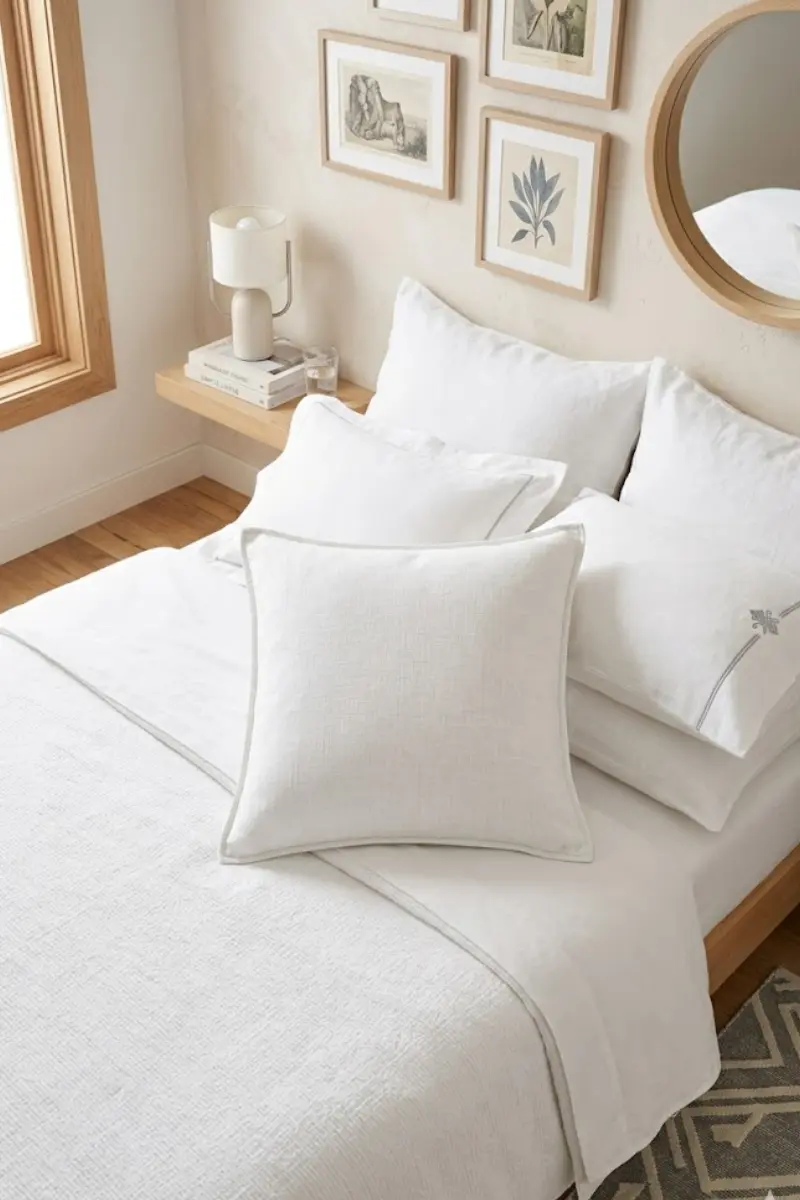
It doesn’t show crush marks the way velvet does, and a subtle texture weave like this white linen pillow reads clean and calm instead of demanding attention.
It’s also the cooler fabric to the touch, which matters more than people expect on a sofa or bed that gets used daily, not just styled for photos.
Linen wins for: minimalist or coastal rooms, daily-use pillows that get sat on and moved around, and spaces that already feel busy.
The Real Difference Is Upkeep, Not Looks
A velvet pillow needs a light brush every few weeks to keep crush marks from settling in one direction, and it shows dust more than linen does on darker colors.
Linen wrinkles faster, but that wrinkling is part of its relaxed look rather than a flaw to fix, so it actually needs less active maintenance than velvet does, just a different kind of care.
Match the Room’s Existing Materials
A room with existing velvet upholstery, brass hardware, or a marble surface already speaks the same language as a velvet pillow, so adding one continues what’s there instead of introducing something new.
A room with linen curtains, woven rattan, or matte wood finishes reads the same way with linen.
Neither fabric is the wrong choice; the mismatch with the room’s other materials is what actually looks off.
FAQ
Is velvet or linen better for a sofa that gets used every day? Linen, for pure durability against daily wear.
It resists visible crush marks and wipes clean more easily than velvet, which shows dust and pile direction changes faster under regular use.
Does velvet fade faster than linen? Both fade with direct sun exposure, but velvet’s deeper pile shows fading unevenly, in patches rather than an overall lightening, which reads more noticeable than linen’s more even fade.
Can I mix velvet and linen pillows on the same sofa? Yes, and it’s one of the easiest texture combinations to pull off.
One or two velvet pillows for richness plus one or two linen pieces for contrast avoids the flat look of an all-one-fabric sofa.
Which fabric is easier to clean? Linen.
Most linen covers handle a damp cloth or light hand wash fine.
Velvet almost always needs spot cleaning or professional cleaning to avoid flattening or watermarking the pile.
See the full lineup of both fabrics in our throw pillows buying guide.
Add us to your preferred sources to see our latest room styling guides and luxury decor edits first in your Google feed.
Ideas & Inspiration
Flat sofa cushions leave living rooms feeling unfinished. Here are 8 velvet, faux fur, and …
Read guide →
One real coastal pillow and a neutral texture pairing build a genuine coastal palette for …
Read guide →
Seven real bedroom throw pillows starting under $30, from velvet to linen to boho macrame …
Read guide →