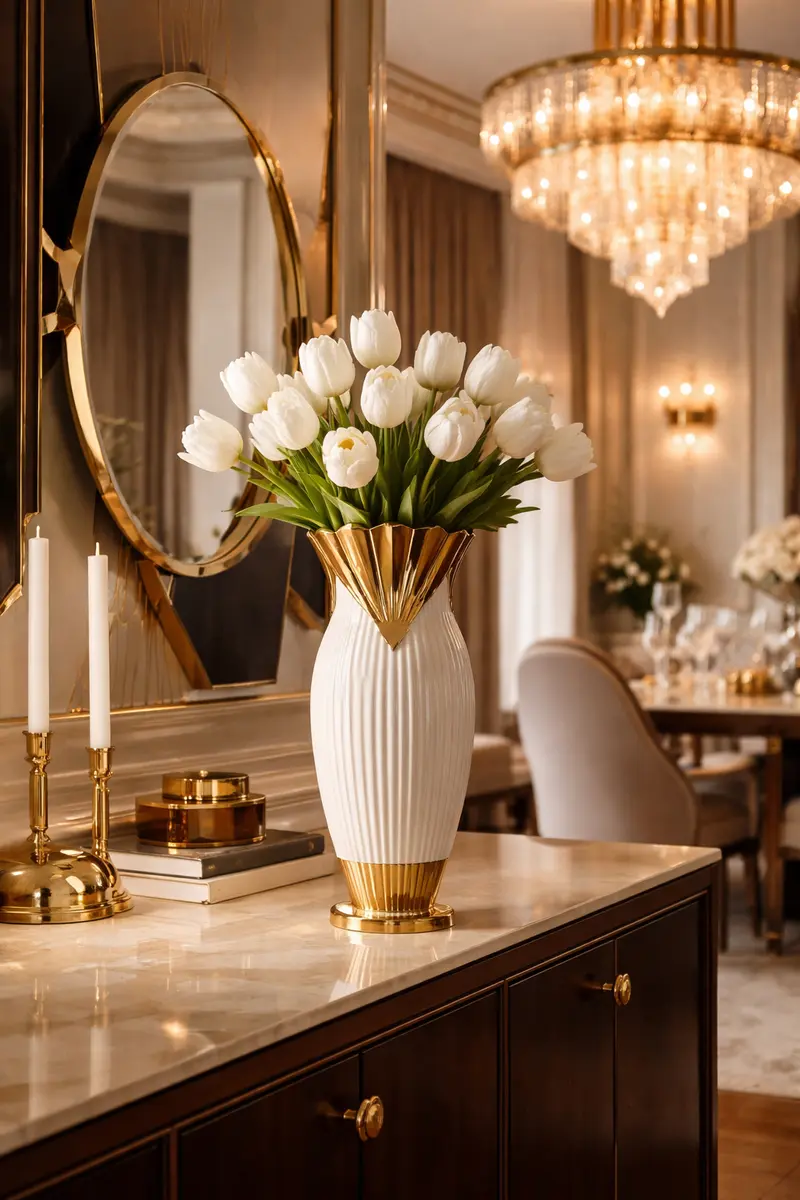
Art Deco Fluted Gold Ceramic Vase
$65–$115
Art deco is a style of confident geometry, not soft or organic shapes, and a rounded plain vase reads wrong next to fluted lines and sharp contrast. The silhouette has to carry the era.
Look for a fluted or ribbed vertical silhouette over a rounded one, and pair gold accents with one bold contrasting color, black or a deep jewel tone, rather than gold alone. Art deco depends on that contrast more than any single finish.
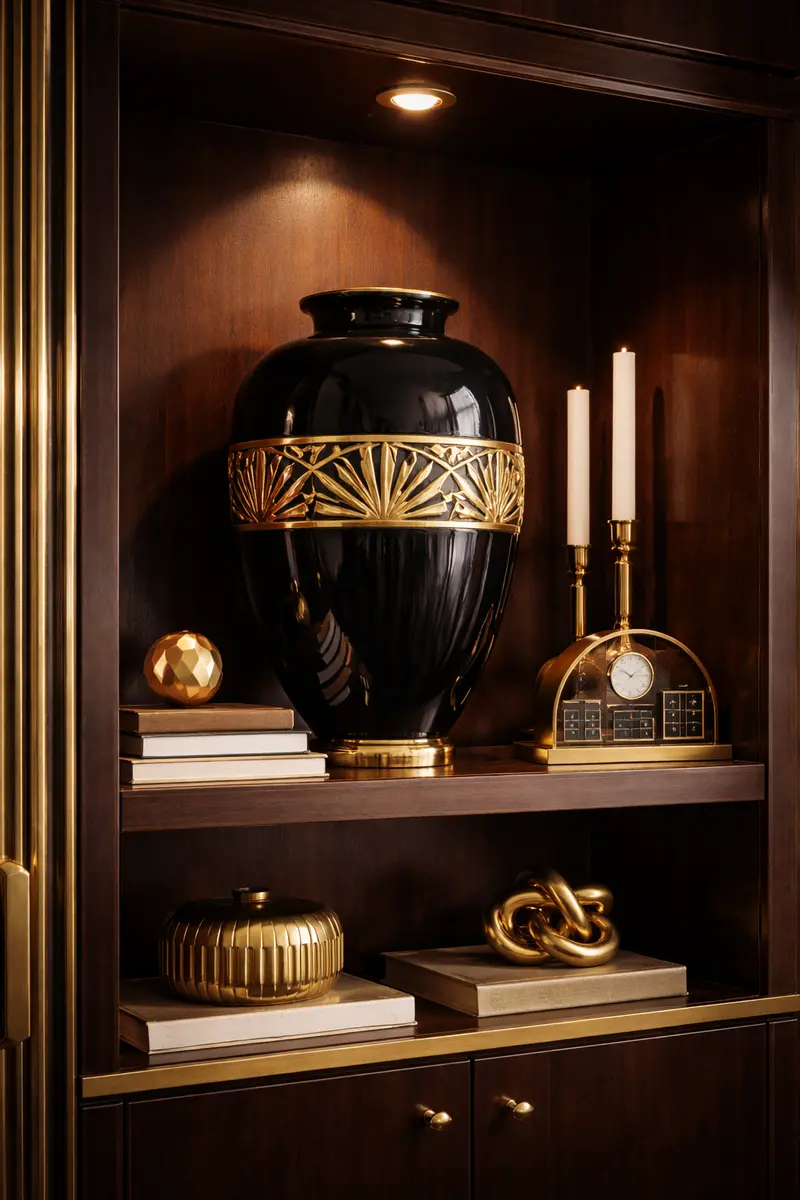
A rounded, plain vase in an art deco room undercuts the whole point of the style, which depends on sharp geometric lines and confident contrast rather than soft, organic shapes.
The wrong silhouette here reads as a mismatch faster than in almost any other decor style, since deco is defined by form more than color alone.
Get it right and the vase becomes part of the room’s architecture.
A fluted gold vase with an elongated silhouette on a dining table, catching light along every ridge.
A bold black and gold banded piece anchoring a console, the geometric pattern echoing lines already in the room’s furniture or lighting.
Fluting and stepped silhouettes matter more here than in a style like modern minimalist, where a plain cylinder would suffice.
The vertical ridges create shadow and light play that a smooth surface can’t replicate, which is a large part of what signals the era specifically rather than a general glam or traditional look.
Contrast is the second detail that carries the style.
Gold alone reads as general luxury rather than specifically art deco.
Pairing gold with black, or with a deep jewel tone, creates the bold visual contrast the era is known for.
A single tone gold piece can work, but it leans toward glam more than true deco.
A stepped, tiered base under the vase itself also reinforces the era specific silhouette, even on a piece that is otherwise a single solid color.
The picks below lead with fluted lines and bold contrast rather than plain rounded shapes, so each one reads as genuinely art deco rather than just gold and glam.
Not all vases work the same way in a art deco space. Here's how the main types differ.
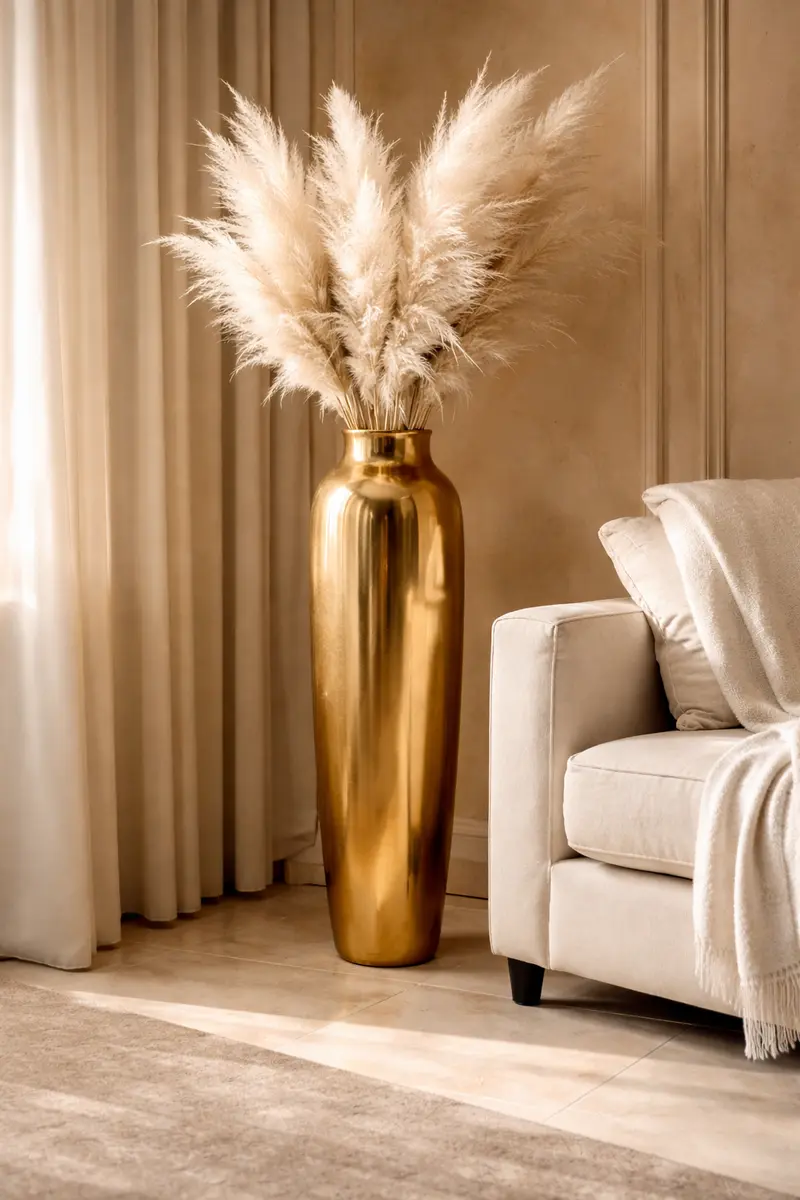
24 inches or taller, sits directly on the floor. This is the single fastest fix for an empty corner. Fill with pampas grass, dried branches, or leave it empty and let the vessel itself do the work.
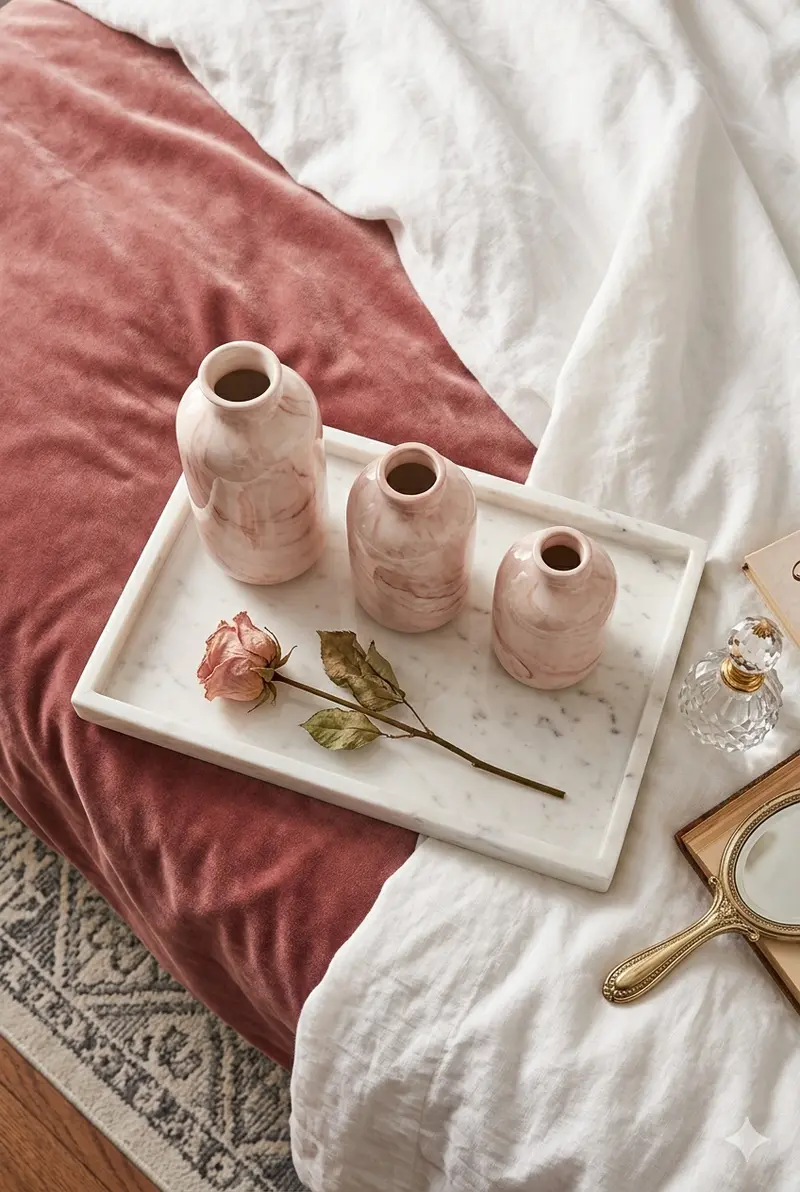
Grouped in threes at graduating heights, bud vases hold a single stem each rather than a full arrangement. This is the format for a nightstand or dresser where a large vase would overwhelm the surface.
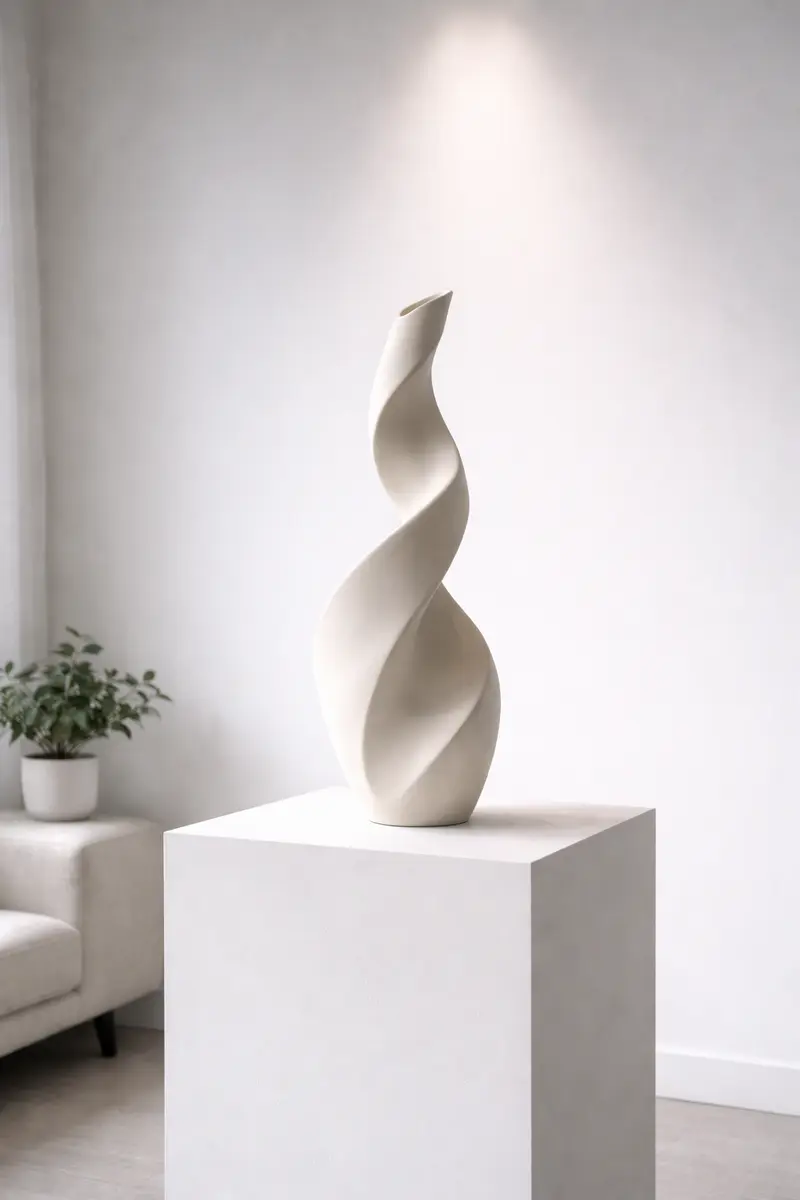
Bought empty, styled empty. The form is the entire point. An abstract or asymmetric silhouette that works as a stand-alone art object rather than a flower holder. Never fill this type; it competes with itself.
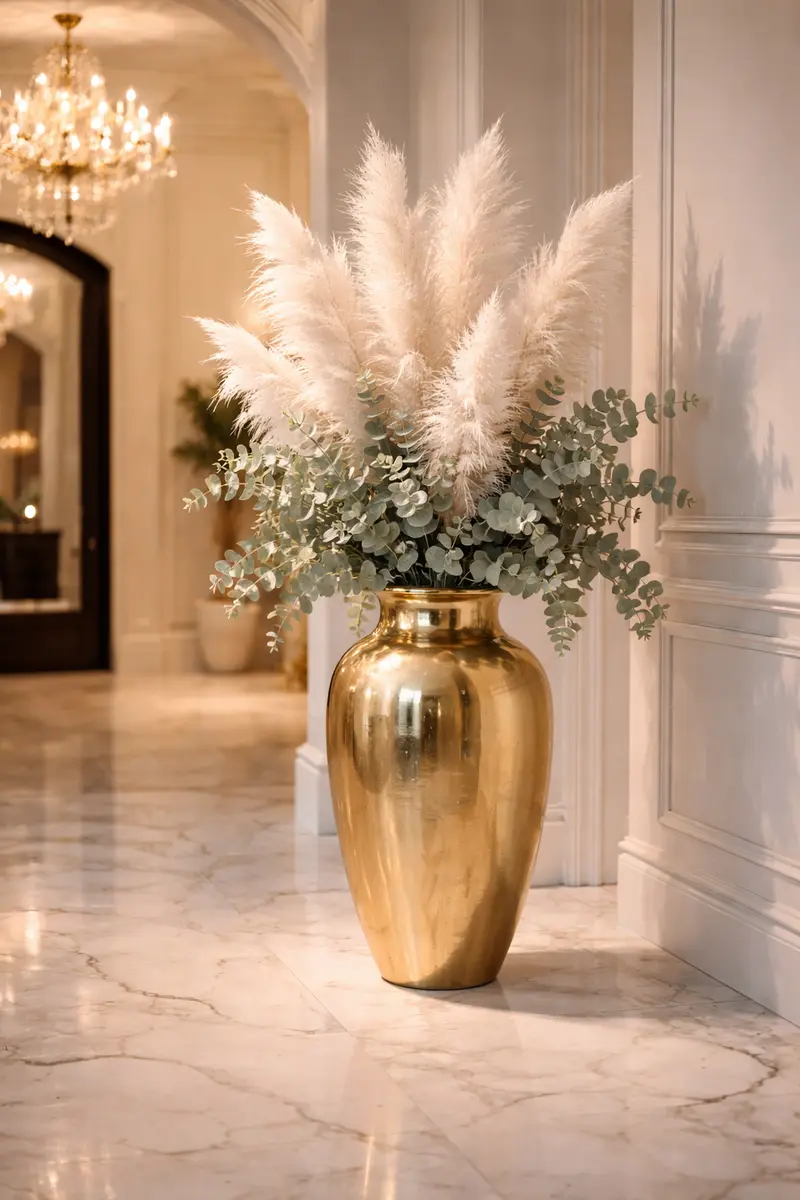
Wider base, classical silhouette, usually the largest and heaviest piece in the room. This is a one-per-room decision. An urn this size only needs one location and it should be the first thing you see entering the space.
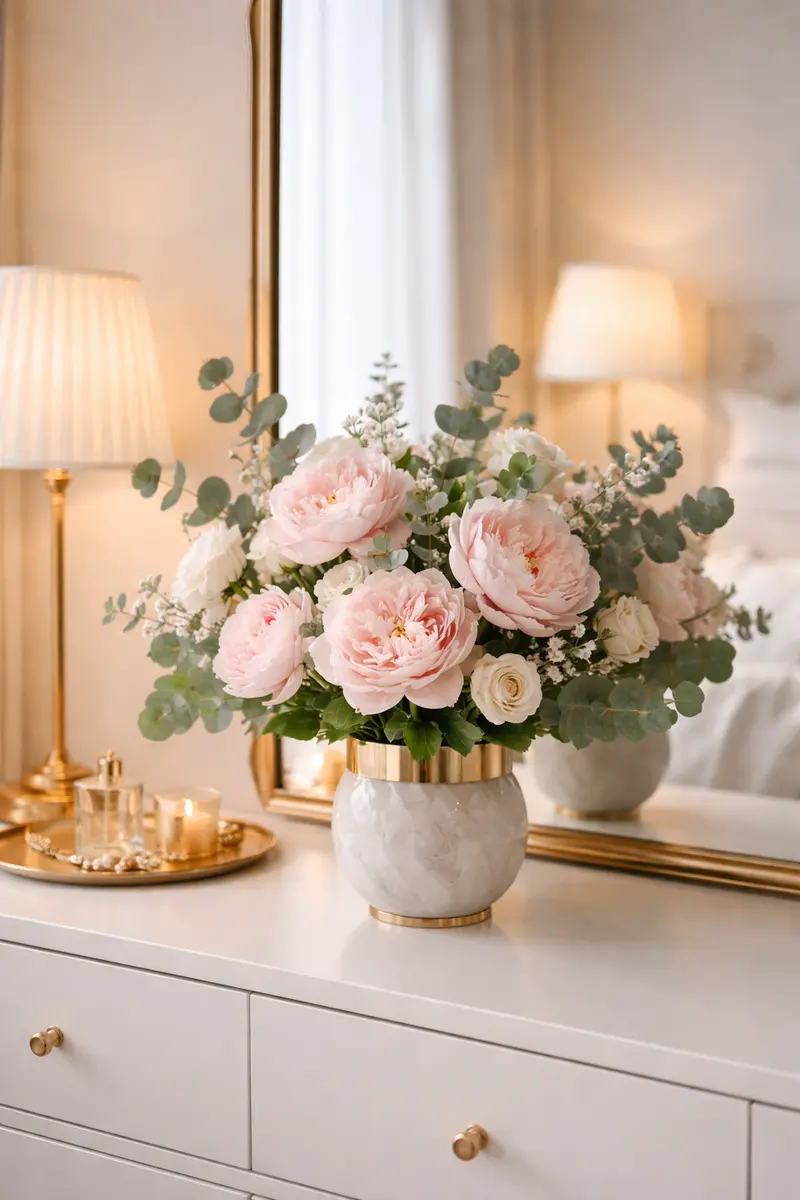
Pre-arranged, vase included, zero maintenance. Quality faux stems now hold up to close inspection. Check for textured petal edges and matte (not shiny) leaves, which are the two tells of a cheap fake.
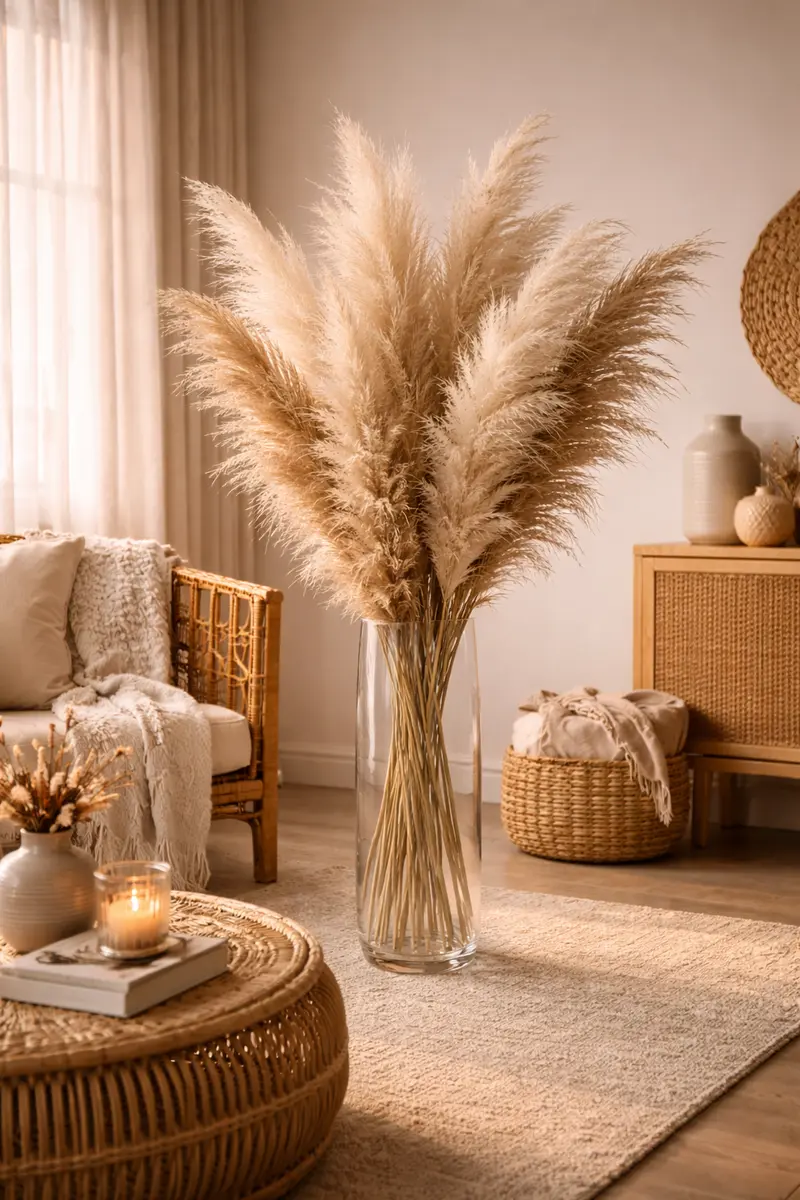
Pampas grass in a bedroom works best scaled down and paired with natural materials already …
Read guide →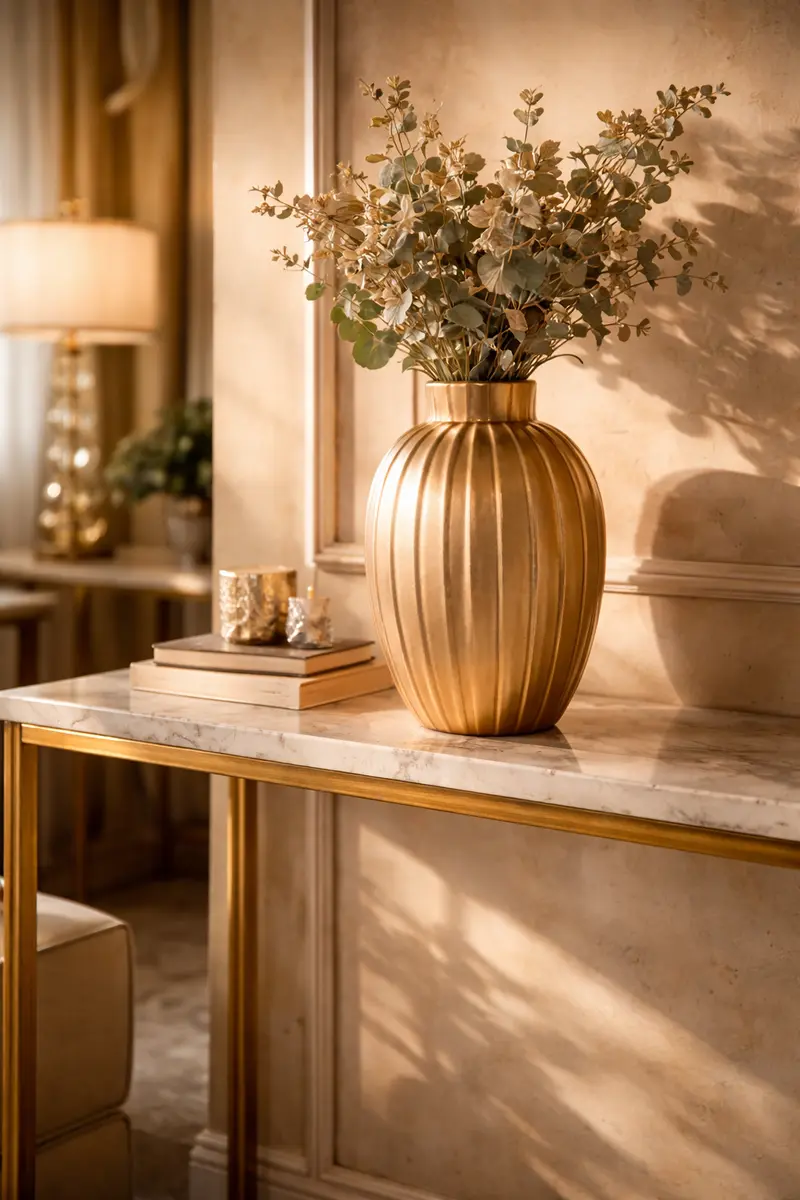
Ceramic reads warmer and more substantial; glass reads lighter and shows off stems. The …
Read guide →
An entryway vase needs to survive daily contact and make an impression in five seconds. …
Read guide →Types, styles, sizing rules, and our complete pick list, all in one place.
Browse All Vases →