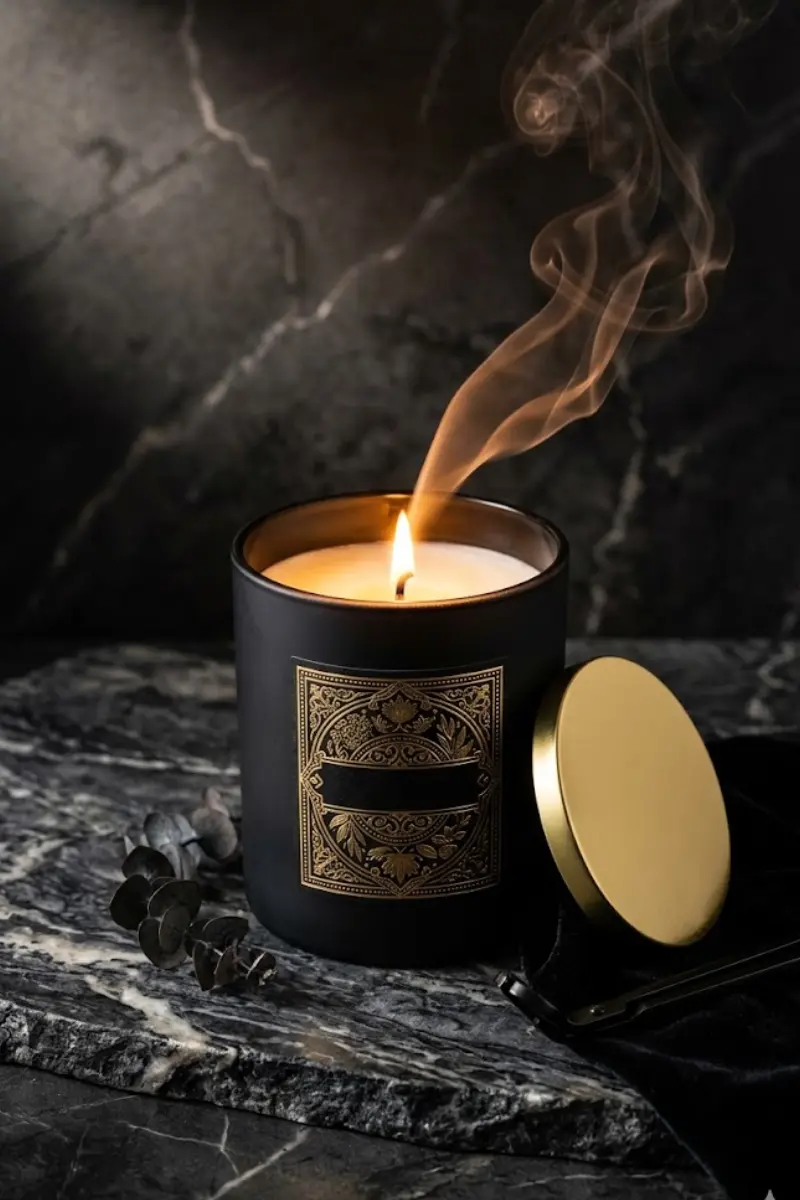
Black & Gold Luxury Scented Candle
$55–$95
A single candle on a coffee table reads as an afterthought. A cluster of three at different heights reads as a styled room.
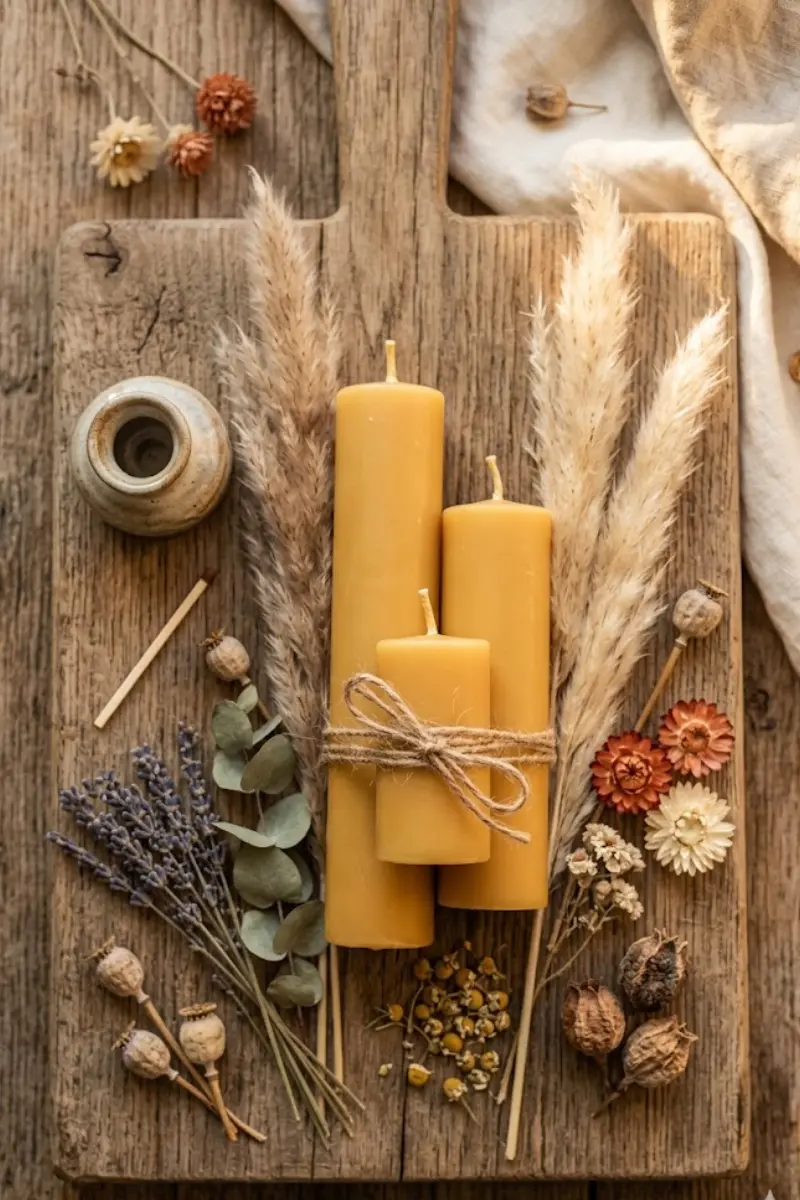
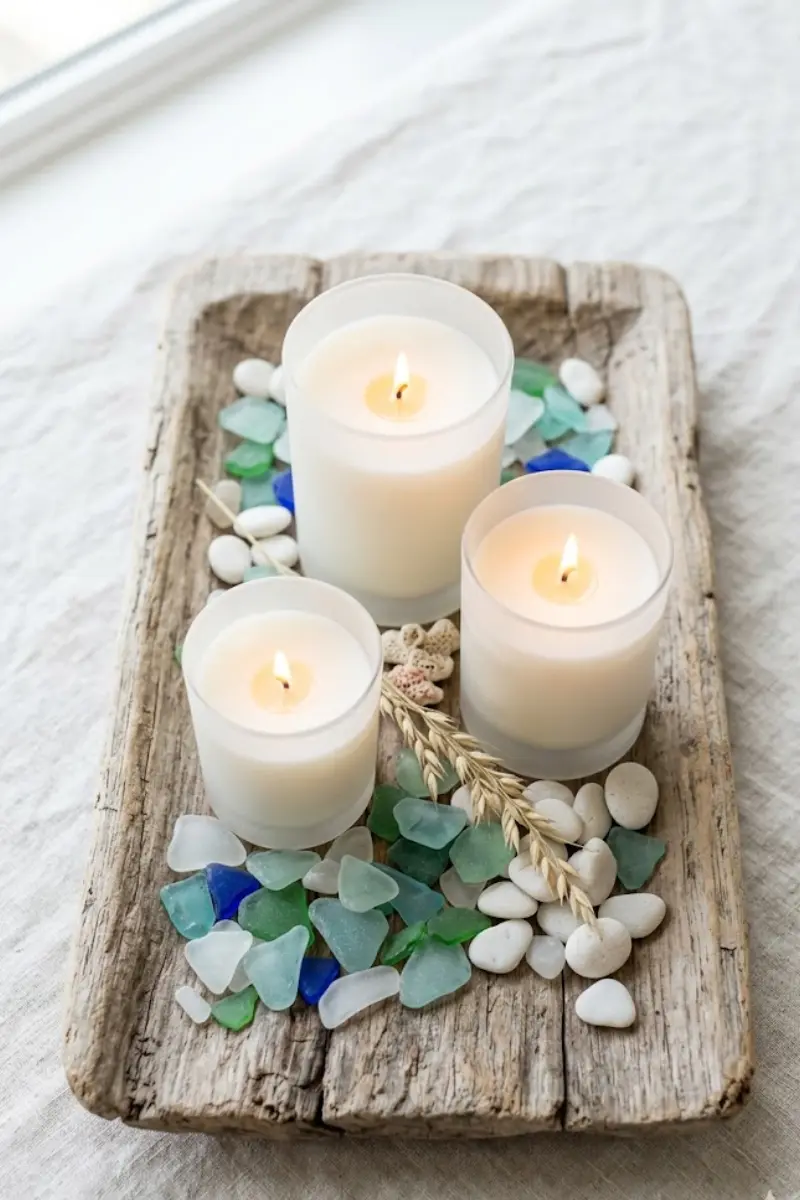
Group candles in odd numbers, three works best, at staggered heights between 4 and 10 inches so the display reads as intentional from across the room, not scattered.
A single candle on a living room coffee table almost always reads as leftover, not styled.
It’s the one thing left over from a gift set, placed with no real thought, and it disappears into the rest of the clutter on the table.
Worse, a candle that’s too small for a 300 square foot living room gets lost entirely once guests are in the room talking, and the scent never actually reaches the seating area.
Get it right and the room feels finished the second someone walks in.
Three pillar candles at staggered heights on a tray.
A black and gold jar candle burning low, sandalwood and oud drifting past the sofa by the time anyone sits down.
The room smells intentional, not like an air freshener plugged into the wall.
It becomes part of how the room looks, not just how it smells.
Coverage matters more in a living room than in any other room in the house.
Styling height matters as much as scent.
Group candles at three different heights rather than three of the same size in a row:
This page covers which candle formats and scent strengths actually work for a living room’s larger square footage, plus how to style a cluster that looks intentional.
The picks above cover pillar sets through statement jars, and the Candles hub guide below goes deeper on the full range.
Not all candles work the same way in a living room space. Here's how the main types differ.
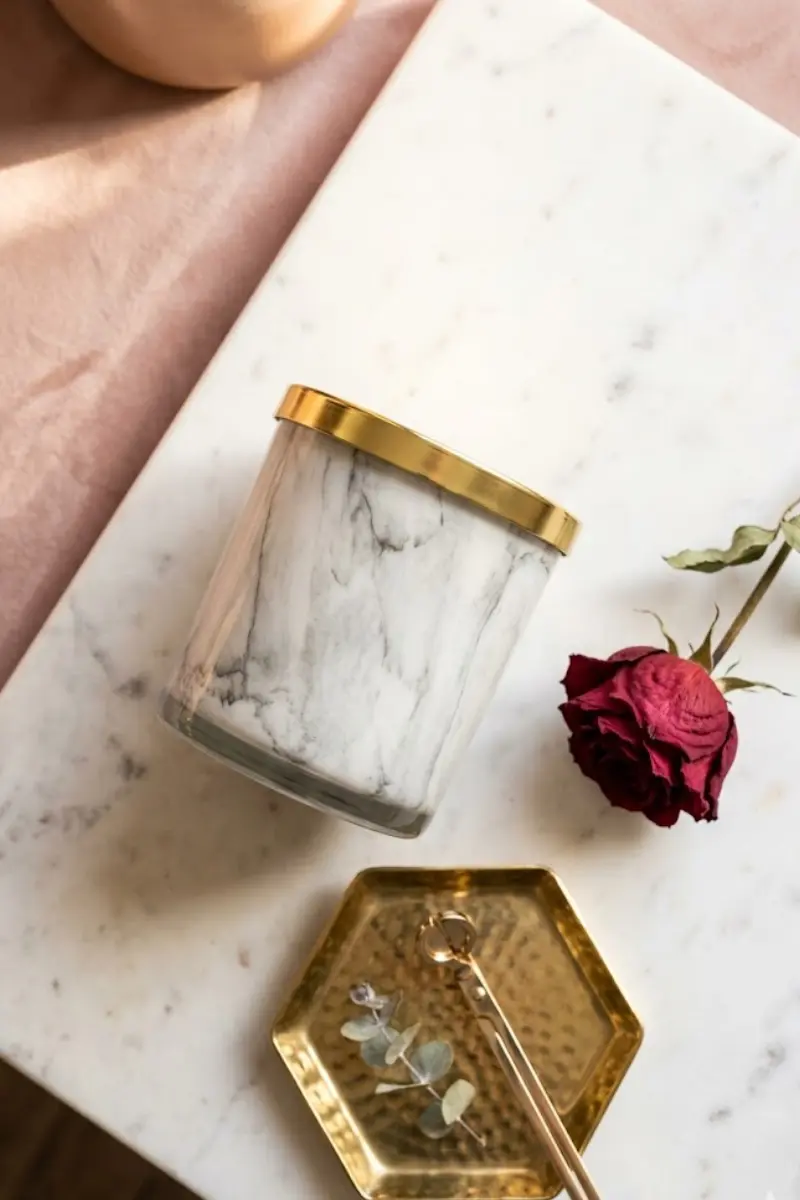
The default for a reason. A soy or paraffin-blend jar candle throws scent evenly across a mid-size room and the vessel doubles as decor once the wax is gone. Look for a lid. It protects the scent between burns.
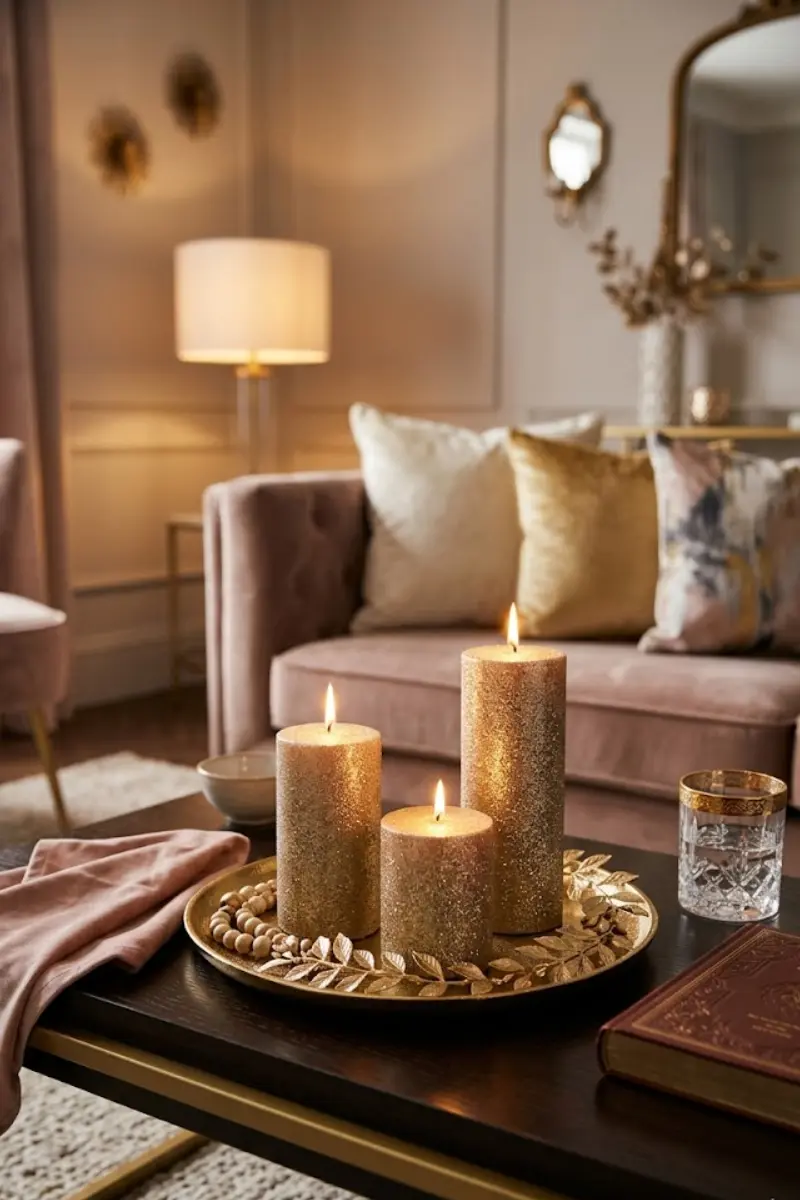
Freestanding, no jar required. Grouped in odd numbers on a tray or mantle, pillars do more visual work than any other format. Most are unscented or lightly scented. Buy these for the look, not the fragrance.
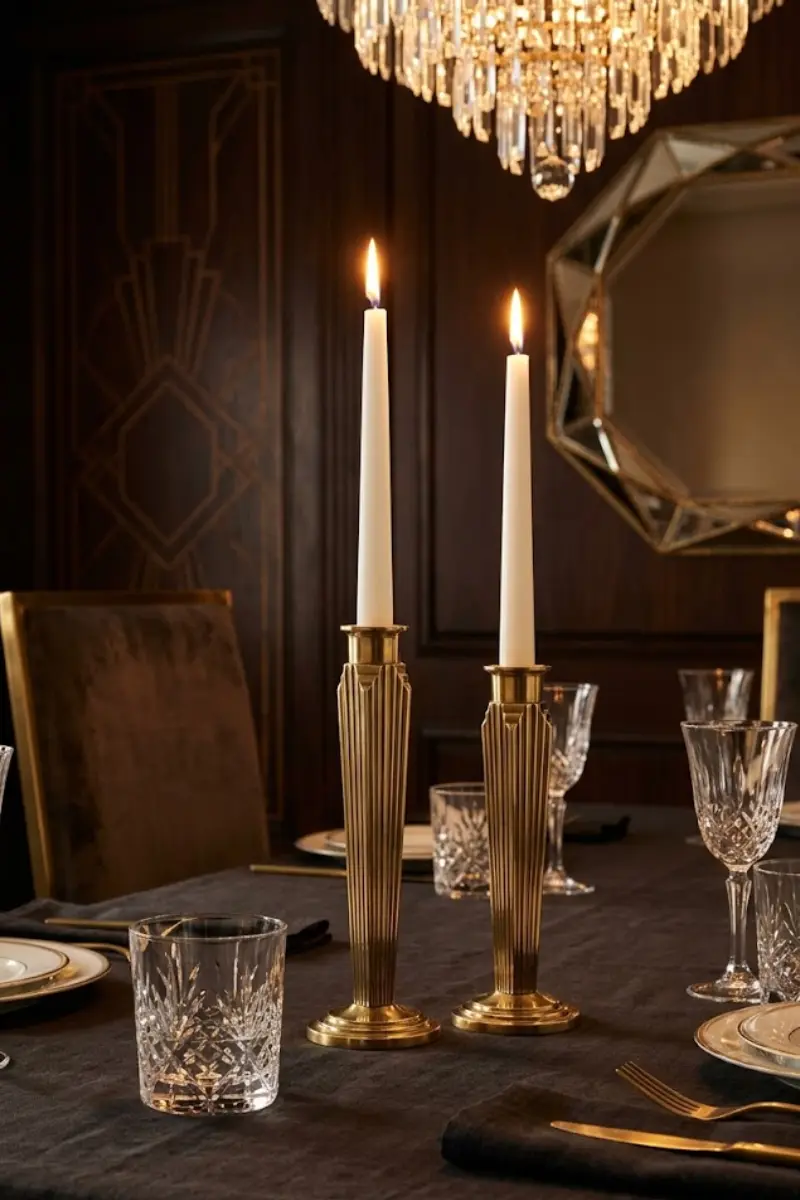
Needs a holder, and that's the point. The holder is half the styling. A pair of brass candlesticks with tapers reads formal and intentional in a way no jar candle can. Trim to 6 inches before lighting so they burn straight.
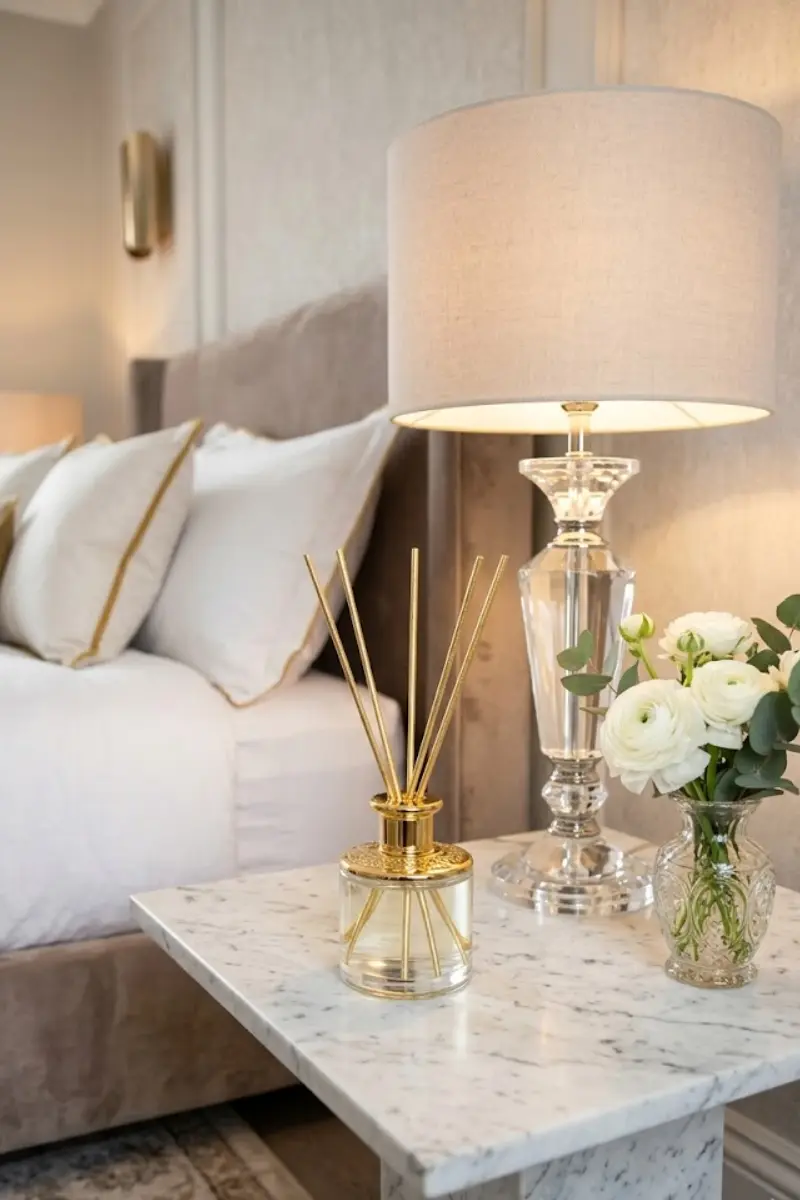
No flame, no maintenance beyond flipping the reeds weekly. Scent is constant but quieter than a lit candle. This is the format for rooms you don't want to actively manage, like a guest bedroom or entryway.
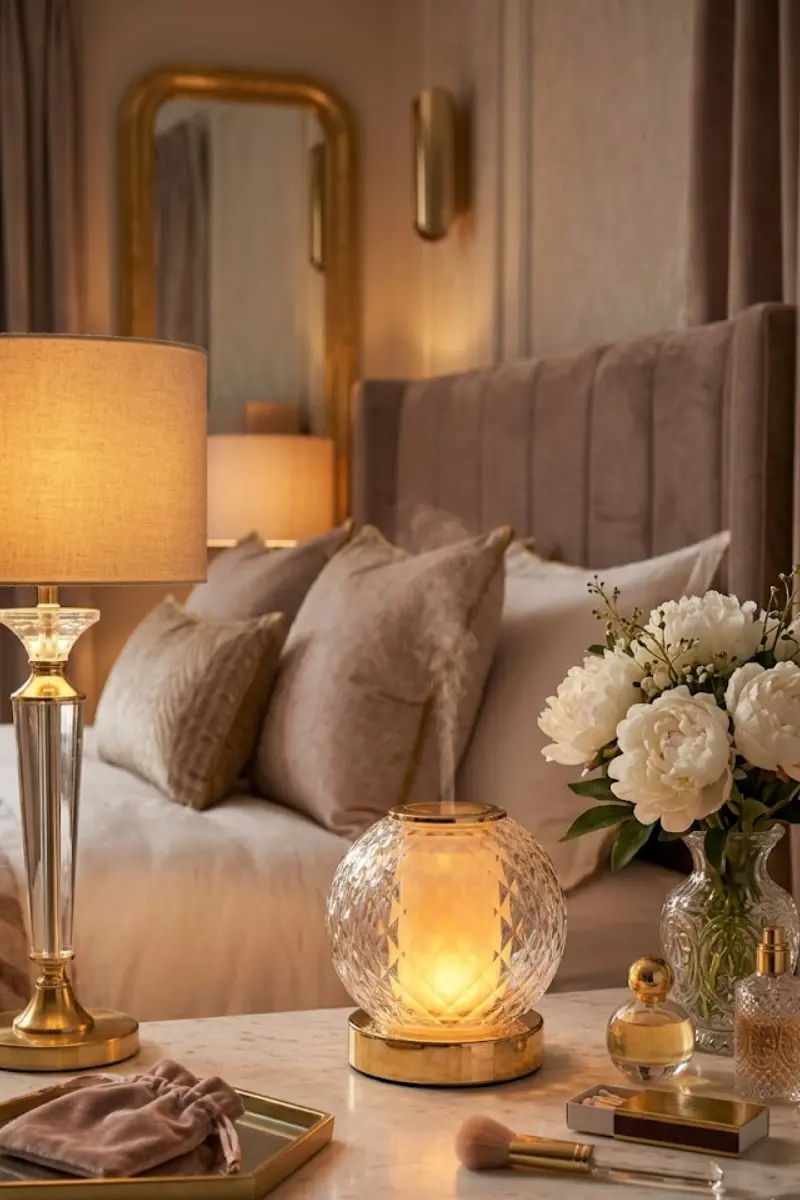
Ultrasonic mist means you control intensity and runtime instead of the wax controlling it for you. Most double as a soft night light. The only format here that adds humidity to the room, which matters in dry climates.
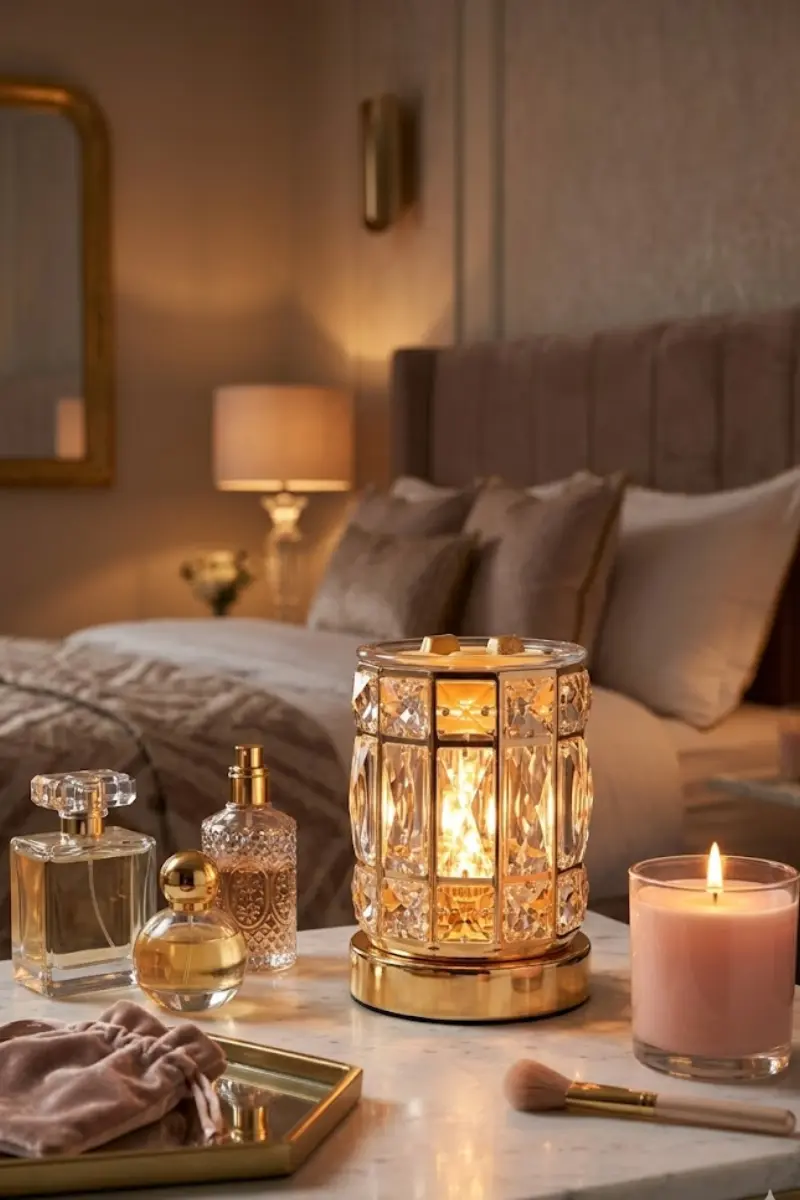
Zero flame risk, which makes this the format for homes with kids or pets. Scent throw is strong and immediate since the wax is heated, not burned. The warmer itself becomes a permanent bedside object. Buy one you actually like looking at.
Group candles in odd numbers at varied heights, keep scent to one strong piece, and leave …
Read guide →
The best luxury living room candles burn 45+ hours and use real fragrance oil, not perfume …
Read guide →
You can get a real hand-poured jar candle with genuine fragrance oil under $25. Check burn …
Read guide →Types, styles, sizing rules, and our complete pick list, all in one place.
Browse All Candles →