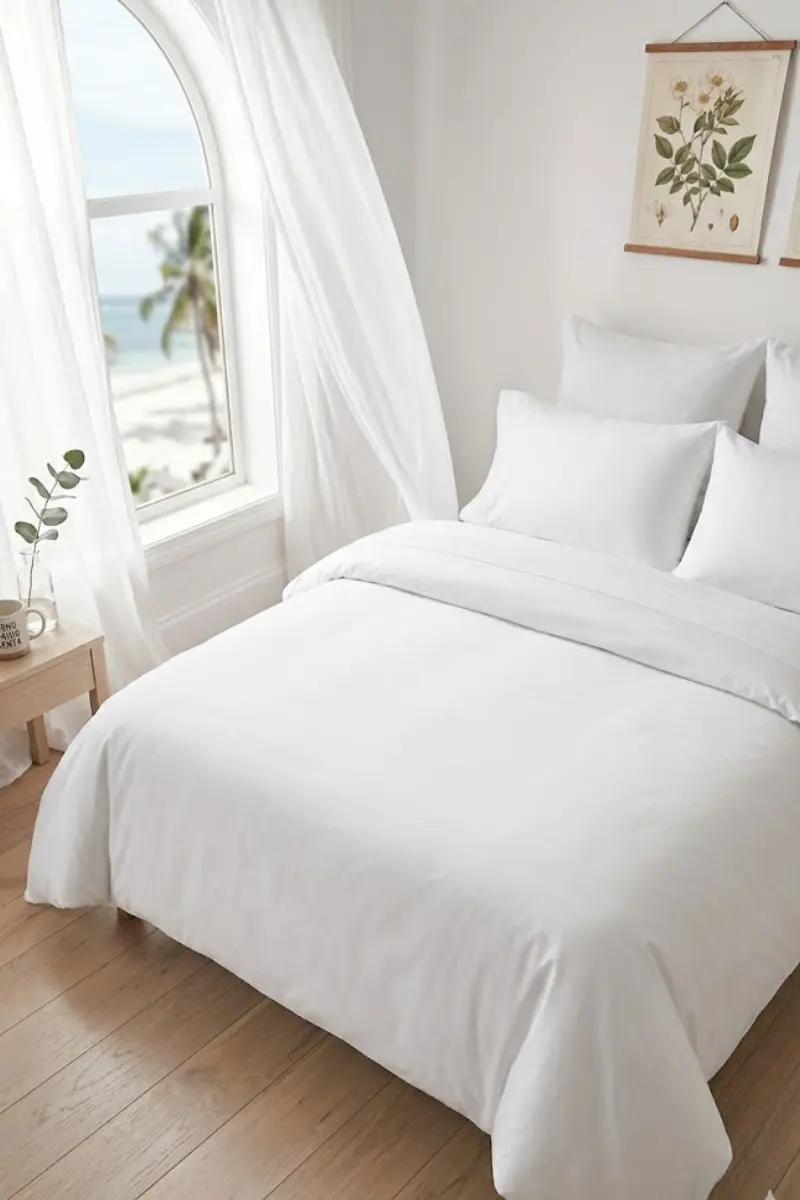
White Crisp Minimalist Duvet Cover Set
$69–$129
Minimalist bedding has to work harder than patterned bedding, since color and print aren't there to hide a flat, cheap fabric.
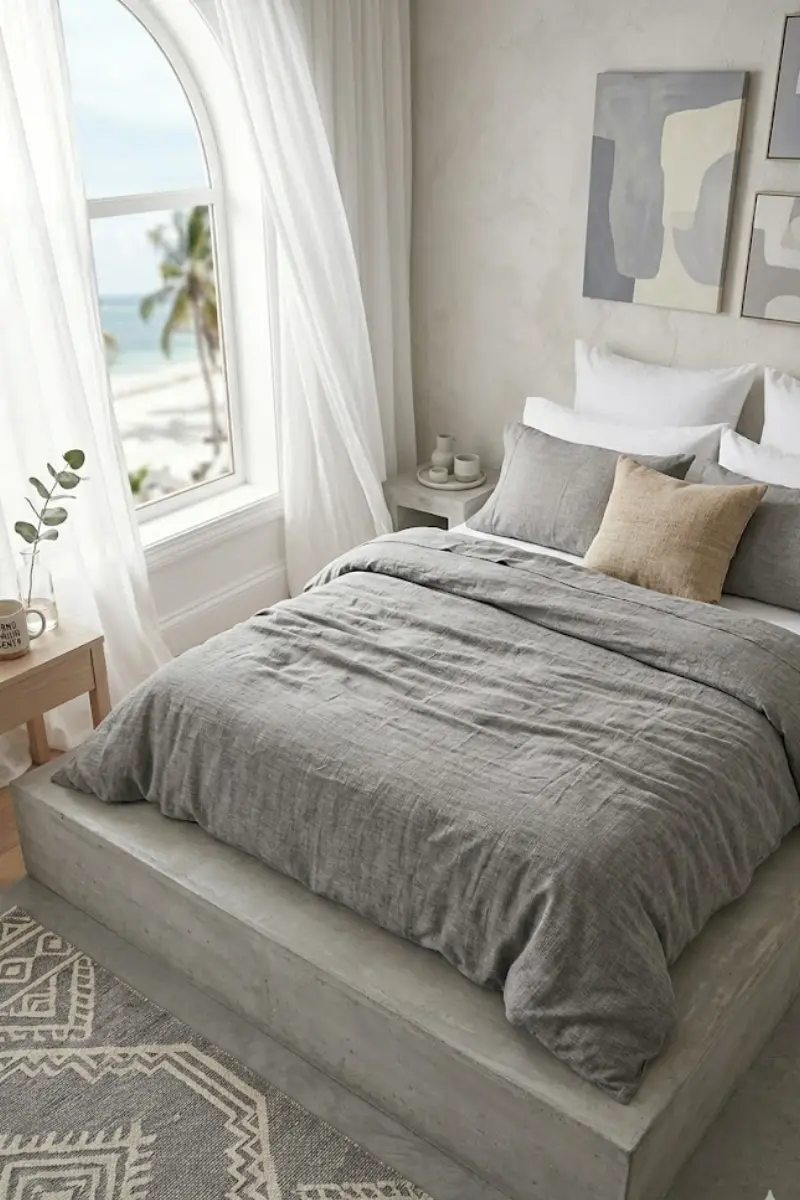
Choose a fabric with visible woven texture, linen or a heavier percale, rather than a flat, smooth microfiber. Texture is what keeps an all white or all grey bed from reading sterile.
Minimalist bedding is deceptively hard to get right.
Pattern and bold color hide a lot of flaws: a cheap fabric with a busy print still photographs fine.
Strip that away and a flat, thin white or grey set has nowhere to hide.
The bed ends up looking sterile and unfinished instead of calm, and that’s the exact opposite of what a minimalist bedroom is supposed to feel like.
Done right, the room feels restful rather than empty.
A linen duvet with visible woven texture catches light unevenly across its surface the way a flat sheet never does.
A crisp white percale set has a clean, almost architectural line when made up.
Neither needs color or pattern to hold visual interest, because the fabric itself is doing that job.
Picking between the two is really picking between two different minimalist moods, not just two fabrics.
Fixing it doesn’t mean adding color, it means adding weight and texture:
Warmth comes from touch, not palette, in a minimalist room.
The bedding below is grouped by texture and weight so it’s clear which pieces lean crisp and architectural versus soft and relaxed.
Pick the one that matches the mood of the rest of the room, not just the color.
Not all bedding work the same way in a modern minimalist space. Here's how the main types differ.
A removable cover for your duvet insert, the most important bedding piece. Sets the entire look and feel of your bedroom. Available in cotton, linen, velvet, and satin. Choose carefully, you'll look at it every day.
Fitted sheet, flat sheet, and pillowcases sold together. Thread count matters but weave matters more. Percale for crisp cool feel, sateen for silky soft warmth. 400+ thread count sateen is the luxury standard.
Often overlooked but hugely impactful. Satin and silk pillowcases reduce hair frizz and skin creasing. Decorative euro shams add hotel-style layering depth to any bed.
Decorative blankets draped at the foot of the bed or over a reading chair. Chunky knit throws are the signature glam bedroom accessory. They add texture, warmth, and instant cosiness.
A narrow strip of decorative fabric laid across the foot of the bed. Used in hotel-style bed dressing to add a layer of colour and texture without a full throw.
Lighter than a duvet, quilts and coverlets sit on top of the bed as a decorative layer. Perfect for warmer climates or as an additional layer in the hotel-style bed.
Four real duvet covers starting at $69 to $85, satin, percale, ruffle trim, and linen, …
Read guide →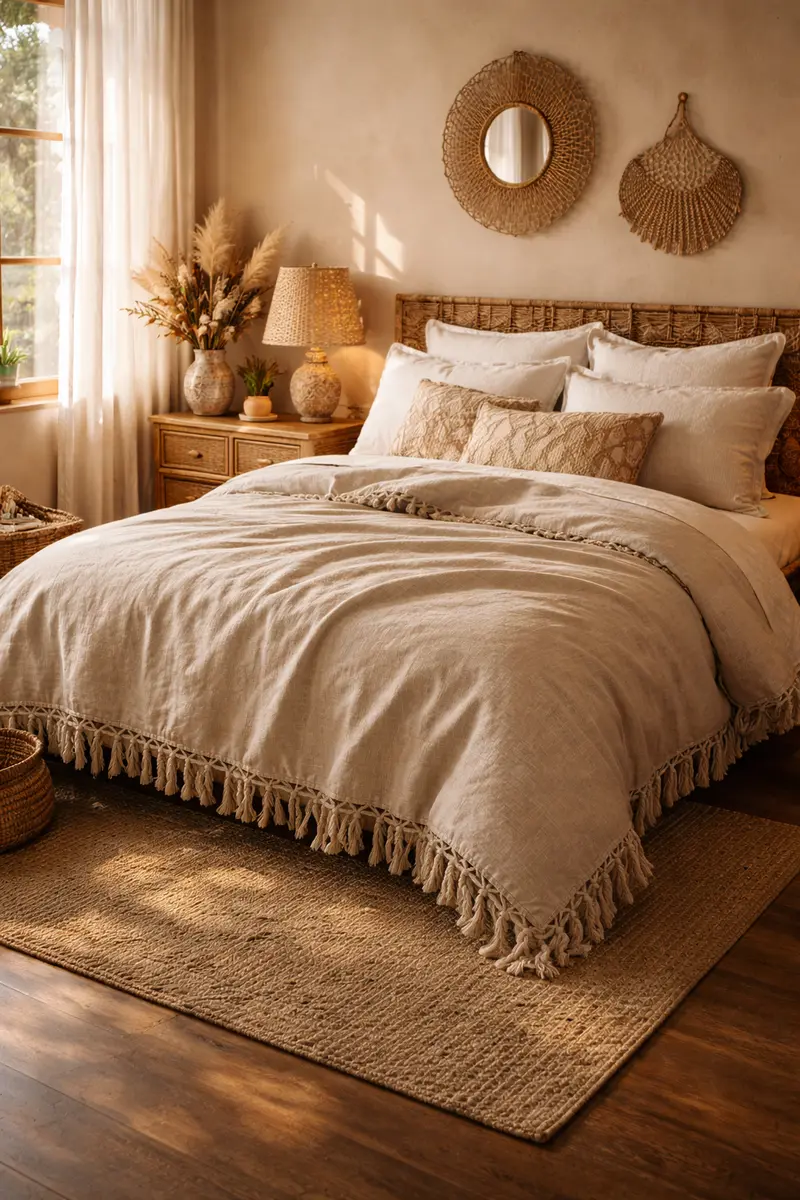
Boho bedding works by layering texture, not pattern. Stonewashed linen, washed cotton, …
Read guide →
Linen wicks more moisture and suits hot sleepers and humid climates. Cotton percale is …
Read guide →Types, styles, sizing rules, and our complete pick list, all in one place.
Browse All Bedding →