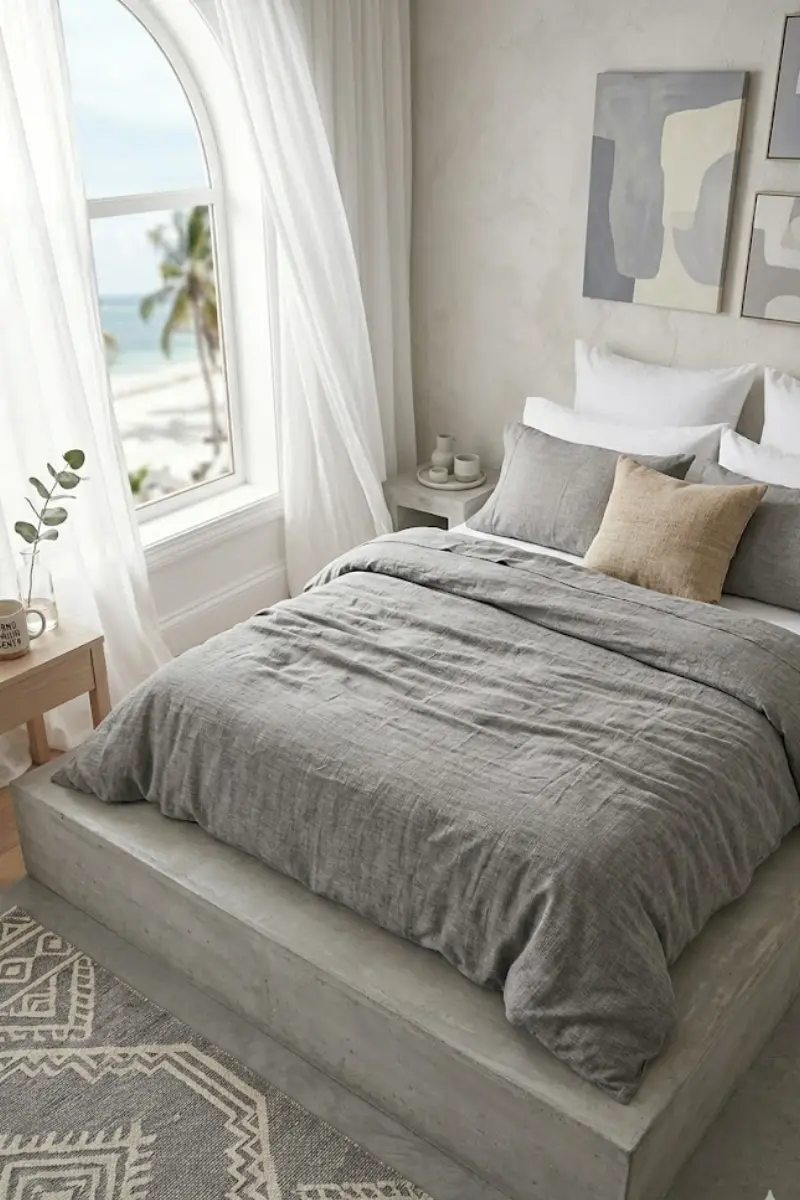
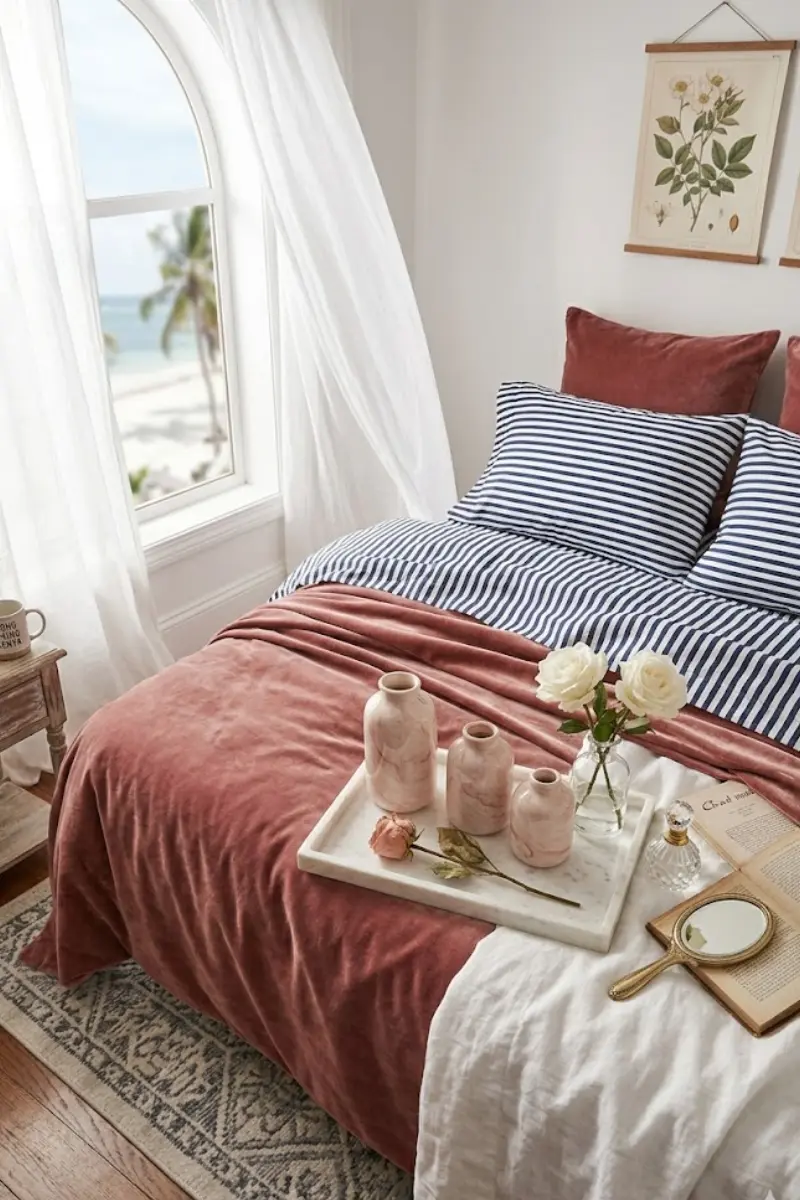
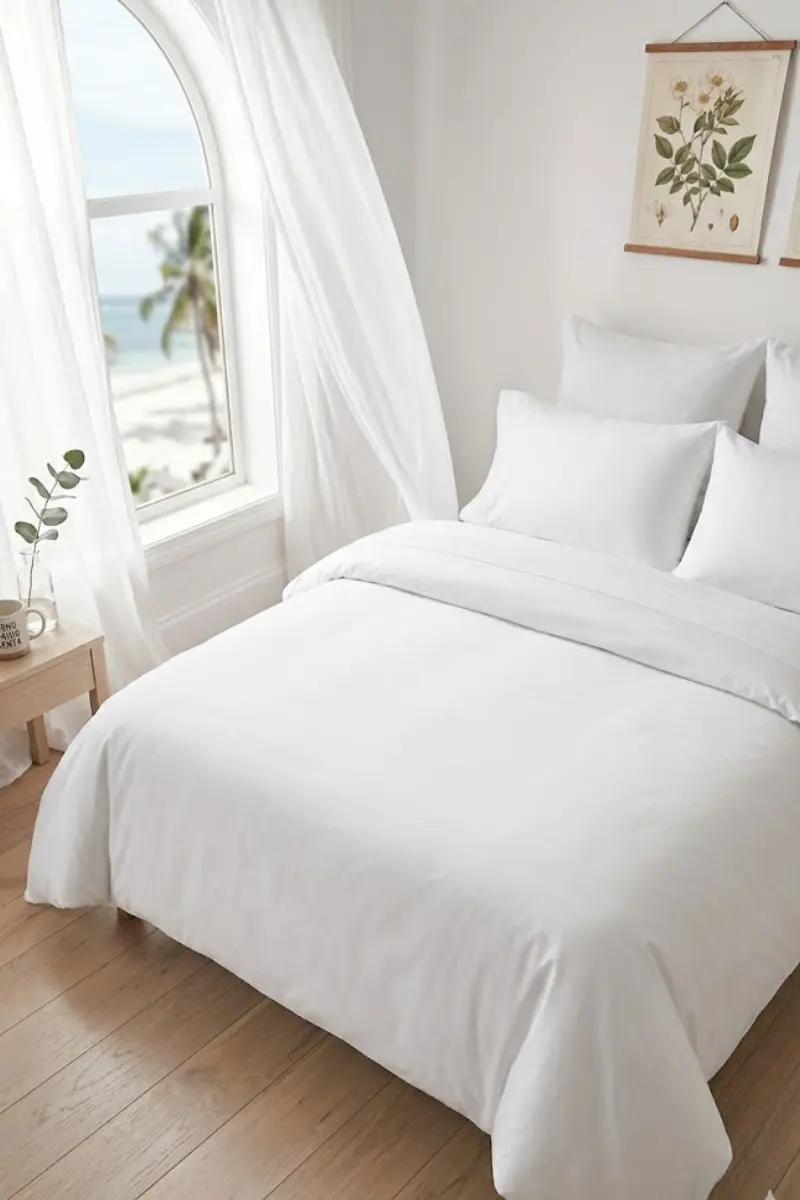
Linen wins for hot sleepers and humid bedrooms.
Cotton percale wins for a crisper feel, a lower price, and less ironing.
Neither is wrong, the right one depends on how hot you actually sleep and how humid your room gets in July and August.
What Linen Sheets Do Better in Summer
Flax fibers, what linen is made from, are naturally hollow and more porous than cotton fibers.
That structure lets more air move through the weave, and it lets linen absorb up to 20 percent of its own weight in moisture before it starts to feel damp against your skin.
For a hot sleeper or a bedroom without air conditioning, that moisture-wicking is the real advantage, not just a marketing line.
Linen also gets softer with every wash instead of wearing thin.
Linen wins for:
- Hot sleepers
- Humid climates
- Bedrooms without strong air conditioning
What Cotton Percale Sheets Do Better in Summer
Percale is a tight, plain weave, not the sateen weave that shows up on a lot of “luxury” cotton sheets.
That plain weave is what makes it feel crisp and cool to the touch the second you get into bed, even before your body heat has a chance to warm it up.
Percale also dries faster than linen after washing and wrinkles noticeably less, so it needs less upkeep if you want a made-bed look without ironing.
Cotton percale wins for:
- Crisp, immediate coolness
- Faster drying
- Easier care
- A lower price point
The Lightweight Duvet Cover Wildcard
If your sheets are already fine and the problem is a heavy winter comforter, swap the top layer instead.
A hotel-white percale duvet cover over a lightweight insert does for your comforter what percale sheets do for your bed, crisp, breathable, and cool, without replacing the sheets underneath at all.
The Real Answer: Match It to How Hot You Sleep
If you run hot at night or live somewhere humid, linen’s moisture-wicking earns its higher price.
If you want a crisp, cool feel at a lower cost with less maintenance, cotton percale is the better everyday choice.
Sateen weave cotton, the glossy, silky kind, is the one to avoid for summer specifically, its tighter weave traps more heat than either linen or percale.
FAQ
Which sheets are cooler for hot sleepers, linen or cotton? Linen, for most hot sleepers.
Its hollow fiber structure wicks up to 20 percent of its weight in moisture before feeling damp, which matters more overnight than raw breathability alone.
Do linen sheets wrinkle more than cotton? Yes, noticeably more.
Wrinkling is part of linen’s natural texture and most people leave it unironed on purpose.
Cotton percale wrinkles far less and holds a crisp, flat look longer between washes.
What thread count should I look for in summer sheets? 180 to 300 in a percale weave specifically, not sateen.
A high thread count in a sateen weave still traps more heat than a lower thread count percale, because the weave type affects airflow more than the number does.
Do linen sheets need to be washed less often than cotton? Often, yes.
Linen has natural resistance to bacteria and odor buildup, so it can go a bit longer between washes than cotton without feeling or smelling used, though weekly washing is still the standard recommendation for either.
See the full breakdown of materials and care in our complete bedding buying guide.
Add us to your preferred sources to see our latest room styling guides and luxury decor edits first in your Google feed.
Ideas & Inspiration
Four real duvet covers starting at $69 to $85, satin, percale, ruffle trim, and linen, …
Read guide →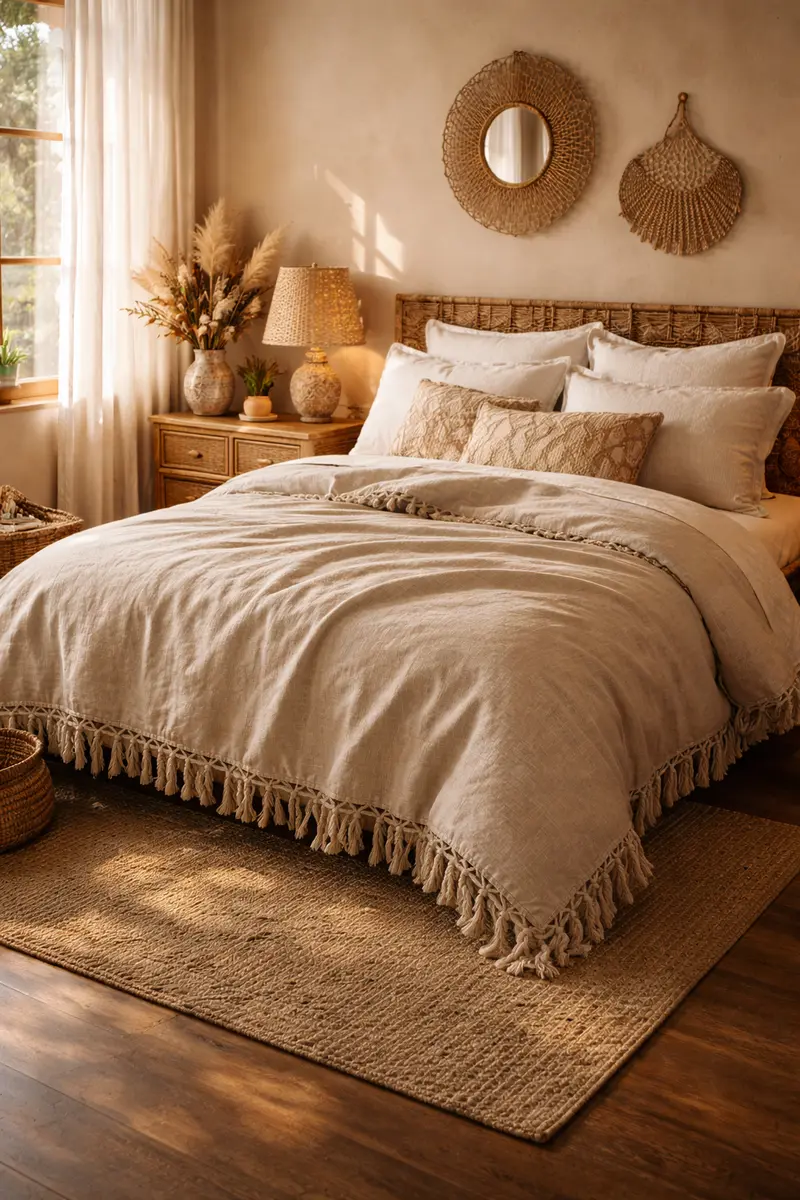
Boho bedding works by layering texture, not pattern. Stonewashed linen, washed cotton, …
Read guide →
Linen wicks more moisture and suits hot sleepers and humid climates. Cotton percale is …
Read guide →