Mixing throw pillows on a sofa comes down to four rules: odd numbers, one pattern plus one texture plus one solid, varied scale, and knowing when to stop.
Four real pillows below show exactly how each rule works in practice.
Start With an Odd Number
Even numbers of pillows read as matched pairs, which looks like a hotel lobby, not a home.
Three or five pillows total forces a slight asymmetry your eye reads as intentional instead of accidental.
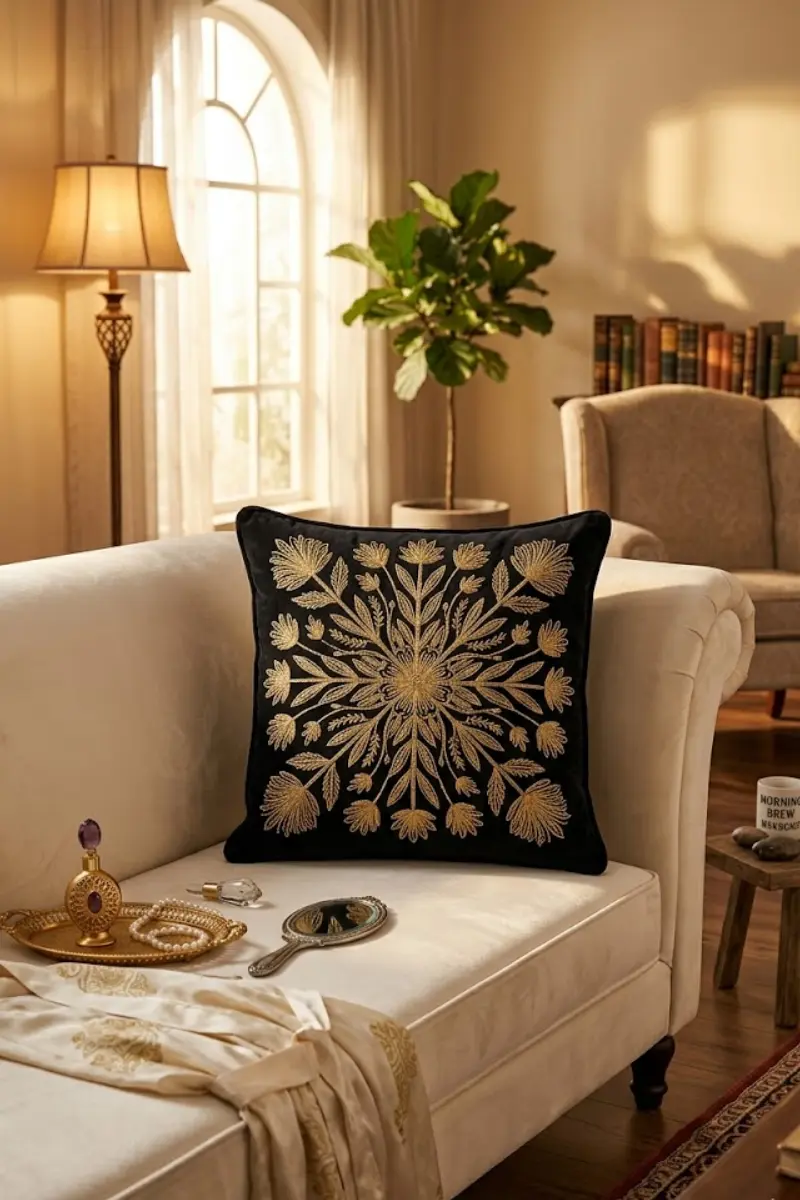
A single strong solid piece like this black velvet pillow with its gold embroidered detail works as the odd one out, the one that doesn’t have a matching twin anywhere else on the sofa.
One Pattern, One Texture, One Solid
Three patterns on a sofa fight each other.
Three solids look flat.
The rule that actually works is one pattern, one texture, and one solid color, repeated across however many pillows you’re using.
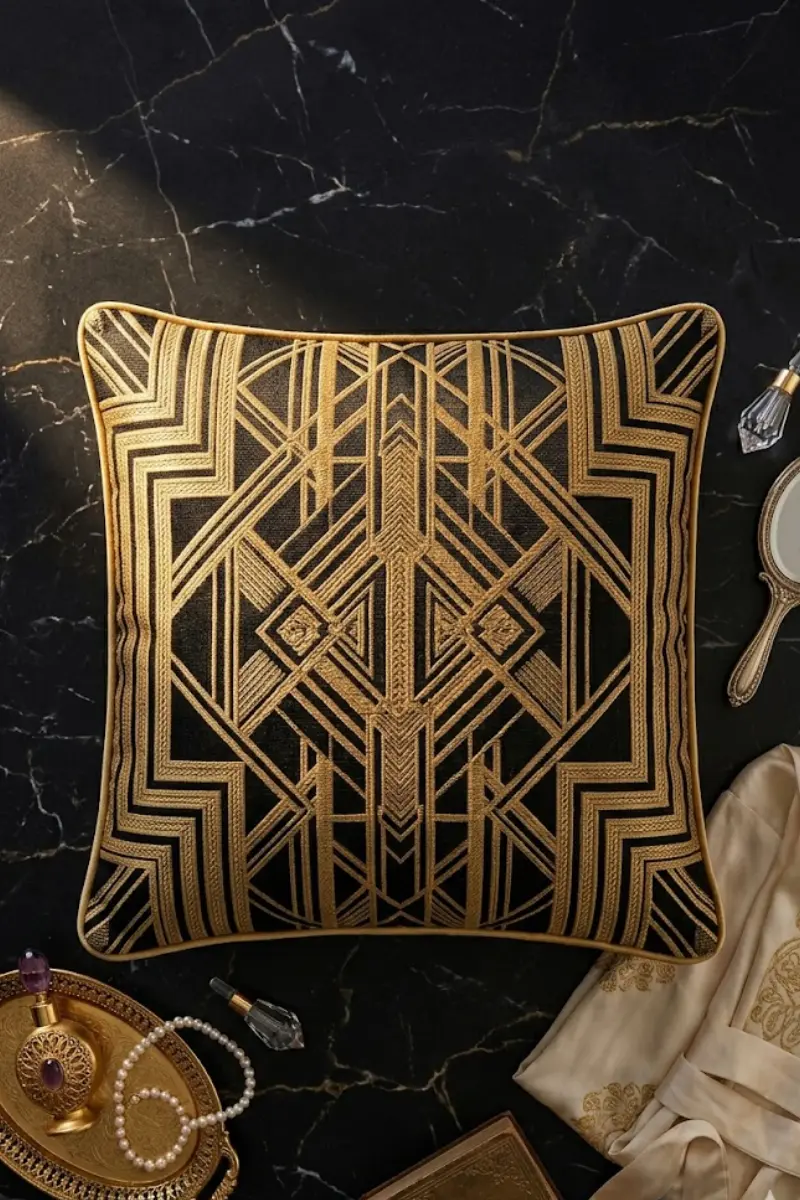
A bold jacquard pattern like this art deco geometric pillow earns the pattern slot on its own, so nothing else on the sofa needs a print.
Vary the Scale, Not Just the Print
Five pillows in the same 18-inch size look like a row of the same box repeated.
Swap one for an oversized piece and the eye has somewhere to land first.
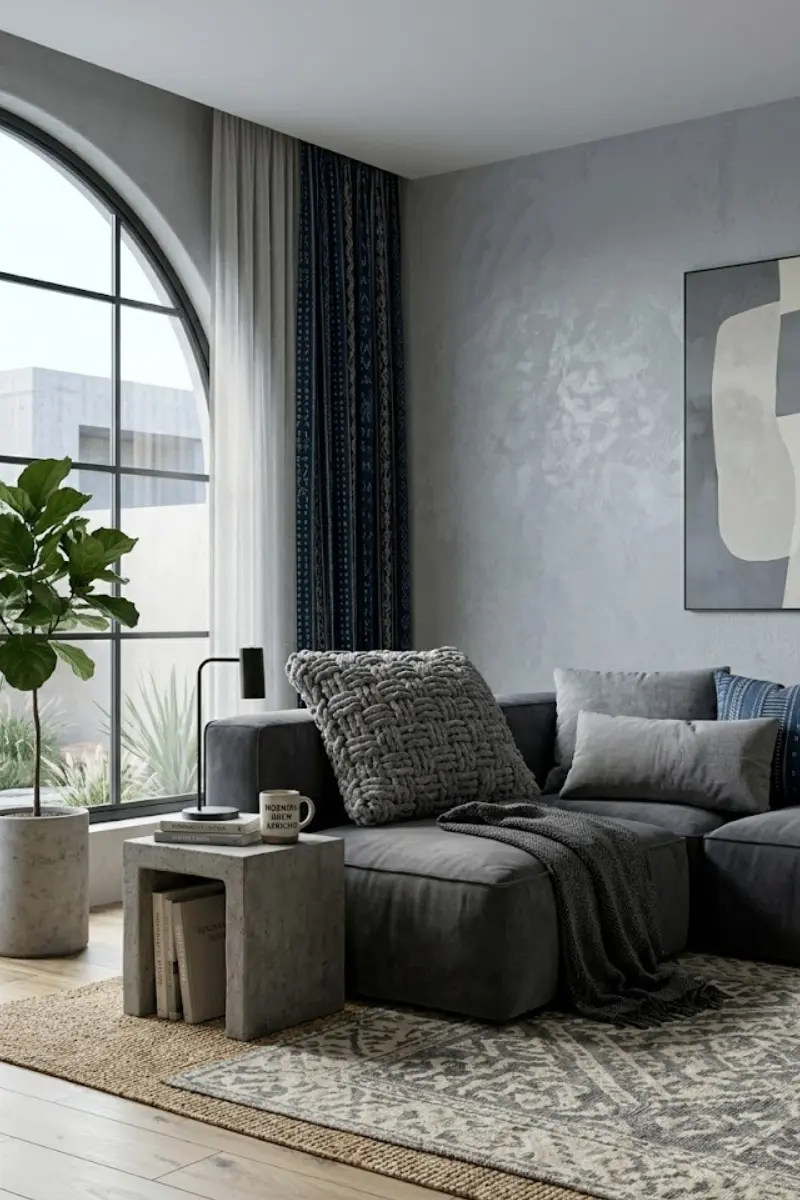
A chunky knit oversized pillow does double duty here: bigger scale breaks the repetition, and its heather grey texture fills the “texture” slot from the rule above without adding another pattern.
Texture Fills the Gaps a Print Can’t
A sofa with only smooth velvet and printed jacquard still looks flat once you get up close, because everything has the same hand-feel.
Fringe, knots, or nubby weaves add a third sensory layer patterns and solid colors can’t.
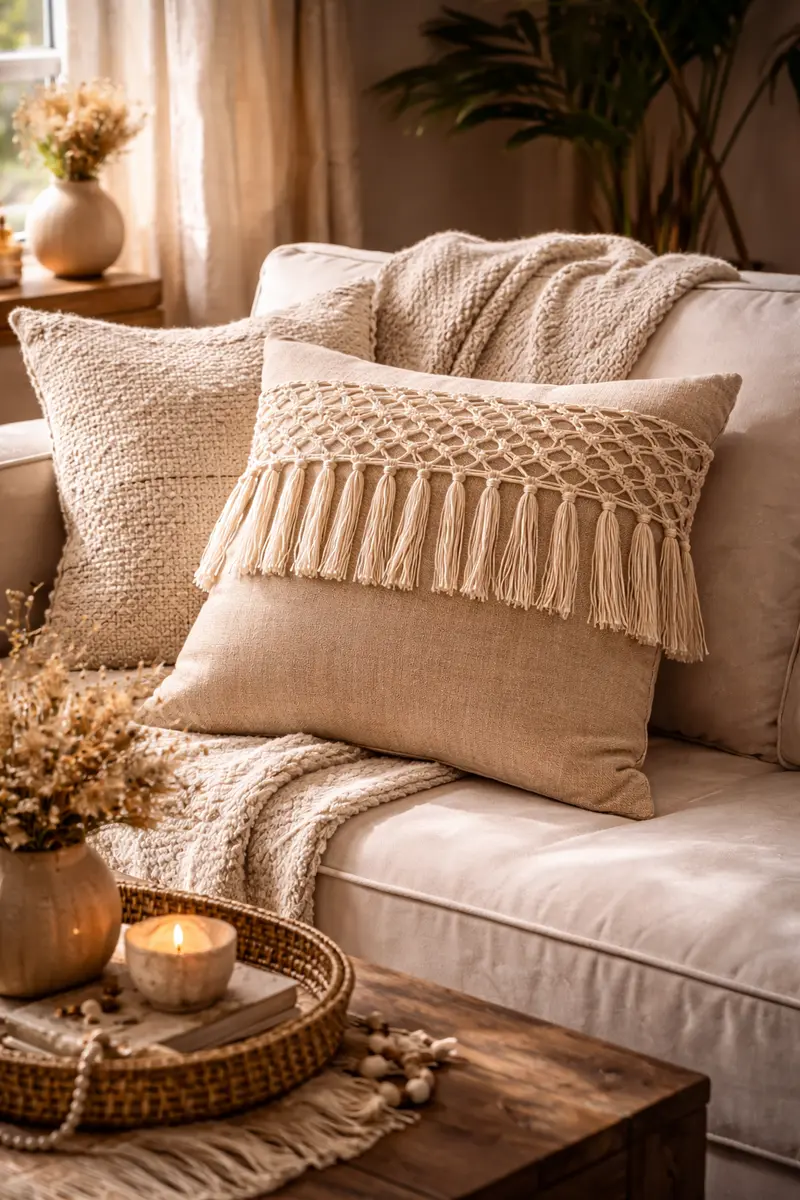
A tasseled cotton pillow like this one is the easiest way to add that layer without introducing a fourth competing color.
The Order That Actually Works
- Largest pieces go in the back corners first, against the sofa arms.
- The next size down goes just in front of those.
- The odd solid piece, the pattern pillow, and the texture piece fill the middle in whatever order looks balanced once the first two rows are placed.
Five total pillows for a three-seat sofa is the ceiling before it starts looking like a display instead of a place to sit.
FAQ
How many throw pillows is too many for a sofa? More than five on a standard three-seat sofa starts to look staged rather than styled.
Two large back-corner pillows, two medium pillows in front, and one accent piece is the practical ceiling for a sofa people actually sit on.
Do throw pillow patterns need to match the sofa fabric? No, they need to relate to it, not match it.
Pull one color already in the sofa or the room’s rug and repeat it in at least one pillow.
The rest of the mix can vary in pattern and texture as long as that one color shows up more than once.
Should throw pillows be the same size? No. A row of identical sizes reads flat.
Mixing one oversized piece, one or two standard 18 to 20 inch squares, and one lumbar or smaller accent pillow gives the eye different scales to land on.
What’s the fastest way to mix pillows without overthinking it? Pick one solid, one pattern, and one textured piece in the same two or three colors, then use an odd total count.
That’s the whole formula.
Everything else is personal taste.
See more sofa-ready pillow picks in our throw pillows buying guide.
Add us to your preferred sources to see our latest room styling guides and luxury decor edits first in your Google feed.
Ideas & Inspiration
Flat sofa cushions leave living rooms feeling unfinished. Here are 8 velvet, faux fur, and …
Read guide →
One real coastal pillow and a neutral texture pairing build a genuine coastal palette for …
Read guide →
Four real throw pillows show the actual rules for mixing textures, patterns, and scale on …
Read guide →