If you live in an apartment, a townhouse, or a home with an open kitchen nook, you already know the everyday pain of a bad dining table. You walk past the kitchen to grab a glass of water, and bang. Your thigh catches a razor-sharp wooden corner. You squeeze into a chair on pizza night, and your knees hit a clunky table leg.
When you have guests over, it gets even worse. Everyone sits elbow to elbow, pulling in their stomach every time someone needs to get up from the table.
You do not need a giant banquet room to have wonderful, comfortable family meals. You just need a table built with geometry that respects your walking paths. Today, we are walking through the smartest space-saving tables that give you back real walking room while making dinner feel relaxed and special.
The Hidden Math of Small Dining Spaces
Most people measure the length and width of their kitchen nook, see that a 60-inch rectangular table fits on paper, and hit order. Two weeks later, the delivery box arrives, they assemble it, and their dining area feels like an obstacle course.
Why does that happen? Because paper measurements forget human bodies:
- The 36-Inch Perimeter Rule: You need at least 36 inches between the table edge and the wall (or kitchen counter) so someone can pull their chair out and walk behind an occupied seat without sliding sideways like a crab.
- The Corner Tax: Rectangular tables waste square footage at the four pointed corners. Nobody sits at the diagonal corners, yet those pointed edges eat up your walking hallway.
- The Four-Leg Trap: Standard four-legged tables place rigid posts exactly where human knees, shins, and chair feet want to slide.
When you switch to a pedestal base or a curved oval shape, you instantly reclaim several feet of usable visual and floor space.
3 Dining Tables That Open Up Small Spaces
Here are our top three tested tables from our catalog that solve the small-nook squeeze without looking cheap or temporary.
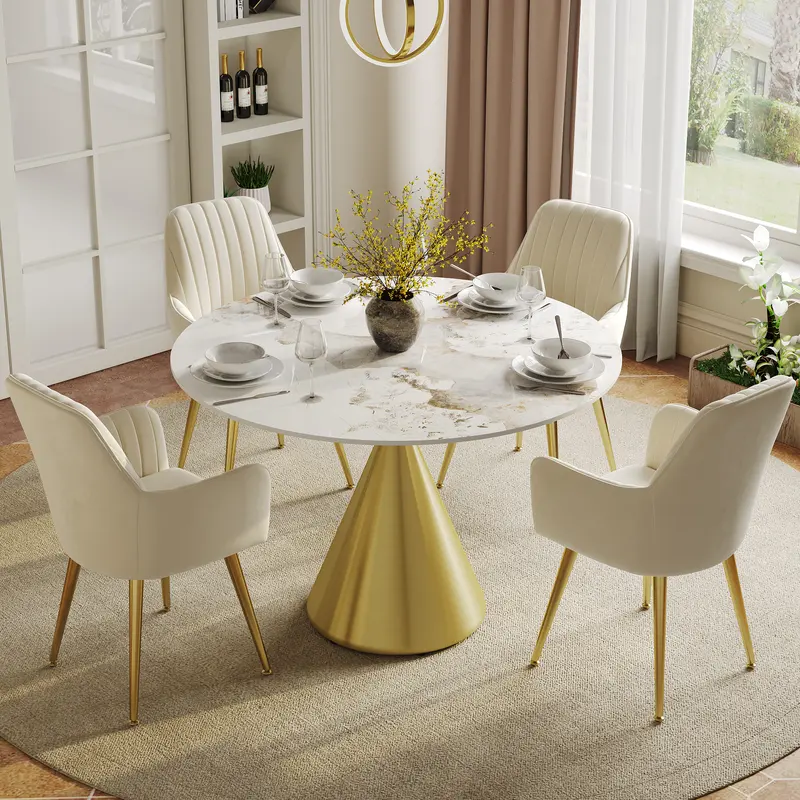
1. The Pedestal Winner: Pandora Faux Marble Round Dining Table
Pandora Faux Marble Round Dining Table, Gold Base
- Best for: Tight breakfast nooks, compact condos, and small square dining rooms.
- Why it saves space: A single center pedestal column frees up 100 percent of the outer perimeter. No matter where you tuck your chairs, there are zero corner legs blocking your shins.
- Surface durability: Built with a sintered stone faux marble top. Hot soup pots and red wine spills will not etch or stain the surface.
- The look: A warm, mirror-gloss gold base that bounces floor light upward, making the entire corner feel airier and larger.
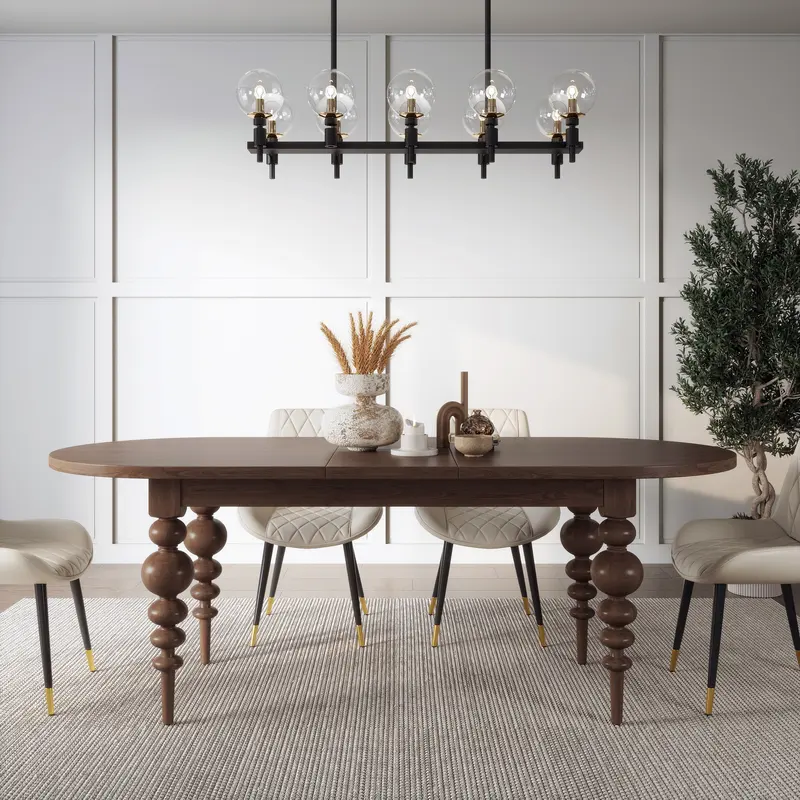
2. The Mid-Century Stunner: Mid-Century Oval Extendable Dining Table
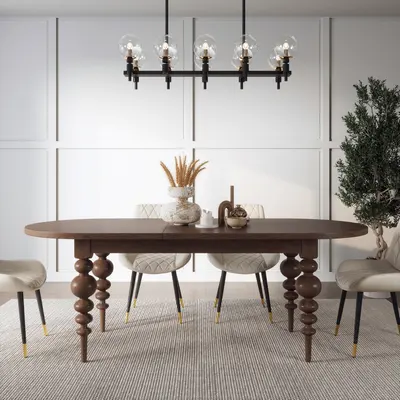
Mid-Century Oval Extendable Dining Table
- Best for: Rectangular nooks and narrow open-concept living-dining combos.
- Why it saves space: The soft curved ends let you round the corner without bruised hips. During regular weeknights, keep it at its compact size to preserve wide walkways.
- Entertaining superpower: When family arrives for Sunday dinner or birthday celebrations, smoothly pull the extension leaf out to seat up to 8 people comfortably.
- The look: Warm wood tones with classic tapered legs that bring cozy mid-century charm to modern spaces.
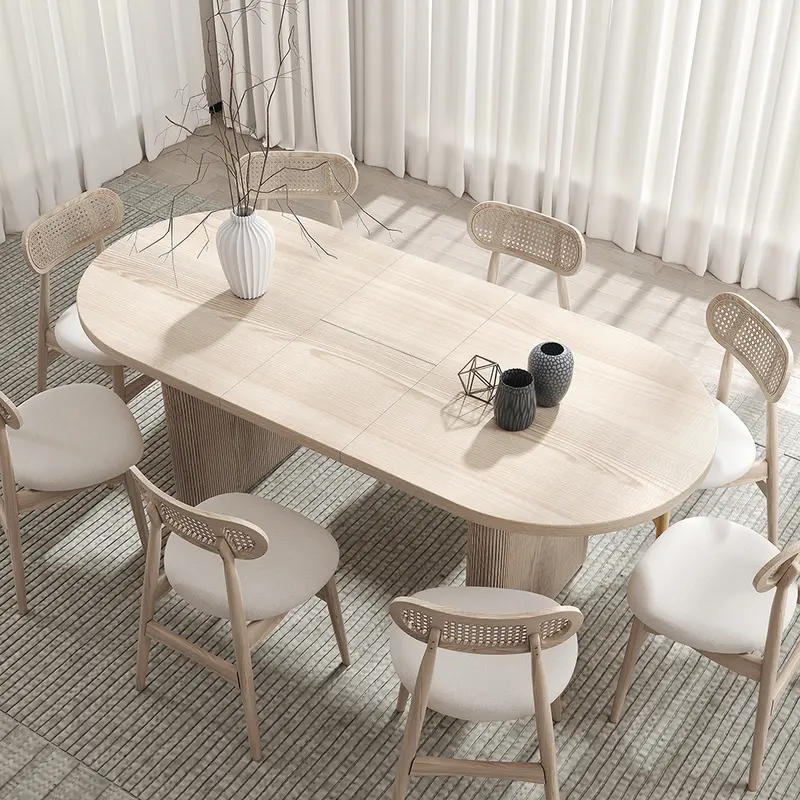
3. The Japandi Chameleon: Japandi Butterfly Leaf Oval Table
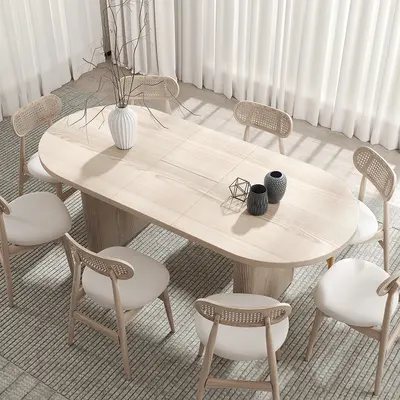
Japandi Butterfly Leaf Oval Dining Table (63-79 in)
- Best for: Homes wanting serene minimalism and hassle-free leaf storage.
- Why it saves space: The hidden butterfly leaf folds directly under the tabletop. You never have to drag a heavy wooden panel out of your bedroom closet or under the bed when guests arrive.
- Clever leg design: The double pedestal base supports heavy weight while keeping knees completely free at both ends of the table.
- The look: Soothing whitewashed wood finish that reflects natural daylight and keeps your eating nook bright and breezy.
Direct Side-by-Side Comparison
| Table Model | Base Type | Seating Capacity | Best Room Shape | Top Perk |
|---|---|---|---|---|
| Pandora Round Marble | Single Center Pedestal | 4-5 people | Square nooks & corners | Zero legs to kick; heat & stain proof top |
| Mid-Century Oval | Tapered Turned Legs | 4 to 8 people | Narrow rectangular areas | Expands for dinner parties, rounded safety corners |
| Japandi Butterfly Leaf | Double Pedestal Base | 6 to 8 people | Open kitchen-dining zones | Self-storing butterfly leaf, calm whitewash tone |
4 Rules to Maximize Floor Space Around Your Dining Table
Rule 1: Choose Backless Benches or Armless Chairs
Chairs with high, chunky arms cannot slide all the way under the table when dinner is done. That means the chair sticks 12 inches out into your walkway all day long. Choose low-profile, armless chairs or slide-under benches that tuck completely flush against the table rim.
Rule 2: Hang Your Chandelier Exactly 30 to 34 Inches High
In a small room, high flush-mount ceiling lights illuminate the ceiling and make walls feel closer together. Hanging a pendant or chandelier 30 to 34 inches above your tabletop draws the gaze down onto the dining surface. It creates an intimate dining bubble that separates the eating zone from the rest of the living area.
Rule 3: Hang a Large Wall Mirror Perpendicular to the Table
Place a tall gold or fluted mirror on the wall beside your dining table. The mirror reflects the table surface, daylight, and pendant glow. Your brain reads the reflection as an extension of the room, doubling the perceived depth of your nook.
Rule 4: Match Your Rug to the Extended Table Footprint
If you use a rug under your dining table, make sure it extends at least 24 inches beyond every table edge. If the rug is too small, the chair back legs catch on the rug lip every time someone stands up. If your nook is too cramped for an 8x10 rug, skip the rug completely. Bare, clean flooring makes tight rooms feel noticeably bigger.
Common Small Dining Mistakes to Avoid
- Buying a rectangular table with thick apron sides: Thick wooden aprons under the tabletop hit your thighs and prevent people from crossing their legs.
- Pivoting to bar stools only: High counters are great for quick cereal mornings, but uncomfortable for two-hour dinner conversations with close friends.
- Placing heavy cabinets right next to the seating: Keep credenzas and bar carts on opposite walls so you do not crowd the main dining path.
Frequently Asked Questions
What shape table is best for a tight dining corner?
A round pedestal table is the undisputed king of tight dining corners. Because there are no sharp 90-degree corners, you can squeeze past the edge easily. A center pedestal also lets you squeeze an extra chair in without anyone straddling a wooden table leg.
How much space do I need around a dining table?
Leave a minimum of 36 inches between the tabletop edge and the nearest wall or furniture piece. This allows an adult to sit down comfortably and allows other family members to walk past without bumping into chairs.
Can an oval table fit in a narrow room?
Yes. Oval tables are actually better than rectangular tables in narrow rooms because the curved ends open up sightlines and eliminate hip-bumping pinch points in the walking lanes.
How do I care for a faux marble sintered stone top?
Sintered stone is one of the toughest surfaces available in modern furniture. You can place hot mugs, bowls, and plates directly on it without trivets. Simply wipe clean with warm water and mild dish soap. Avoid abrasive scouring pads to keep the polished shine intact.
Add us to your preferred sources to see our latest room styling guides and luxury decor edits first in your Google feed.