Bedroom Bedding

Bedroom Bedding That Turns a Bed Into a Hotel Suite

The bed takes up more visual space than any other piece of furniture in your bedroom, so the bedding decides whether the room reads finished or unfinished.

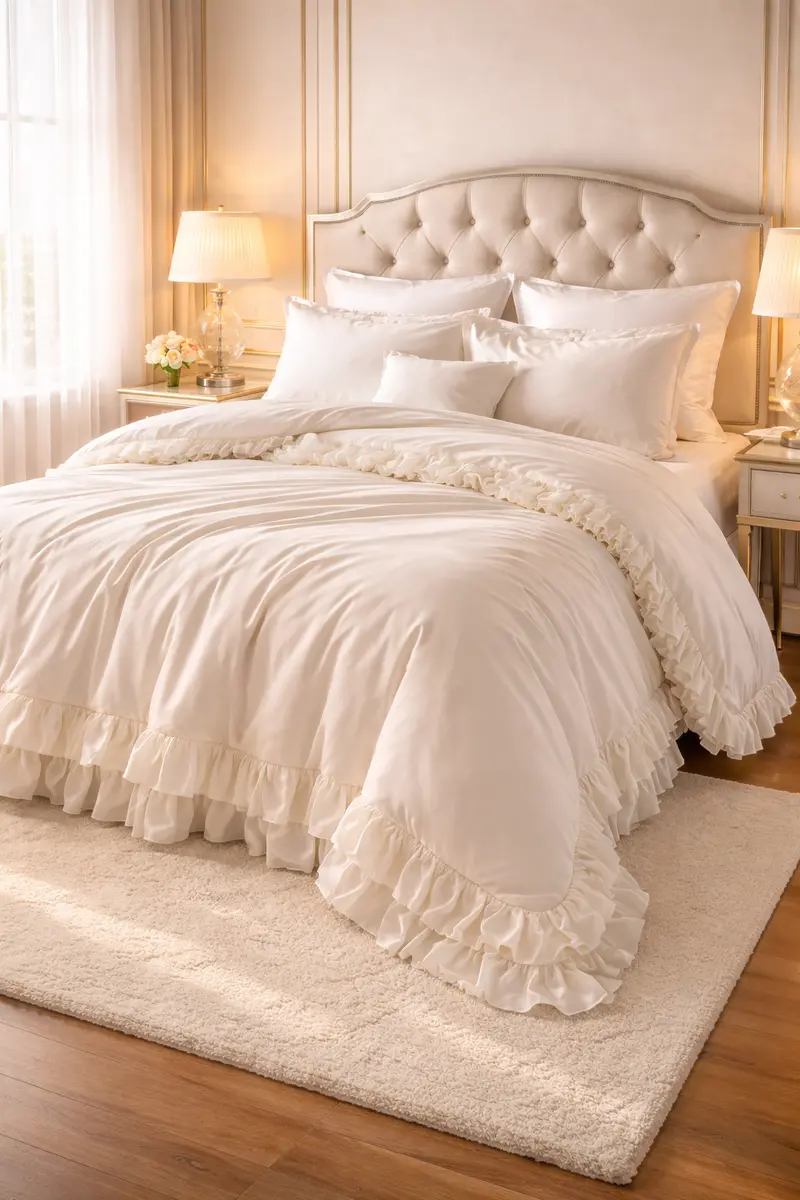
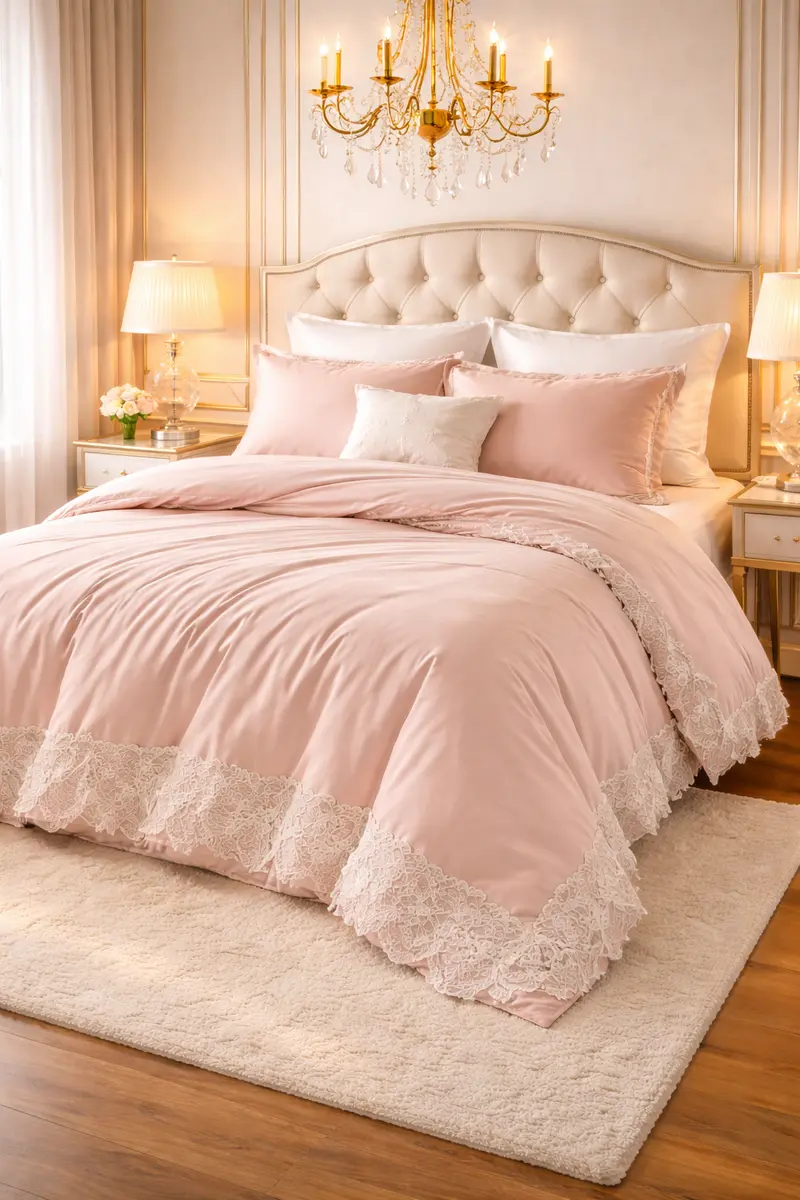
Buy a duvet cover one size up from your mattress. An oversized queen duvet on a queen bed gives you the puffed, hotel style overhang instead of a flat, tucked in look.
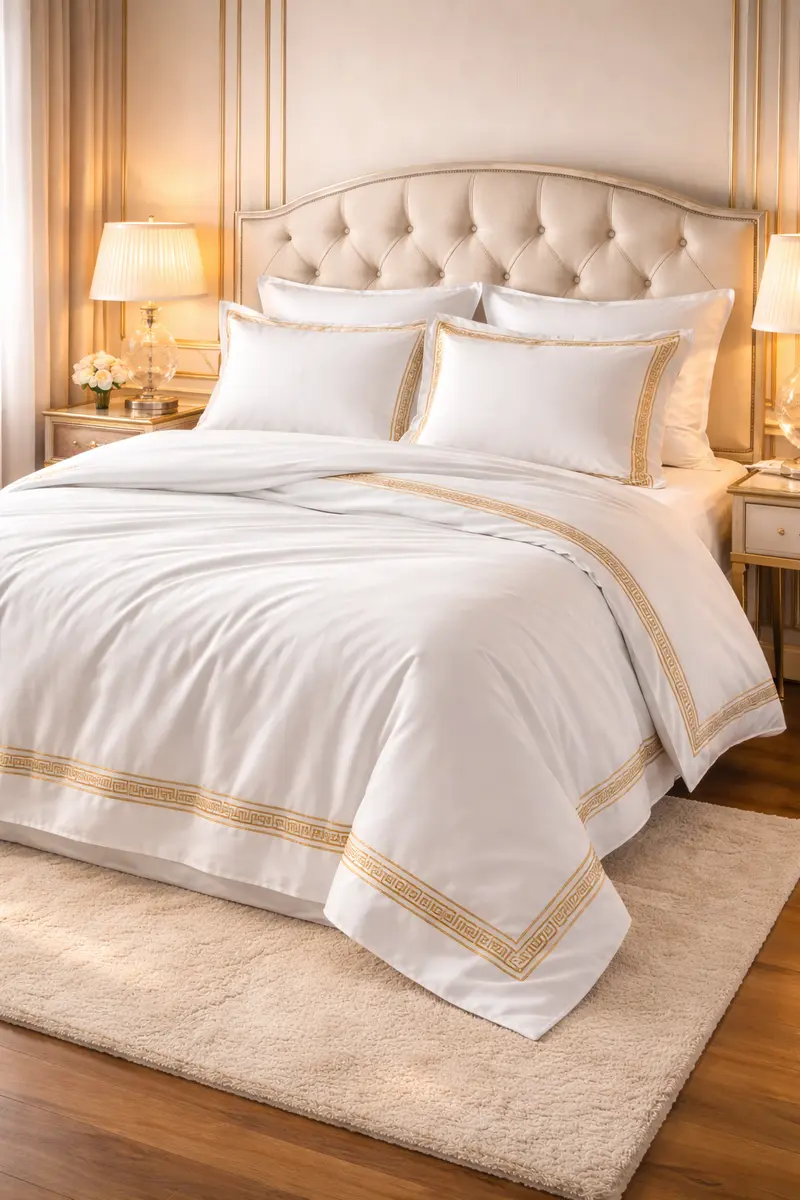
gold embroidered border cotton sheet set styled on a made bed

A bedroom with expensive furniture and the wrong bedding still reads unfinished.

Thin, mismatched sheets under a flat comforter is the fastest way to make an otherwise well designed room look like a guest room nobody committed to.

The bed takes up 40 to 50 percent of the visual field in most bedrooms, so whatever covers it decides the room’s whole first impression, not the paint color or the art on the wall.

Done right, the bed becomes the room’s calm center instead of its weak point.

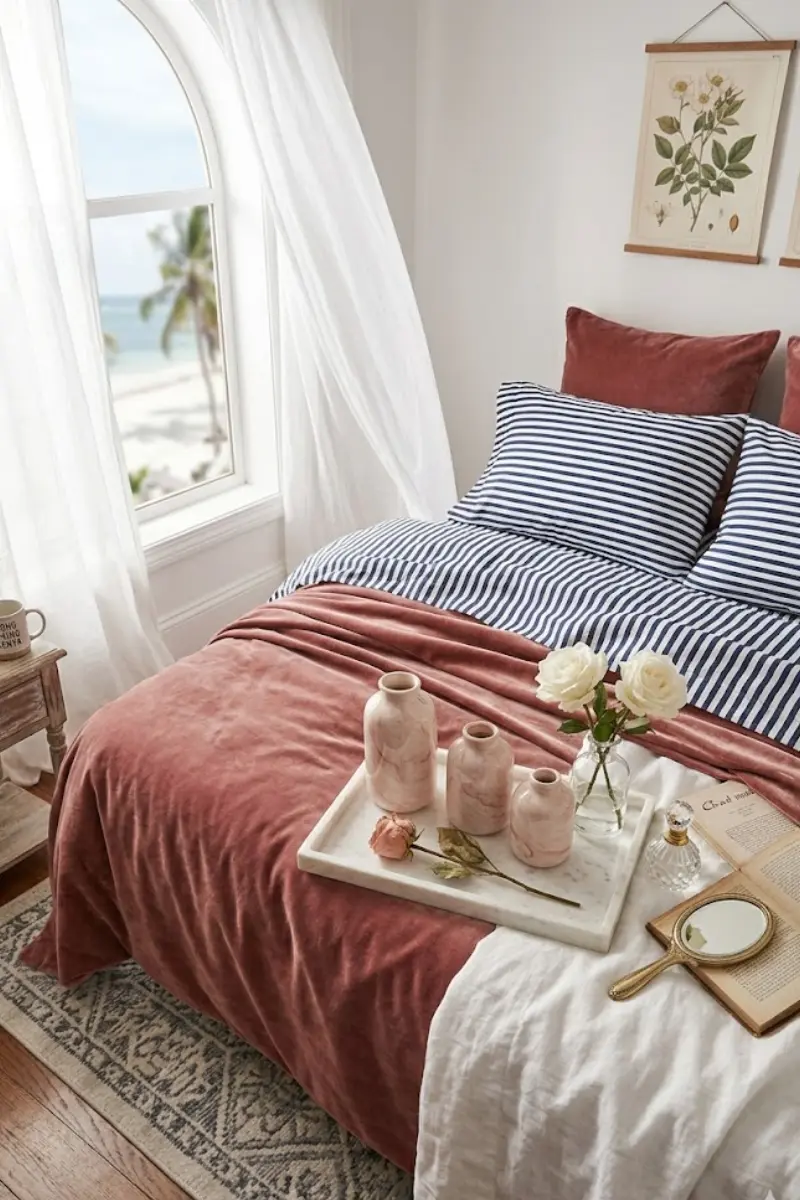
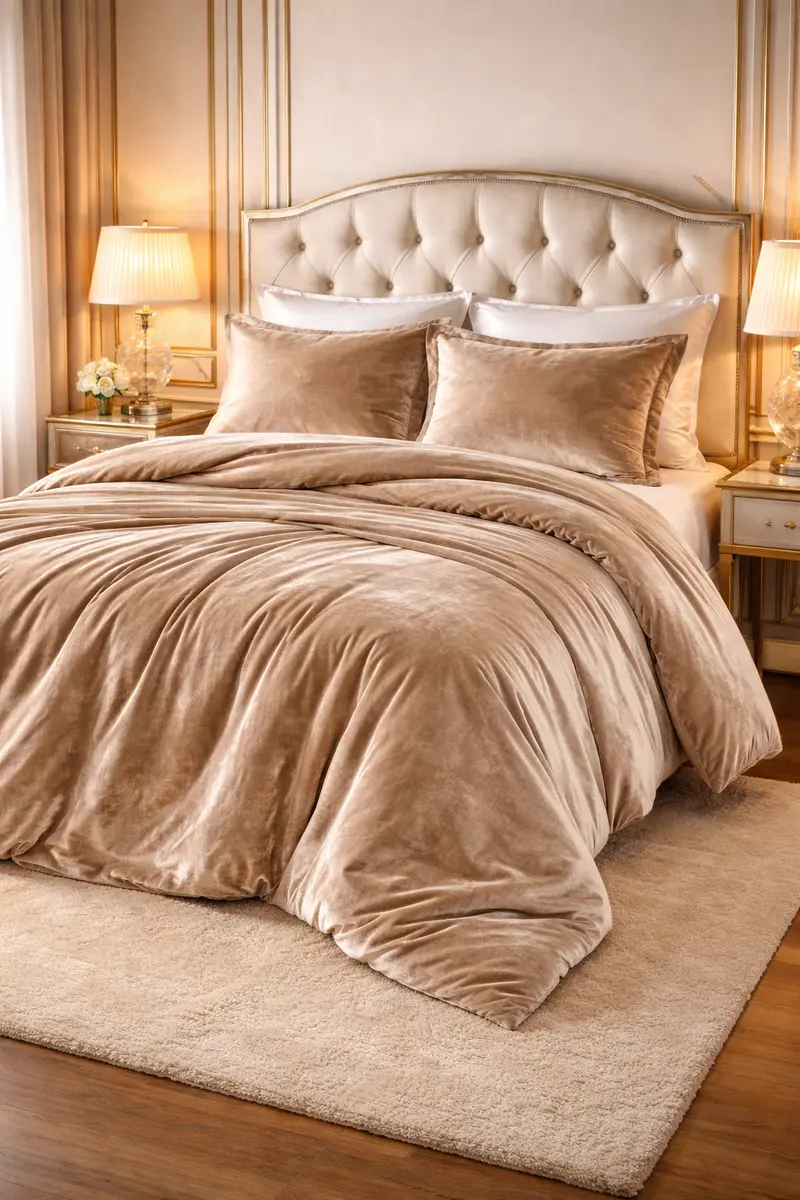
Weight and drape matter as much as color: a velvet coverlet pools and folds with real heft, while a thin polyester set sits flat no matter how it’s arranged.

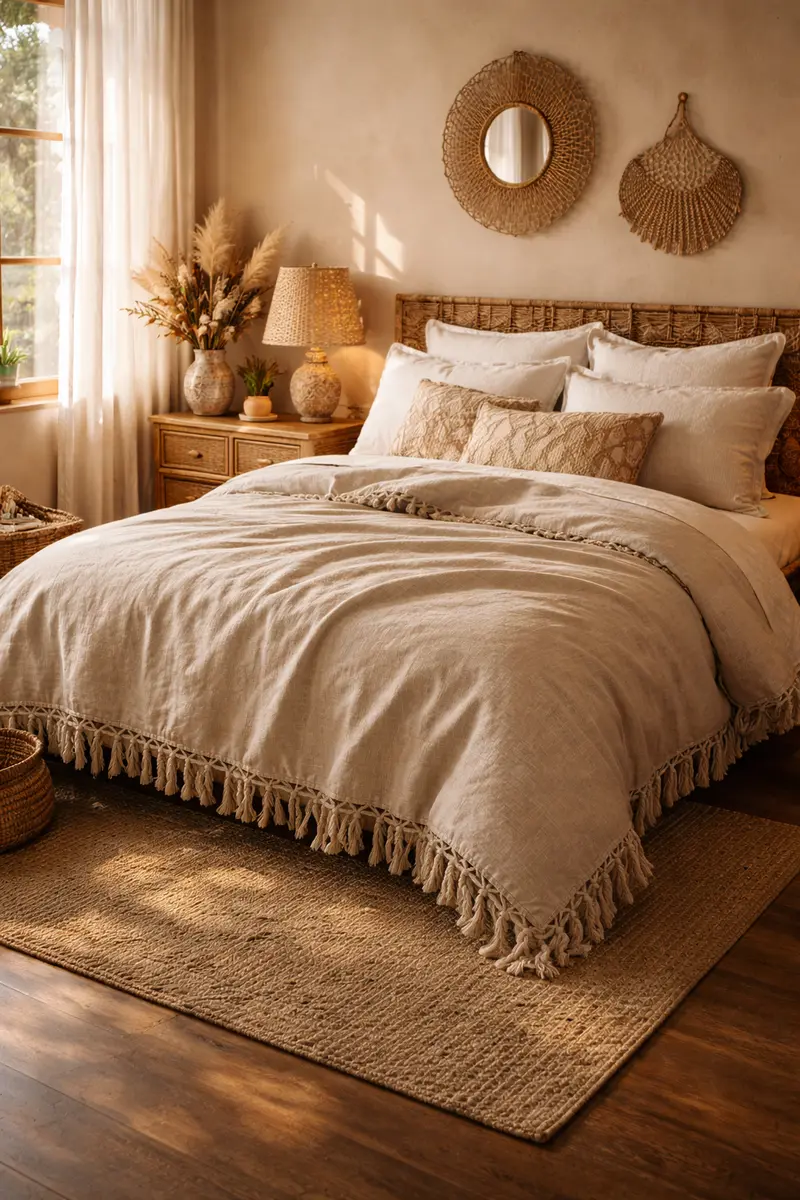
Layering a duvet, a folded throw, and a mix of pillow sizes creates depth a single flat comforter never manages, and it takes the same five minutes to make each morning.

Buy the duvet cover one size larger than the mattress.

A queen duvet on a queen bed sits flush and looks flat once it’s tucked.

A king duvet on a queen bed drapes past the edges and gives the puffed, hotel style overhang most people are actually picturing when they shop.

The same logic applies to flat sheets: an extra 6 to 8 inches of drop on each side reads intentional instead of stretched.

Tip An extra 6 to 8 inches of drop on each side of a flat sheet reads intentional instead of stretched. The same oversized logic that works for a duvet applies here too.

Fabric weight is the detail most people skip and regret.

A lightweight microfiber comforter looks fine in a product photo but goes flat and thin after a few washes. These hold their shape and texture over years of use instead:

  • Cotton velvet
  • Jacquard weaves
  • Heavier percale

Checking the fill weight or fabric grams per square meter before buying, not just the thread count on the sheets underneath, is what separates bedding that lasts from bedding that needs replacing by next winter.

Hack Check fill weight or fabric grams per square meter before buying, not just thread count on the sheets underneath. That’s what separates bedding that lasts from bedding that needs replacing by next winter.

Everything below is real bedding sized and photographed for an actual bedroom, sorted by the details that matter: fabric weight, color, and finish.

Start with the duvet or comforter, since it drives every other choice in the room.

Types of Bedding

Not all bedding work the same way in a bedroom space. Here's how the main types differ.

Duvet Covers

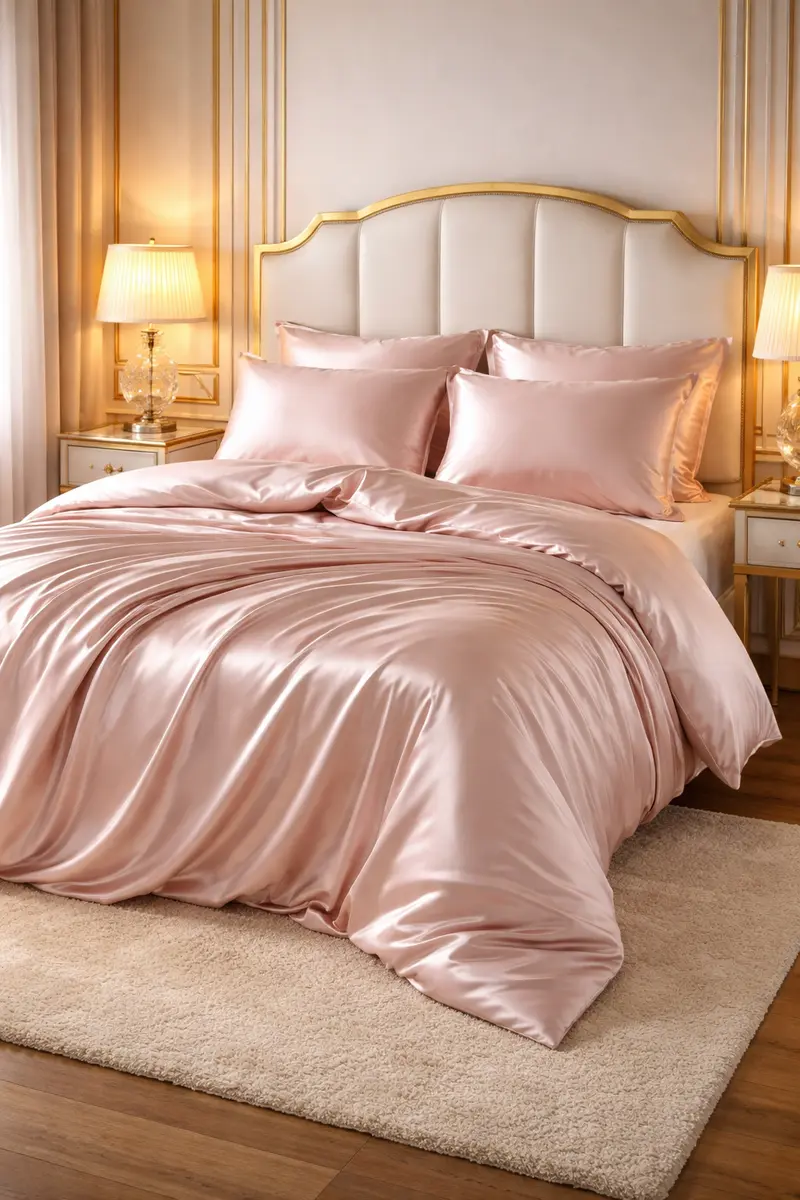
A removable cover for your duvet insert, the most important bedding piece. Sets the entire look and feel of your bedroom. Available in cotton, linen, velvet, and satin. Choose carefully, you'll look at it every day.

Best for: All bedrooms. The foundation of any bedding setup

Sheet Sets

Fitted sheet, flat sheet, and pillowcases sold together. Thread count matters but weave matters more. Percale for crisp cool feel, sateen for silky soft warmth. 400+ thread count sateen is the luxury standard.

Best for: All bedrooms

Pillowcases

Often overlooked but hugely impactful. Satin and silk pillowcases reduce hair frizz and skin creasing. Decorative euro shams add hotel-style layering depth to any bed.

Best for: All bedrooms. Especially beauty-conscious sleepers

Throw Blankets

Decorative blankets draped at the foot of the bed or over a reading chair. Chunky knit throws are the signature glam bedroom accessory. They add texture, warmth, and instant cosiness.

Best for: Bedroom foot of bed, sofas, reading chairs

Bed Runners

A narrow strip of decorative fabric laid across the foot of the bed. Used in hotel-style bed dressing to add a layer of colour and texture without a full throw.

Best for: Bedrooms aiming for a hotel aesthetic

Quilts & Coverlets

Lighter than a duvet, quilts and coverlets sit on top of the bed as a decorative layer. Perfect for warmer climates or as an additional layer in the hotel-style bed.

Best for: Warm climates, layered bed dressing, guest rooms

Browse All Bedroom Bedding

Ideas & Inspiration

Frequently Asked Questions

What is the difference between a duvet cover and a comforter?
A comforter is one finished piece filled with insulation that you use as is. A duvet cover is a fabric shell you wash separately and slide over a duvet insert, which means you can change the whole bedroom color story without buying new bedding every time. Duvet covers also wash easier since you're not stuffing a king size comforter into a home washer. Comforters are simpler for a guest room where you want one less step.
How often should bedroom sheets be washed?
Wash sheets once a week, or every 10 days at the outside limit. Skin cells, oil, and dust mites build up fast on a surface you spend 7 to 8 hours a night on. Duvet covers and pillowcases follow the same weekly schedule since they touch skin directly. The duvet insert itself only needs washing 2 to 3 times a year.
What thread count is actually worth buying for bedroom sheets?
300 to 400 thread count in cotton percale or sateen is the real sweet spot, not the marketing number above 800. Thread counts above 500 are frequently inflated by counting multi ply threads as separate strands, so a true single ply 400 count sheet often feels better than a padded 1000 count claim. Percale feels crisp and cool. Sateen feels smoother and slightly warmer.
How do you layer a bed like a hotel?
Start with a fitted sheet and flat sheet, add the duvet folded back a third of the way down, then stack 2 to 4 pillows in ascending size from back to front. A folded throw or runner across the foot of the bed finishes the layer. Hotels use this exact order because it photographs well and stays easy to remake every morning.
What color bedding makes a small bedroom look bigger?
Light, low contrast bedding in ivory, white, or soft grey makes a small bedroom read larger, since the eye doesn't stop at a hard color break between the bed and the wall. Save the boldest pattern or darkest color for one accent, like a single lumbar pillow or folded throw, not the full duvet. A busy, high contrast duvet on a small bed makes the whole room feel more cramped, not less.
How many pillows should actually be on a made bed?
2 sleeping pillows plus 2 to 3 decorative pillows or a bolster is the range that reads styled without turning into a nightly chore. Anything past 6 pillows on a queen bed becomes something you have to physically remove and pile on the floor before sleeping, which most people give up on within a month. Fewer, better pillows beat a tall stack every time.
Should bedroom sheets match the duvet cover exactly?
No, matching tone rather than matching pattern reads more intentional. A solid ivory sheet under a patterned or textured duvet looks more considered than an exact matching set, since it avoids the flat, one note look of a full print set. Keep one element, like color family, consistent and let the textures do the rest of the work.
What is the best bedding fabric for a hot sleeper?
Percale cotton or linen is the better choice for a hot sleeper, not sateen or microfiber. Percale has a plain, tight weave that lets air pass through, while sateen's looser weave traps more heat against skin. Linen goes a step further since the fiber itself pulls moisture away from the body overnight.

Want the Full Bedding Guide?

Types, styles, sizing rules, and our complete pick list, all in one place.

Browse All Bedding β†’

Explore More Bedroom Guides

Get Decor Ideas Straight to Your Inbox πŸ“¬

Weekly inspiration, styling tips, and curated picks for your home.