Coastal Bedding

Coastal Bedding: Crisp Stripe, Cotton, No Anchor Motifs

Coastal bedding works best understated, since an anchor or seashell print reads more like a beach gift shop than an actual coastal bedroom.

Choose a plain stripe or solid white over any nautical print. A navy stripe on white cotton percale reads coastal in ten years the same way it does today. A novelty print won't.

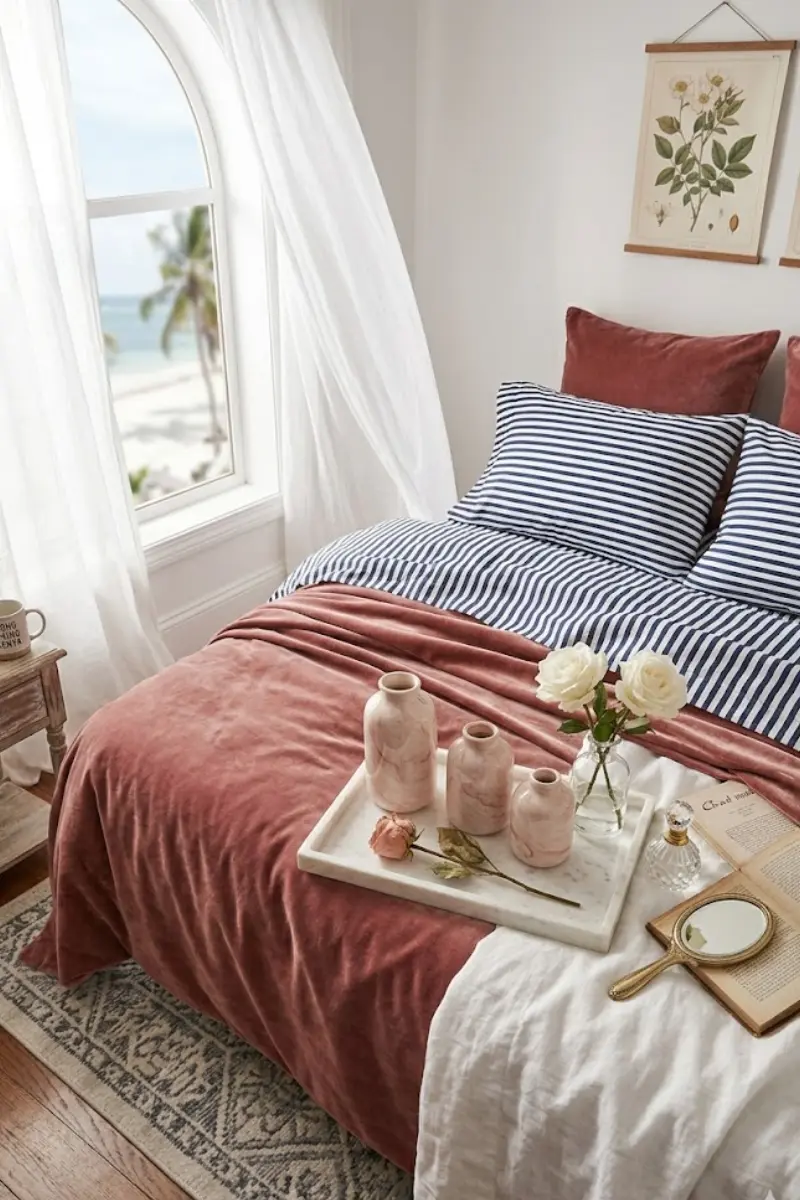
crisp navy stripe cotton percale sheet set styled on a coastal bedroom bed

Coastal bedding gets misread constantly as anchor prints and seashell motifs, which is closer to a beach gift shop than an actual coastal home. That version of coastal dates within a couple of years and starts to feel like a themed rental rather than a considered bedroom. The real style is quieter than most people expect going in.

Done right, coastal bedding is crisp, breathable, and genuinely timeless. A navy stripe on white cotton percale looks the same in ten years as it does today, because it was never trend dependent to begin with. The fabric itself does real work too: cotton percale is one of the more breathable options available, which matters in a warm coastal climate where a heavier fabric would actually be uncomfortable.

Fabric choice is a practical decision here, not just a style one. Cotton percale’s tight, plain weave lets air move through it, which keeps a coastal bedroom cooler than a heavier sateen or velvet set would. This is one of the few styles on this list where the most authentic fabric choice and the most climate practical choice are the exact same fabric.

Palette restraint is the second detail. Navy and white is the classic pairing, but any two color combination, sandy tan and white, or seafoam and grey blue, keeps the clean, breezy read coastal is built on. A third or fourth color added to the mix starts pulling the room toward a more general beach theme rather than the specific, understated coastal look.

The bedding below sticks to that understated coastal formula: crisp cotton, a simple stripe or solid, two colors at most. Start with the sheet set, since it’s the piece most directly touching skin in a warm coastal bedroom.

Types of Bedding

Not all bedding work the same way in a coastal space. Here's how the main types differ.

Duvet Covers

A removable cover for your duvet insert, the most important bedding piece. Sets the entire look and feel of your bedroom. Available in cotton, linen, velvet, and satin. Choose carefully, you'll look at it every day.

Best for: All bedrooms. The foundation of any bedding setup

Sheet Sets

Fitted sheet, flat sheet, and pillowcases sold together. Thread count matters but weave matters more. Percale for crisp cool feel, sateen for silky soft warmth. 400+ thread count sateen is the luxury standard.

Best for: All bedrooms

Pillowcases

Often overlooked but hugely impactful. Satin and silk pillowcases reduce hair frizz and skin creasing. Decorative euro shams add hotel-style layering depth to any bed.

Best for: All bedrooms. Especially beauty-conscious sleepers

Throw Blankets

Decorative blankets draped at the foot of the bed or over a reading chair. Chunky knit throws are the signature glam bedroom accessory. They add texture, warmth, and instant cosiness.

Best for: Bedroom foot of bed, sofas, reading chairs

Bed Runners

A narrow strip of decorative fabric laid across the foot of the bed. Used in hotel-style bed dressing to add a layer of colour and texture without a full throw.

Best for: Bedrooms aiming for a hotel aesthetic

Quilts & Coverlets

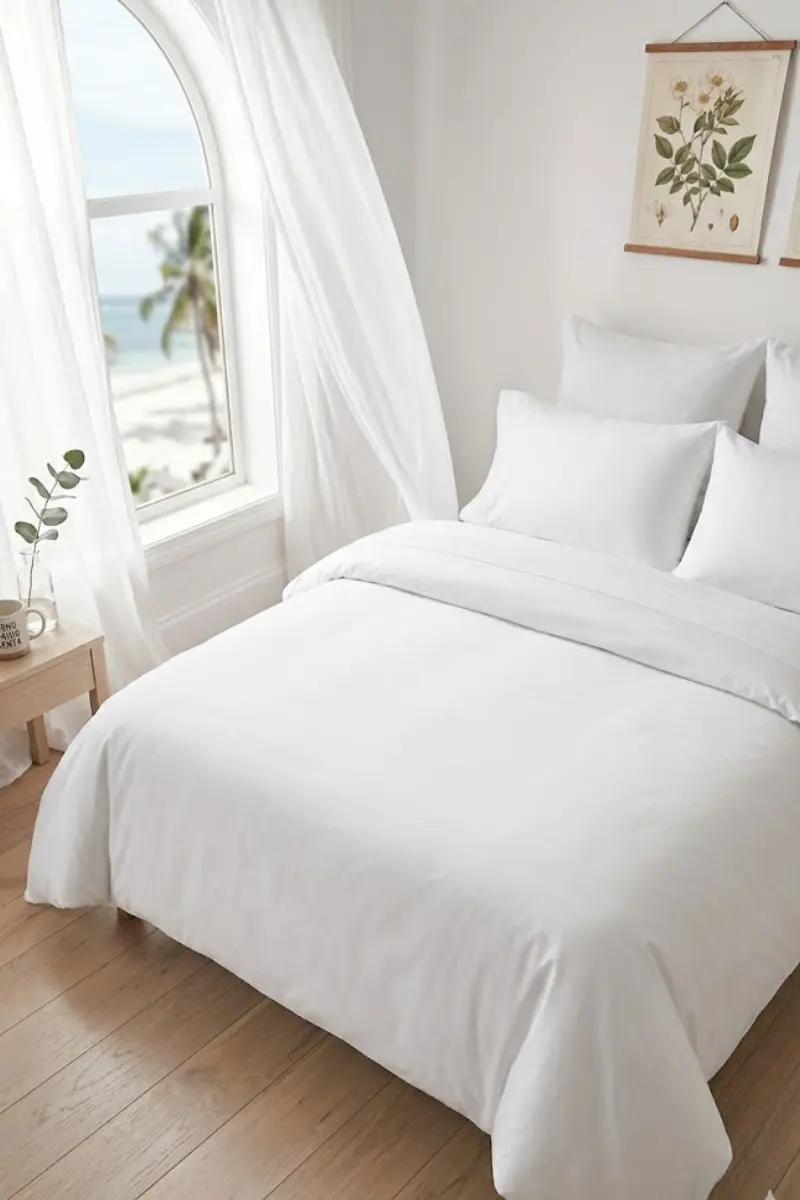
Lighter than a duvet, quilts and coverlets sit on top of the bed as a decorative layer. Perfect for warmer climates or as an additional layer in the hotel-style bed.
Best for: Warm climates, layered bed dressing, guest rooms

Browse All Coastal Bedding

Frequently Asked Questions

What is the difference between coastal and nautical bedding?
Coastal bedding is understated: crisp cotton, a simple stripe, white and one blue tone. Nautical bedding is themed: anchors, seashells, rope motifs, and often more color and pattern than an actual coastal home would use. Coastal is the style that ages well. Nautical reads more like a beach rental.
What fabric is best for a coastal bedroom?
Cotton percale is the standard, chosen because it's crisp, breathable, and handles a warm coastal climate better than a heavier fabric like velvet or flannel. The crisp hand feel also matches the clean, fresh look coastal bedrooms are going for.
What colors work in coastal bedding besides navy and white?
Navy and white is the classic pairing, but sandy tan, seafoam, and soft grey blue all work as coastal alternatives. Keep the palette to two colors maximum. Coastal bedding loses its clean, breezy quality fast once a third or fourth color gets added to the mix.
Does coastal bedding need a stripe pattern to read coastal?
No, a solid white or ivory set with crisp percale texture reads just as coastal as a striped one, especially paired with natural fiber accessories like a jute rug or rattan headboard elsewhere in the room. The stripe is a classic option, not a requirement.
Is coastal bedding good for a warm climate bedroom?
Yes, cotton percale is one of the more breathable fabric choices available, which makes coastal bedding a practical choice for a warm climate bedroom, not just a style choice. Avoid heavier fabrics like velvet or flannel sateen in this style for exactly that reason.
How do you keep coastal bedding from looking dated?
Stick to a plain stripe or solid color over any literal beach motif like anchors or shells, since motif driven prints date the fastest of any pattern category. A navy stripe on white cotton has looked the same for decades and will keep looking current, while a novelty print reads dated within a couple of years.

Want the Full Bedding Guide?

Types, styles, sizing rules, and our complete pick list β€” all in one place.

Browse All Bedding β†’

Get Decor Ideas Straight to Your Inbox πŸ“¬

Weekly inspiration, styling tips, and curated picks for your home.