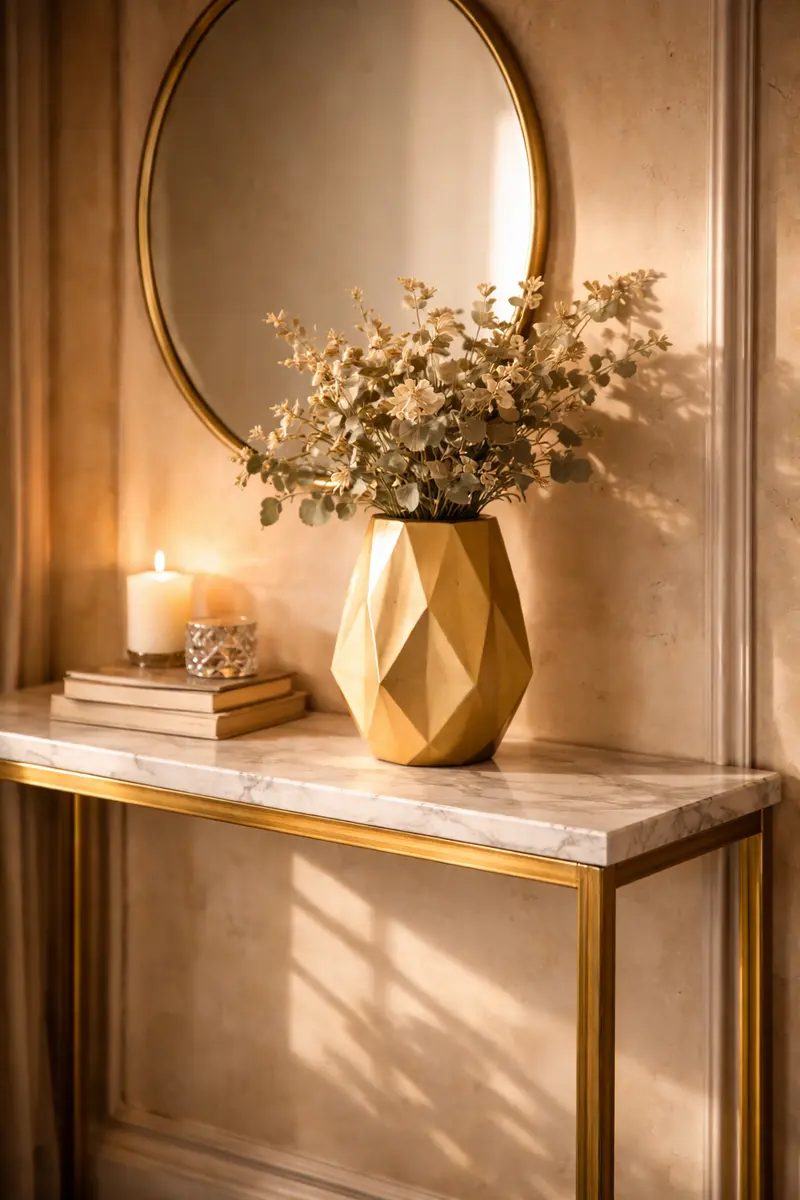
Choose a vase in raw or matte metal, black, gunmetal, or aged gold, with an angular rather than rounded silhouette. A faceted geometric metal vase pairs with exposed brick or steel shelving better than any ceramic piece will.
A soft pastel or heavily glazed ceramic vase looks decorative in a way that undercuts an industrial room built around exposed steel, raw wood, and concrete.
The whole style depends on materials that look worked or salvaged, and a delicate vase breaks that story the moment it’s placed on a shelf.
Get it right and the vase reads like reclaimed hardware rather than a decorative object.
An angular gold finish metal piece with faceted panels on a console beside exposed brick.
Nothing rounded or soft about it.
Just structural lines that could belong in a warehouse as easily as a living room.
Material carries more weight in this style than in almost any other on this list.
Metal fits the raw, worked feeling this style depends on far better than ceramic or glass does, specifically in one of three finishes:
- Matte black
- Gunmetal
- Aged gold
A faceted or paneled metal surface reads as functional first, decorative second, which is exactly the industrial logic.
Shape reinforces the material choice.
Angular and geometric silhouettes pull from factory and warehouse design, where form typically follows function rather than ornament.
A rounded, soft vase undercuts an otherwise angular room even in the right metal finish, so shape and material both need to point the same direction.
A visible weld seam or rivet detail on the metal also reinforces the salvaged, functional feeling, rather than undercutting it the way a smooth finish would.
The picks below lean into metal finishes and angular lines over anything soft or rounded, so each one fits a room built around raw, structural materials.
Types of Vases
Not all vases work the same way in a industrial space. Here's how the main types differ.
Floor Vase
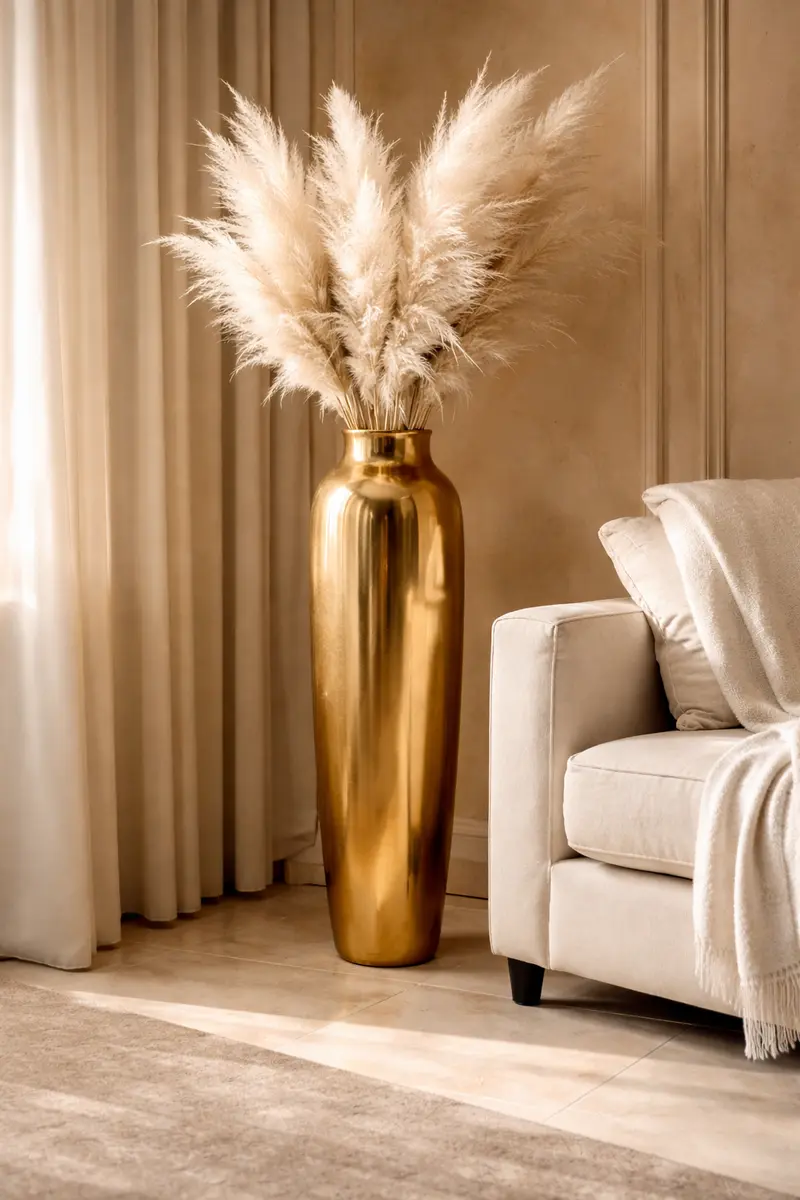
24 inches or taller, sits directly on the floor. This is the single fastest fix for an empty corner. Fill with pampas grass, dried branches, or leave it empty and let the vessel itself do the work.
Bud Vase Sets
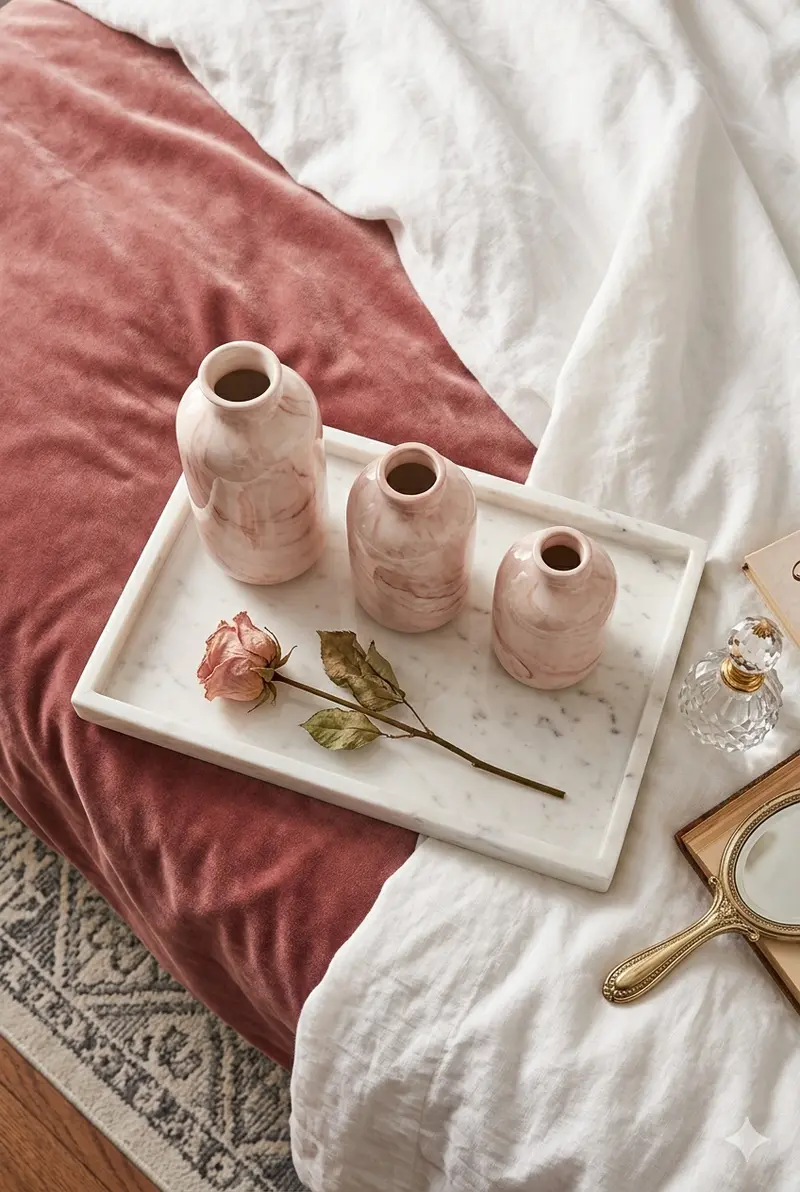
Grouped in threes at graduating heights, bud vases hold a single stem each rather than a full arrangement. This is the format for a nightstand or dresser where a large vase would overwhelm the surface.
Sculptural / Statement Vase
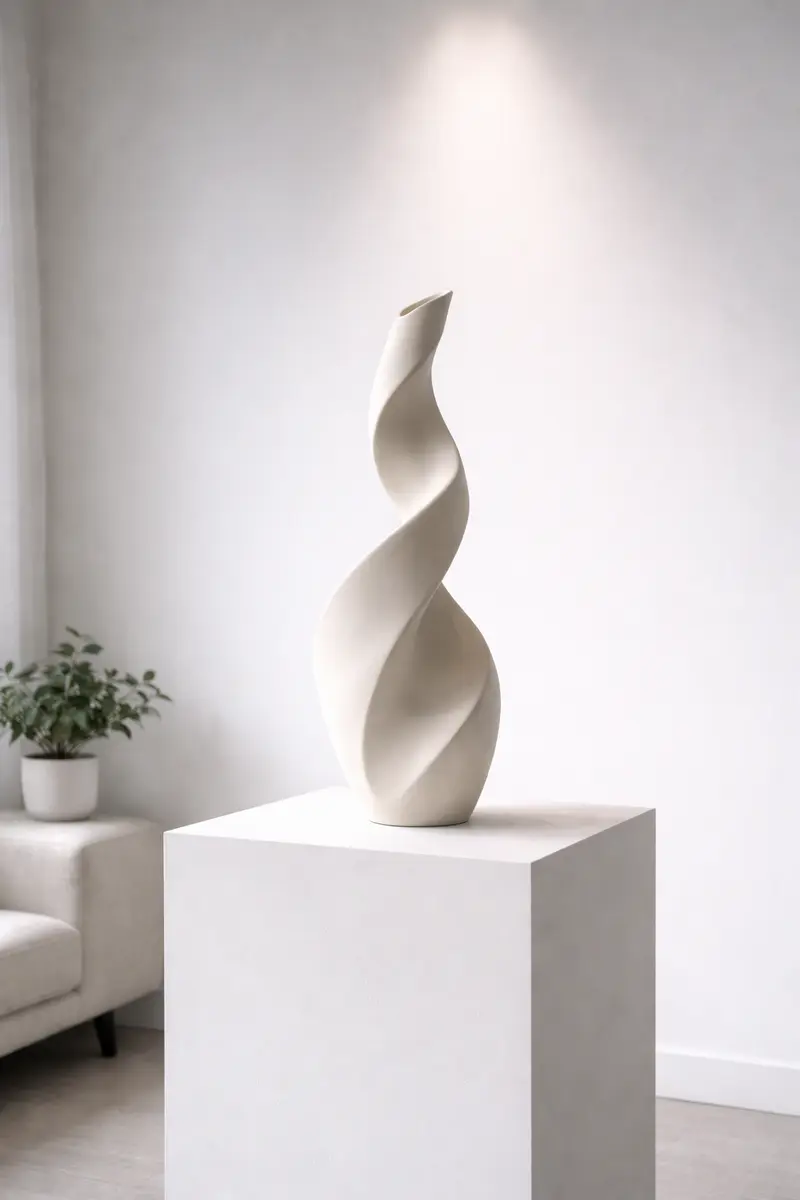
Bought empty, styled empty. The form is the entire point. An abstract or asymmetric silhouette that works as a stand-alone art object rather than a flower holder. Never fill this type; it competes with itself.
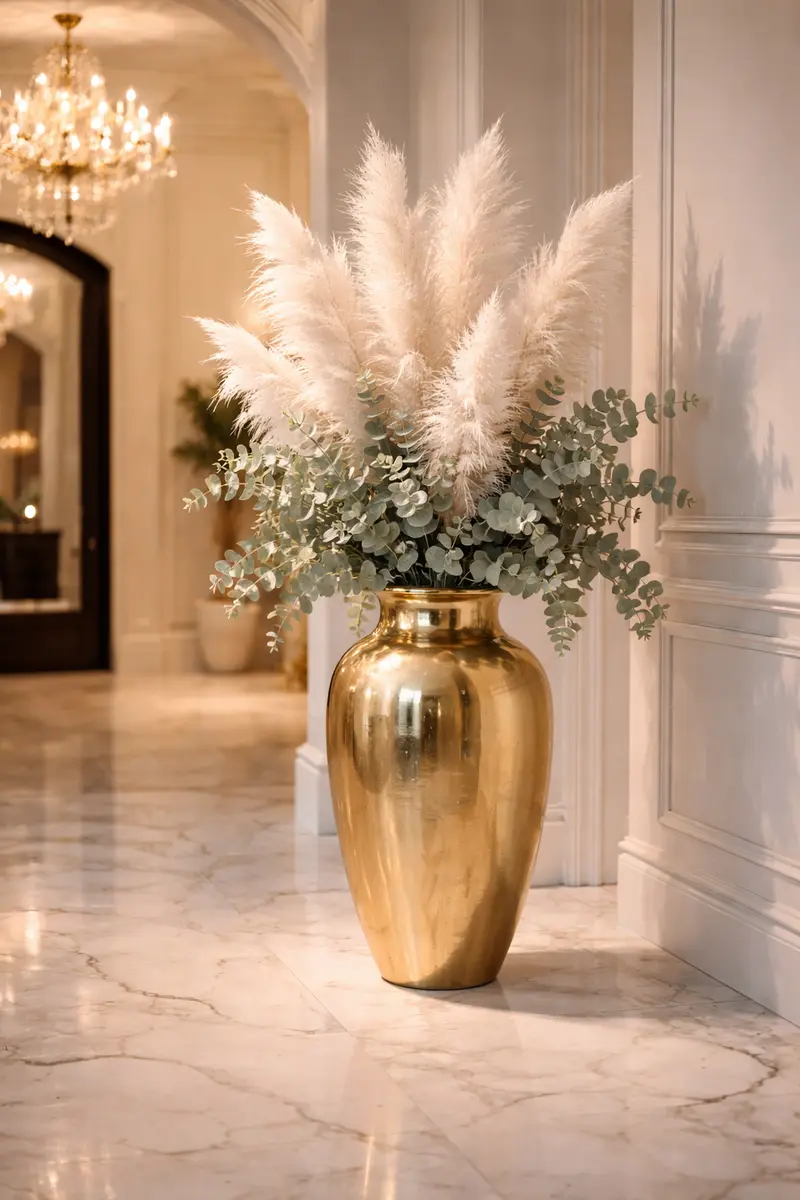
Urn Vase
Wider base, classical silhouette, usually the largest and heaviest piece in the room. This is a one-per-room decision. An urn this size only needs one location and it should be the first thing you see entering the space.
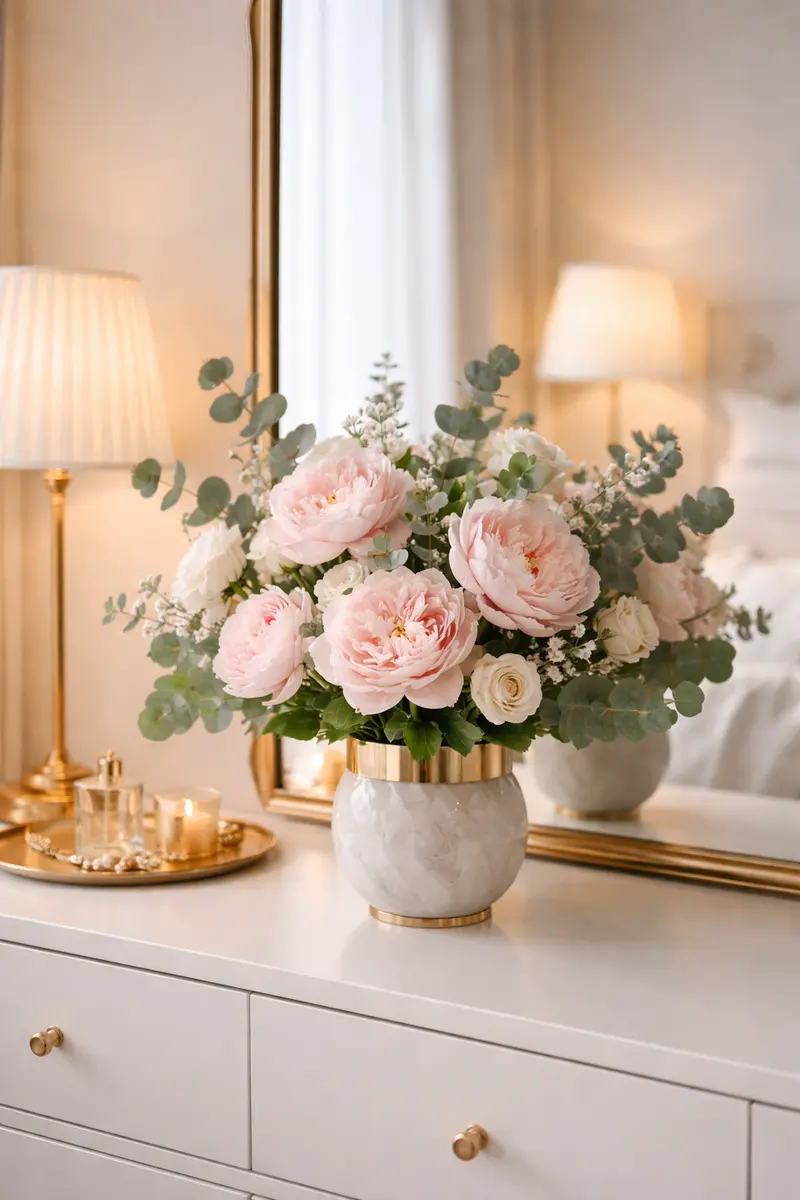
Faux Floral Arrangement
Pre-arranged, vase included, zero maintenance. Quality faux stems now hold up to close inspection. Check for textured petal edges and matte (not shiny) leaves, which are the two tells of a cheap fake.
Browse All Industrial Vases
Ideas & Inspiration
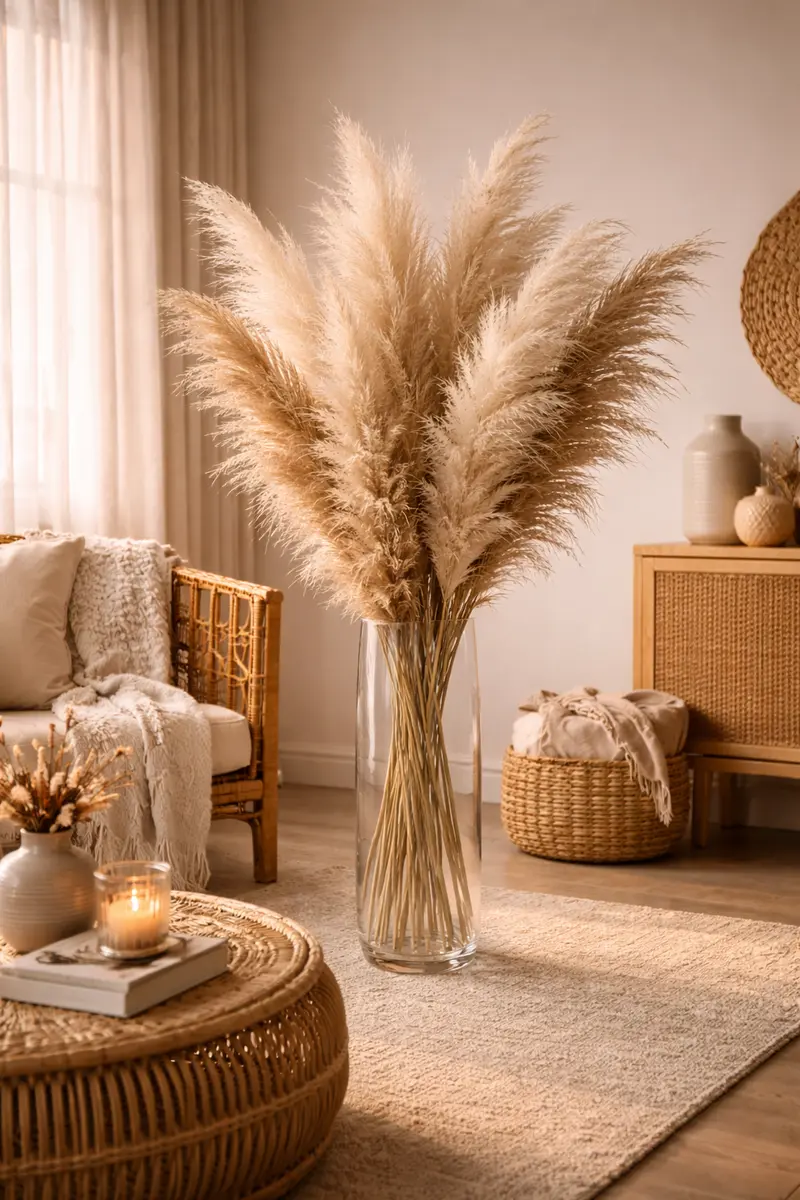
Pampas grass in a bedroom works best scaled down and paired with natural materials already …
Read guide →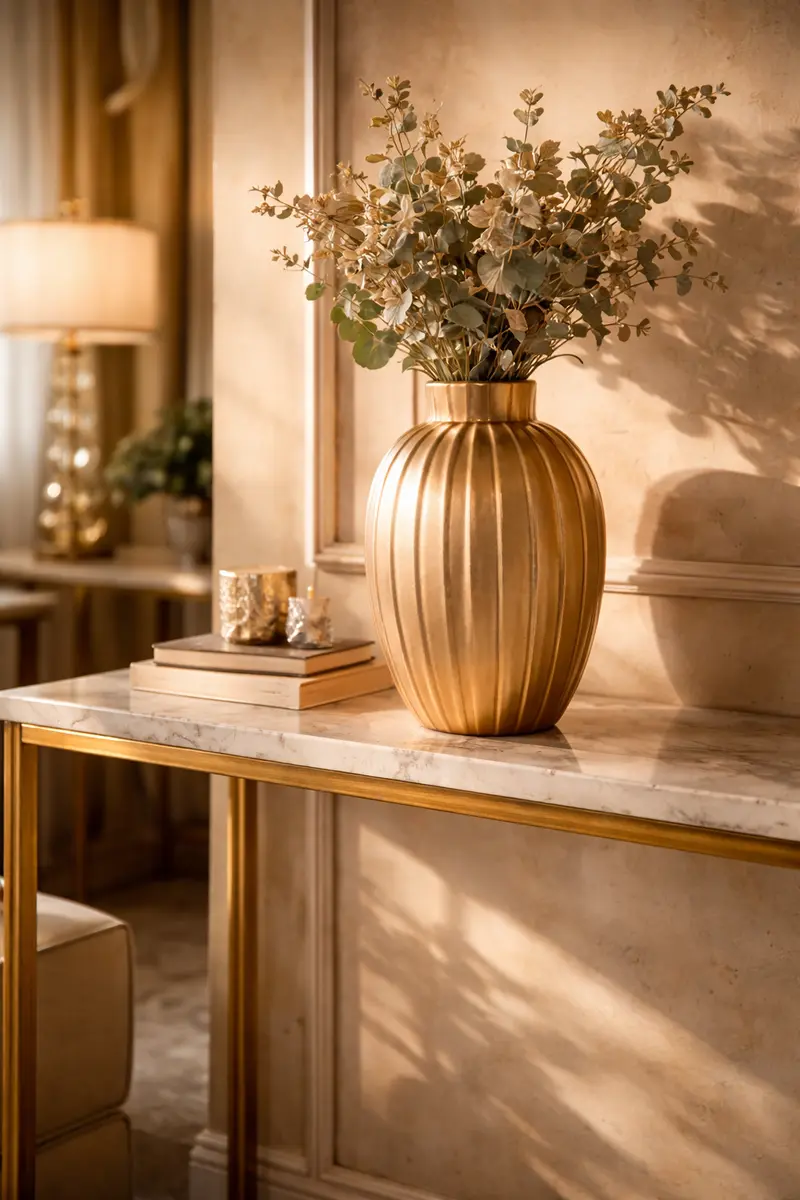
Ceramic reads warmer and more substantial; glass reads lighter and shows off stems. The …
Read guide →
An entryway vase needs to survive daily contact and make an impression in five seconds. …
Read guide →Frequently Asked Questions
What material fits industrial decor best?
What shape suits an industrial vase?
What color vase works in an industrial room?
What flowers suit an industrial vase?
Does industrial decor use gold accents?
How big should an industrial statement vase be?
Want the Full Vases Guide?
Types, styles, sizing rules, and our complete pick list, all in one place.
Browse All Vases →