Choose stonewashed linen over a printed plaid or gingham. The texture reads farmhouse on its own. A print risks reading more like a costume theme than a real material choice.
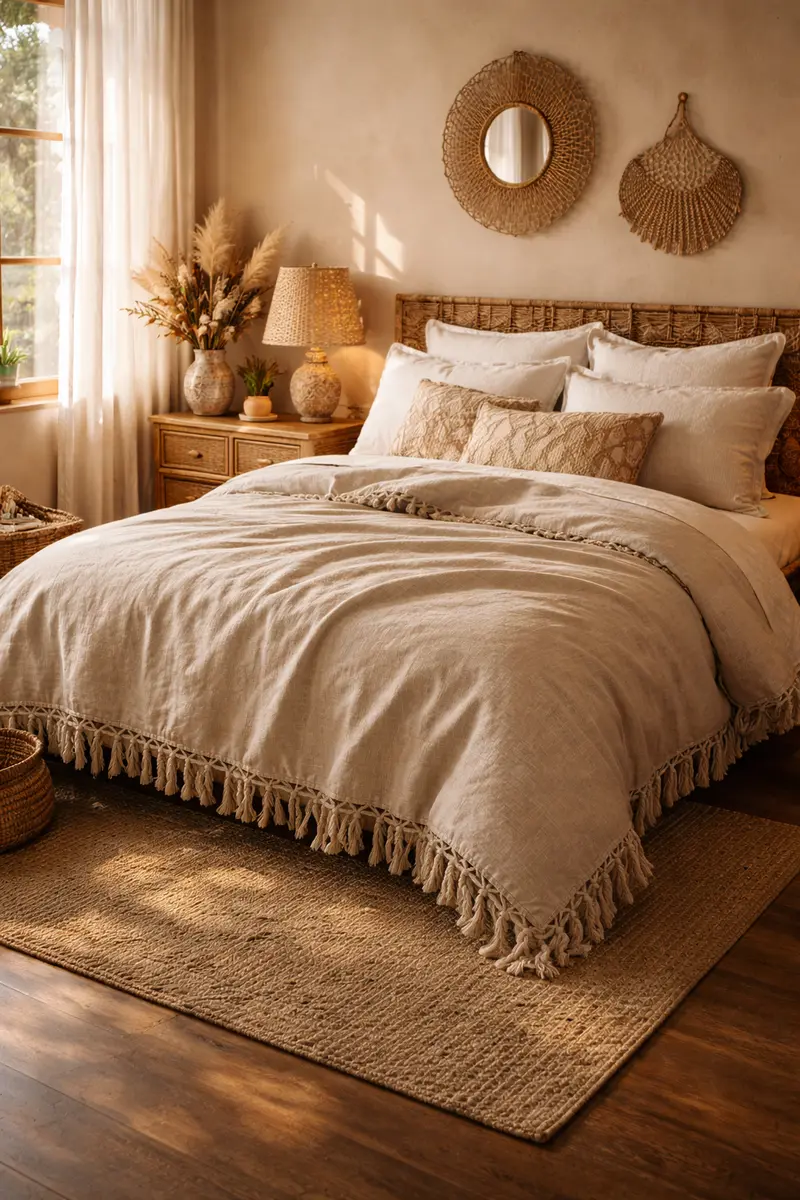
Farmhouse bedding goes wrong the same way farmhouse decor in general goes wrong: too much printed plaid, too little real material.
A gingham duvet in a synthetic fabric reads more like a costume version of farmhouse than the real thing, because the style was never actually about the print.
It’s about honest, natural material doing the visual work on its own.
Done right, the bed feels like it belongs in a house built from real wood and iron, not a themed rental.
Stonewashed linen has the same slightly rumpled, honest texture as reclaimed wood or worn hardware elsewhere in the room.
Cream, tan, and sage tones sit quietly against that material instead of competing with it, which is exactly the restrained, material first look farmhouse is going for.
Climate changes the right weight to buy.
Farmhouse homes are often older or less insulated than a newer build, so a lightweight percale alone can leave a farmhouse bedroom cold in winter.
The bedding below leans into natural fiber and real texture first, matching the honest, material driven core of this style.
Start with whichever piece has the most visible natural texture, since that’s doing more of the styling work than color ever will here.
Types of Bedding
Not all bedding work the same way in a rustic farmhouse space. Here's how the main types differ.
Duvet Covers
A removable cover for your duvet insert, the most important bedding piece. Sets the entire look and feel of your bedroom. Available in cotton, linen, velvet, and satin. Choose carefully, you'll look at it every day.
Sheet Sets
Fitted sheet, flat sheet, and pillowcases sold together. Thread count matters but weave matters more. Percale for crisp cool feel, sateen for silky soft warmth. 400+ thread count sateen is the luxury standard.
Pillowcases
Often overlooked but hugely impactful. Satin and silk pillowcases reduce hair frizz and skin creasing. Decorative euro shams add hotel-style layering depth to any bed.
Throw Blankets
Decorative blankets draped at the foot of the bed or over a reading chair. Chunky knit throws are the signature glam bedroom accessory. They add texture, warmth, and instant cosiness.
Bed Runners
A narrow strip of decorative fabric laid across the foot of the bed. Used in hotel-style bed dressing to add a layer of colour and texture without a full throw.
Quilts & Coverlets
Lighter than a duvet, quilts and coverlets sit on top of the bed as a decorative layer. Perfect for warmer climates or as an additional layer in the hotel-style bed.
Browse All Rustic Farmhouse Bedding
Ideas & Inspiration
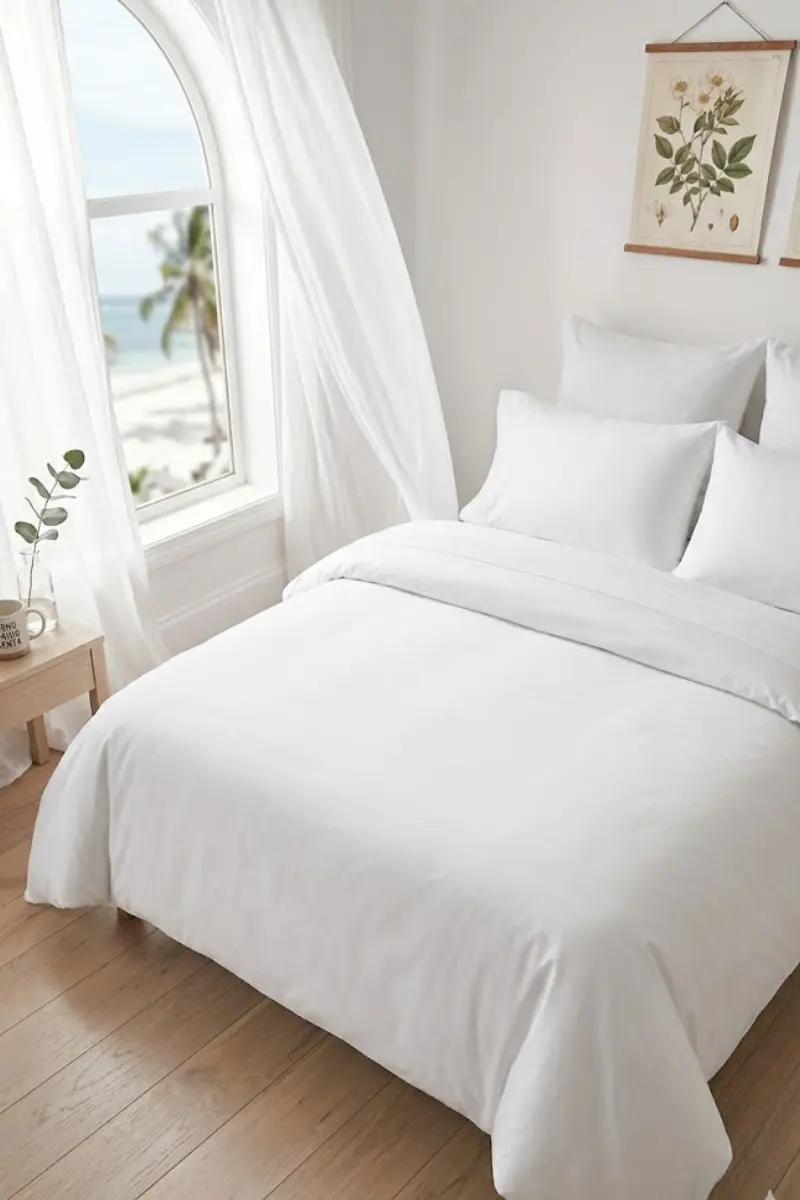
Four real duvet covers starting at $69 to $85, satin, percale, ruffle trim, and linen, …
Read guide →
Boho bedding works by layering texture, not pattern. Stonewashed linen, washed cotton, …
Read guide →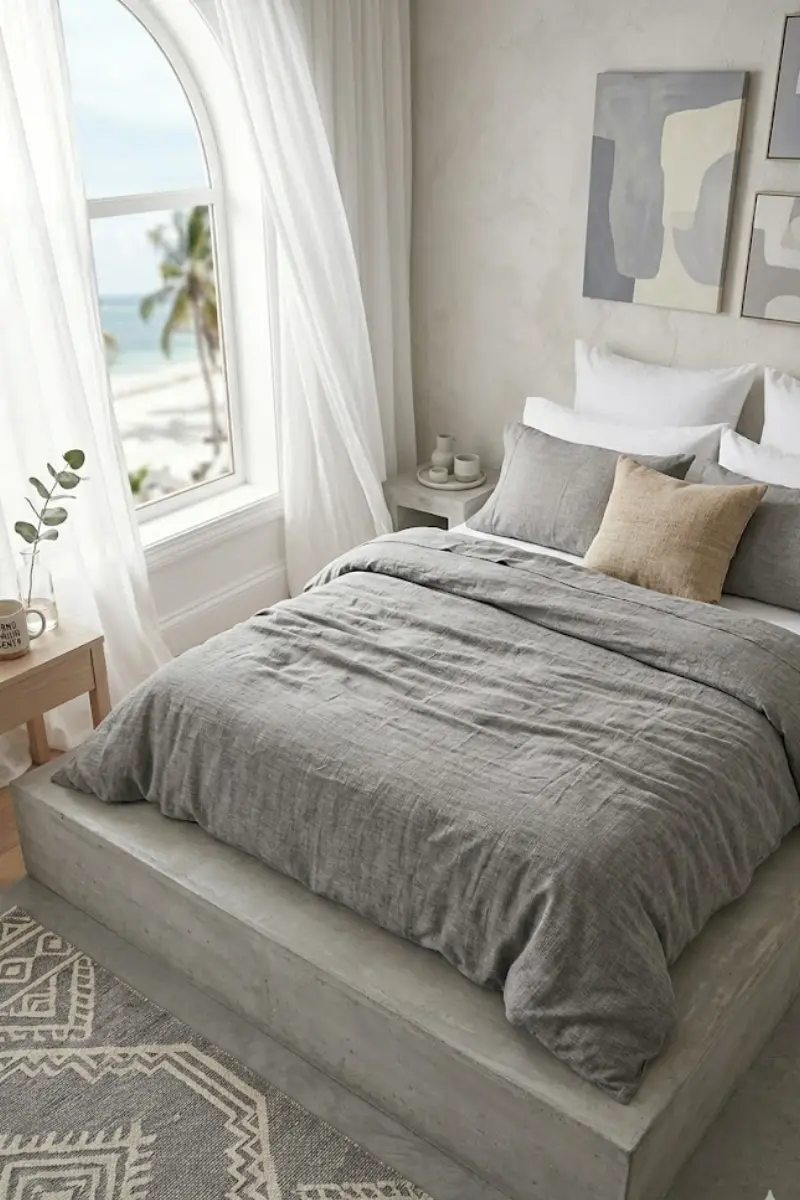
Linen wicks more moisture and suits hot sleepers and humid climates. Cotton percale is …
Read guide →Frequently Asked Questions
What fabric is most authentically farmhouse?
Does farmhouse bedding need a plaid or gingham print?
What colors work in farmhouse bedding?
How is farmhouse bedding different from boho bedding?
Does farmhouse bedding need to be handmade to look authentic?
What bedding weight suits a farmhouse bedroom in a cold climate?
Want the Full Bedding Guide?
Types, styles, sizing rules, and our complete pick list, all in one place.
Browse All Bedding →